
The Fitties Journal
How Exercise Relieves Stress and Supports Mental Wellness
Key Takeaways
Here's what matters most if you're short on time.
- Exercise lowers cortisol and adrenaline while increasing endorphins, the body's natural mood elevators.
- Consistent physical activity supports neuroplasticity, helping the brain build resilience over time.
- Movement provides a sense of agency and control, especially valuable during high-stress periods.
- Magnesium, B vitamins, and amino acids like L-theanine can complement an active lifestyle by supporting nervous system health.
Feeling stressed, tense, or overwhelmed from time to time is a normal part of life. A tough deadline at work, an uncertain outcome, a packed schedule with no margin for error. These moments of mental tension are universal, and in small doses, they can even sharpen focus and drive performance.
But when stress and worry become persistent, they start to erode the things that matter most, like sleep quality, focus, energy, recovery, and overall quality of life. Left unchecked, chronic stress can affect everything from immune function to how quickly your body bounces back from training.
The good news is that one of the most effective tools for managing everyday stress is something you already have access to, which is physical activity. A growing body of research supports the idea that regular movement improves how you feel and think. The CDC notes that a single session can reduce short-term feelings of anxiety in adults, and that regular activity helps keep thinking skills sharp as you age.
The Neurochemistry of Exercise and Stress Relief
The connection between exercise and stress relief isn't anecdotal. It's rooted in measurable biochemistry. When you engage in physical activity, your body reduces circulating levels of stress hormones, primarily adrenaline and cortisol. At the same time, it ramps up endorphin production, the body's natural mood elevators and pain relievers.
This is the mechanism behind the familiar "runner's high," but it's not exclusive to running. Any sustained physical effort, from a brisk walk to a heavy lifting session, can trigger this neurochemical shift. The result is that post-workout sense of calm and clarity that often outlasts the exercise itself by several hours.
There's more happening beneath the surface, too. Regular exercise supports the production of brain-derived neurotrophic factor (BDNF), a protein that promotes the growth and maintenance of neurons. BDNF is particularly active in the hippocampus, the brain region involved in mood regulation and memory. Higher levels of BDNF are associated with greater cognitive resilience. In 535 older adults who had yearly cognitive tests and a brain autopsy at death, cognitive decline was about 50 percent slower in those at the 90th percentile of brain BDNF expression than in those at the 10th (Buchman et al., 2016).
Exercise also influences the balance of neurotransmitters like serotonin, dopamine, and gamma-aminobutyric acid (GABA), all of which play central roles in regulating mood, motivation, and the body's ability to shift out of a heightened stress state. In short, movement doesn't just distract you from stress. It changes your brain chemistry in ways that help you handle it better.
FitWell
B vitamins, chelated magnesium, GABA, 5-HTP, taurine, and Suntheanine® L-theanine in a single formula. Each two-capsule serving has 100 mg each of GABA, 5-HTP, and L-theanine, 300 mg of taurine, and 70 mg of magnesium, with B6 as pyridoxal 5'-phosphate, B12 as methylcobalamin, and folate as methylfolate and calcium folinate.
Shop FitWellBuilding Stress Resilience Over Time
A single workout can improve your mood for hours. But the real power of exercise lies in what it does over weeks and months of consistent practice. Researchers call this stress resilience, and a 2014 review of the biology found that physical fitness appears to blunt the body's stress reactivity, meaning how strongly it reacts to a stressor (Silverman and Deuster, 2014).
Think of it like physical conditioning. Just as your cardiovascular system adapts to repeated aerobic training by becoming more efficient, your stress-response system adapts to regular exercise by becoming less reactive. The hypothalamic-pituitary-adrenal (HPA) axis, which governs your body's cortisol response, gradually learns to dial back faster after a stressor. Over time, you don't just feel better after exercise. You feel more capable of handling whatever comes at you between sessions.
The evidence for this is real but modest. In one lab study of 111 healthy adults, people who exercised at least once a week reported a smaller drop in positive mood after a stressful task than people who did not exercise (Childs and de Wit, 2014). These aren't just subjective impressions. They're reflected in measurable changes in heart rate variability, cortisol patterns, and sleep architecture.
Why Movement Helps You Feel More in Control
There's a powerful psychological dimension to exercise that goes beyond chemistry. When stress makes everything feel chaotic, movement offers something structured and entirely within your control. You set the pace. You choose the activity. You show up and do the work. That sense of agency is especially valuable during periods when other parts of life feel uncertain or overwhelming.
As you notice physical changes from consistent activity, whether it's increased stamina, better sleep, or simply feeling stronger, self-image improves. That creates a positive feedback loop. You feel better, so you move more, which makes you feel even better. Over time, this builds not just physical fitness but genuine self-efficacy, the belief that you can influence outcomes through your own effort.
Exercise also provides a natural mental reset. When your body is engaged in movement, your mind gets pulled away from the repetitive thought patterns that fuel worry and stress. This isn't avoidance. It's a form of active recovery for the brain, freeing up cognitive resources so you return to challenges with more clarity and creativity.
The Best Types of Exercise for Stress Relief
There's no single best exercise for managing stress, but different types of movement offer distinct benefits. The most effective approach is the one you enjoy enough to do consistently.
Aerobic Exercise
Running, cycling, swimming, and brisk walking are the classic aerobic options. The rhythmic, repetitive nature of aerobic movement provides a meditative quality, allowing you to disconnect from racing thoughts and sync with a steady physical cadence. Even a brisk 20 to 30-minute walk can produce a noticeable shift in how you feel. As your conditioning improves, you can explore higher-intensity formats like HIIT, which compress significant stress-relief benefits into shorter sessions.
Yoga and Breathwork
Yoga combines slow, purposeful movement with conscious breath regulation, making it uniquely effective for stress management. The deliberate pacing activates the parasympathetic nervous system (your body's "rest and digest" mode), directly counteracting the physiological effects of chronic stress. Practices such as meditation and deep breathing exercises, often integrated into yoga sessions, have been studied for their effects on stress hormones and focus. A meta-analysis of 42 randomized trials linked yoga practice to lower cortisol (Pascoe et al., 2017), and in an eight-week trial, diaphragmatic breathing training lowered cortisol and improved sustained attention (Ma et al., 2017), while mindfulness programs on their own show only small effects on stress biomarkers (Grasmann et al., 2023). Even if you never set foot on a yoga mat, simple breathwork practices done for five to ten minutes a day can meaningfully shift your stress baseline.
Strength Training
Lifting weights builds more than muscle. It builds confidence, supports better sleep quality, and provides a focused, present-moment activity that demands your full attention, leaving little room for worry or rumination. There's also research linking resistance training to lower anxiety symptoms. A 2017 meta-analysis of 16 studies found a benefit, larger in healthy adults, whether or not strength improved (Gordon et al., 2017).
Outdoor Activities
Hiking, trail running, and even gardening combine physical exertion with exposure to natural environments. The combination of movement plus natural scenery creates a synergistic effect that's hard to replicate indoors.
Group Activities and Team Sports
Stress and low mood can lead to isolation, making social connection feel difficult. Group fitness classes, recreational leagues, and team sports serve a dual purpose. The movement itself triggers endorphin release, while the social component fosters a sense of belonging and shared purpose. Both are powerful counterweights to the isolation that chronic stress can create.
How Nutrition Supports Stress Resilience
Exercise is the foundation, but what you put into your body matters too. Several key nutrients play direct roles in nervous system health, neurotransmitter production, and the body's stress-response pathways.
Magnesium is a cofactor in more than 300 enzyme systems, including those for muscle and nerve function, according to the NIH Office of Dietary Supplements. Despite its importance, 49% of Americans take in less magnesium from food and beverages than their estimated average requirement, in USDA survey data for 2017 to March 2020.
B vitamins, particularly B6, B12, and folate, are essential for the synthesis of neurotransmitters like serotonin and GABA. These chemical messengers directly influence mood regulation, stress response, and sleep quality.
L-theanine, an amino acid naturally found in tea, promotes relaxation without drowsiness, according to a 2015 review by researchers at Taiyo Kagaku, the company that makes Suntheanine®. The sleep studies it covers used 200 mg before bed (Rao et al., 2015). GABA is the main inhibitory neurotransmitter in the brain (Hepsomali et al., 2020). And 5-HTP is the compound the body converts directly into serotonin, a neurotransmitter involved in mood, sleep, and learning (Maffei, 2020). If you take medication, especially antidepressants or other serotonergic drugs, are pregnant or nursing, or have a health condition, talk to your healthcare provider before starting 5-HTP or any new supplement.
These nutrients work best as part of a comprehensive approach with consistent exercise, quality sleep, balanced nutrition, and targeted supplementation where gaps exist.
Getting Started: Practical Steps
If the idea of starting an exercise routine feels overwhelming, start small. The goal isn't perfection. It's consistency. Here's how to build momentum without burning out.
- Start with five to ten minutes. A short walk around the block, a few minutes of stretching, or a simple breathing exercise. The bar is intentionally low. You're building the habit first.
- Pick something you actually enjoy. Compliance is the only variable that matters long-term. If you hate running, don't run. Walk, swim, lift, dance, hike. It all counts.
- Schedule it like a meeting. Don't leave exercise to willpower. Put it on the calendar and protect it the way you would a work commitment.
- Progress gradually. Add time, intensity, or frequency in small increments. Jumping from zero to five days a week is a recipe for burnout. Two or three sessions a week is a great starting point.
- Track how you feel, not just what you did. Note your mood and energy before and after workouts. Seeing the pattern reinforces the habit more effectively than any fitness metric.
The CDC recommends 150 minutes of moderate-intensity aerobic activity per week, but any movement is better than none. Even short bouts count. In a small trial in young adults, a single 10-minute brisk walk improved mood compared with sitting (Edwards and Loprinzi, 2018).
The Bigger Picture
Physical activity isn't a cure-all, and it's not a substitute for professional support when you need it. But as part of a broader approach to well-being that includes good daily habits, quality sleep, strong social connections, and the right nutritional foundation, regular movement is one of the most accessible and effective tools available for managing everyday stress.
You don't need a perfect plan. You don't need a gym membership. You don't need to overhaul your life. You just need to move, consistently, in a way that works for you. Every session is a deposit in your stress-resilience account, and the returns compound over time.
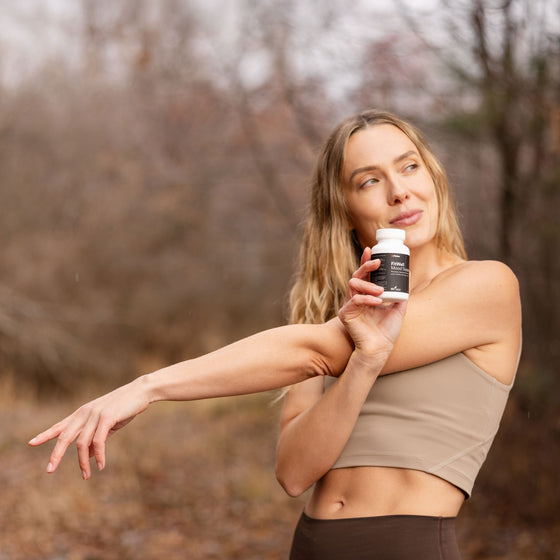
FitWell
B vitamins, chelated magnesium, GABA, 5-HTP, taurine, and Suntheanine® L-theanine in a single formula. Each two-capsule serving has 100 mg each of GABA, 5-HTP, and L-theanine, 300 mg of taurine, and 70 mg of magnesium, with B6 as pyridoxal 5'-phosphate, B12 as methylcobalamin, and folate as methylfolate and calcium folinate.
Shop FitWell