
The Fitties Journal
Best Time to Take Probiotics: Morning, Night, or With Food?
Key Takeaways
Here's what matters most if you're short on time.
- The best time to take probiotics is the one you will take consistently; a daily habit matters more than the exact hour.
- Taking probiotics with a meal, or up to 30 minutes before one, helps more of the bacteria survive stomach acid.
- Morning and bedtime both work, so pick the slot you are least likely to skip.
- Acid-resistant capsules are built to survive stomach acid, so timing matters even less with them.
- Probiotic benefits are strain-specific, so the named strain on the label matters more than a big CFU number.
- If you take antibiotics, check the strain. Some can be taken alongside, others do better an hour or two apart, and keep going for two weeks after the course.
The best time to take probiotics is the time you will actually take them every day. Consistency beats clock-watching. If you want a rule of thumb, take them in the morning with or just before breakfast, or right before bed. Taking them alongside a meal with a little fat helps more of the live bacteria survive stomach acid, and if your probiotic uses an acid-resistant capsule, the exact hour matters even less.
That is the short answer. The longer answer is that two things decide whether a probiotic does anything at all, and neither one is the time of day. They are the specific strain on the label, and whether you take it consistently. Here is how to pick a timing window that fits your routine, and what actually matters more.
When is the best time to take probiotics?

There is no single magic hour, and any brand that promises one is selling certainty it does not have. What the research supports is simpler. Take your probiotic when your stomach is least hostile to it, which in a lab model of the gut meant with or just before a meal (Tompkins et al., 2011), and take it daily. Both the morning-before-breakfast window and the just-before-bed window work, because each one limits how long the bacteria sit in a highly acidic, actively digesting stomach.
Pick whichever slot you will not skip. A perfectly timed dose you forget four days a week loses to an imperfectly timed one you take every morning without fail.
What matters far more than timing is what is in the capsule. Probiotic benefits are strain-specific, so a named, studied strain at an adequate dose does more than a big-sounding CFU number stamped on a mystery blend, according to the National Institutes of Health. That CFU count is often measured at the time of manufacture rather than at expiry, so the headline number tells you little about how many live organisms actually reach you. Read the strain, not just the billions.
FitProbio+
FitProbio+ delivers 10 billion CFU of HOWARU Shape B420 (Bifidobacterium animalis subsp. lactis B420) in DRcaps gastro-resistant capsules. One vegetarian capsule a day, each sealed in a nitrogen-purged blister pack.
Shop FitProbio+Morning, night, or with a meal: how the timing compares
Each timing window has a reasonable case. Here is how they stack up, so you can match one to your day rather than chase a perfect minute that does not exist.
| Timing | Best for | What to know |
|---|---|---|
| First thing in the morning | A consistent daily anchor and stacking with breakfast supplements | Stomach acid ramps up as you eat, so taking it just before or with your first meal limits acid exposure. |
| With a meal | Most people, especially a meal with a little fat | Bacteria survival tends to be higher when taken with or shortly before food than after it. |
| Before bed | Anyone who forgets in the morning, or takes antibiotics during the day | Your stomach is quieter after a few hours without food. We found no study testing a night-specific edge, so consider it a convenience choice. |
Should you take probiotics with food or on an empty stomach?
With food, in most cases. In a lab model of the human upper gut, survival of the probiotic bacteria was best when the dose was given with a meal or up to 30 minutes before eating, and worst when it was taken 30 minutes after the meal, per a study in Beneficial Microbes. That same research suggested the meal's fat content mattered more than its protein. The bacteria survived better in 1% milk or oatmeal with milk than in apple juice or spring water.
Taking it first thing on an empty stomach works too, because stomach acid is lower before you eat. If you want one default that covers all of this, take it with breakfast. Those breakfast foods can also supply prebiotics, and our guide to prebiotics and probiotics covers how the two differ.
Does the type of probiotic capsule change when you take it?

Yes, and this is where most timing anxiety disappears. Acid-resistant and delayed-release capsules are designed to survive stomach acid and release their contents lower in the digestive tract, which means the hour you swallow them matters less than it would for a bare capsule.
FitProbio+ comes in this kind of capsule. It uses the HOWARU® Shape B420™ strain (Bifidobacterium animalis subsp. lactis B420), which was tested in a six-month randomized, placebo-controlled trial (Stenman et al., 2016). Each capsule delivers 10 billion CFU in a DRcaps™ gastro-resistant capsule and is sealed in a nitrogen-purged blister pack to shield the live cultures from heat, moisture, and oxygen. The label direction is simple. It is one capsule with water, daily. For the science behind that specific strain, read our deep dive on HOWARU Shape B420.
The takeaway is not "buy the fanciest capsule." It is that delivery is part of the dose. A probiotic that never survives the trip is a supplement you are paying to digest, which is the corner too much of the category quietly cuts.
How long does it take for probiotics to start working?
It depends on the strain and why you are taking it. For general digestive comfort, some people notice a difference within a few days to a couple of weeks of daily use. Benefits tied to slower-moving outcomes take longer to study and to appear. The main human trial on the B420 strain measured body-composition changes in overweight and obese adults over six months of daily supplementation, as reported in EBioMedicine. Either way, give any probiotic a few consistent weeks before you decide whether it is doing anything, and keep taking it, since the effects rely on the bacteria being present regularly. For the wider picture on choosing and storing them, see our complete guide to probiotics.
How should you take probiotics with antibiotics?
Antibiotics cannot tell friendly bacteria from the kind making you sick, so give the two some distance. It depends on the strain. Saccharomyces boulardii, for example, is a yeast, and like all yeasts it is naturally resistant to antibiotics, which target bacteria (Kelesidis and Pothoulakis, 2012). Bacterial strains are a different story, so ask your pharmacist or doctor how to time yours around the specific antibiotic you are taking.
There is one caveat that reaches beyond antibiotics. If you are severely ill or immunocompromised, talk to your healthcare provider before starting a probiotic, as the National Institutes of Health advises. A supplement is not a substitute for medical advice, and a quick conversation rules out the uncommon cases where the timing, or the product itself, needs adjusting.
The bottom line is that the best time to take probiotics is the time you will keep. Anchor it to a daily habit, take it with breakfast if you want a simple rule, and choose a probiotic with a named, clinically studied strain and an acid-resistant capsule.
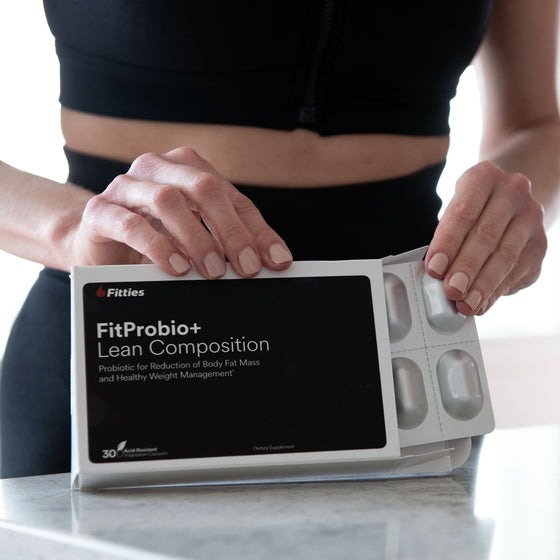
FitProbio+
FitProbio+ delivers 10 billion CFU of HOWARU Shape B420 (Bifidobacterium animalis subsp. lactis B420) in DRcaps gastro-resistant capsules. One vegetarian capsule a day, each sealed in a nitrogen-purged blister pack.
Shop FitProbio+