
The Fitties Journal
Prebiotics vs Probiotics: The Difference, and Do You Need Both?
Key Takeaways
Here's what matters most if you're short on time.
- Probiotics are live beneficial bacteria you add to your gut; prebiotics are fibers that feed the good bacteria you already have.
- The easy way to remember it is that probiotics are the seeds, prebiotics are the fertilizer.
- Most people get plenty of prebiotic fiber from foods like garlic, onions, oats, and bananas.
- Probiotic effects can be specific to the strain, and a higher CFU count is not necessarily more effective, according to the NIH Office of Dietary Supplements.
- Prebiotics and probiotics work best together, so a food-first diet plus a targeted probiotic covers both.
Probiotics are live, beneficial bacteria you add to your gut. Prebiotics are the fibers that feed the good bacteria already living there. That is the whole difference in one line. Probiotics are the gardeners, prebiotics are the fertilizer. You benefit from both, but you get them in different ways. Most people already eat prebiotic fiber from everyday foods, and add a probiotic when they have a specific goal in mind. The International Scientific Association for Probiotics and Prebiotics defines probiotics as live microorganisms that, in adequate amounts, confer a health benefit on the host, and prebiotics as substrates selectively utilised by host microorganisms. Here is how they differ, what each one does, and how to actually use them.
What is the difference between prebiotics and probiotics?
Probiotics are living organisms. Prebiotics are food for organisms. Probiotics add new beneficial bacteria to your gut community, while prebiotics are types of fiber your body cannot digest, so they pass to your colon where your resident good bacteria ferment them and grow. One is the seed, the other is the soil. Neither is "better," because they do different jobs, which is exactly why an aisle selling you one as a magic fix is missing the point.
| Prebiotics | Probiotics | |
|---|---|---|
| What they are | Non-digestible plant fibers | Live beneficial bacteria |
| What they do | Feed the good bacteria you already have | Add more good bacteria to your gut |
| Food sources | Garlic, onions, leeks, asparagus, bananas, oats | Yogurt, kefir, sauerkraut, kimchi, miso |
| Common forms | Inulin, FOS, and GOS fibers | Specific strains of Lactobacillus and Bifidobacterium |
| Think of them as | The fertilizer | The seeds |
FitProbio+
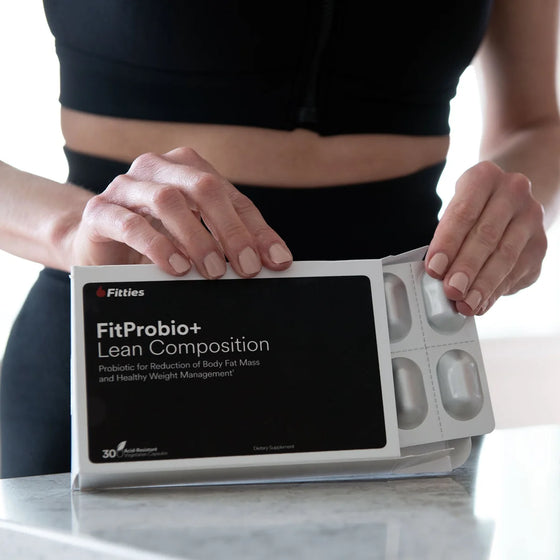
FitProbio+ contains a single probiotic strain, HOWARU Shape B420, at 10 billion CFU per acid-resistant vegetarian capsule. No stimulants, no fat-burner theater, no mystery blend.
Shop FitProbio+What are probiotics, and what do they do?
Probiotics are live microorganisms, mostly bacteria, that add to the population of helpful microbes in your gut. Different strains do different things, which is the part the marketing skips. A probiotic is only as good as the specific strain inside it and the research behind that strain. Common groups include Lactobacillus and Bifidobacterium, and because effects are strain-specific, "probiotics" as a blanket category tells you almost nothing.
You get them from fermented foods like yogurt, kefir, sauerkraut, kimchi, and miso, or from a supplement built around a studied strain. Broadly, probiotics are live microorganisms that, when administered in adequate amounts, confer a health benefit, the scientific definition the NIH Office of Dietary Supplements cites. What they will not do is fix a poor diet, and no CFU count on a label changes that.
What are prebiotics, and what do they do?

Prebiotics are typically complex carbohydrates, such as inulin and other fructo-oligosaccharides, that the microorganisms in your gut use as fuel, according to the NIH Office of Dietary Supplements. In other words, prebiotics feed the bacteria you already have, rather than adding new ones.
They are hiding in plain sight in ordinary foods like garlic, onions, leeks, asparagus, slightly-green bananas, oats, apples, and legumes. The common named prebiotic fibers are inulin, fructooligosaccharides (FOS), and galactooligosaccharides (GOS). Most people who eat a varied, plant-heavy diet are already getting prebiotics without a supplement, which is the boring truth the "prebiotic gummy" shelf would rather you did not know.
A few less obvious sources are worth knowing about. Cooked-and-cooled potatoes, rice, and oats form resistant starch, another fiber your gut bacteria treat as food, while chicory root and Jerusalem artichoke are among the richest natural sources of inulin. Variety matters more than any single superfood here, since different fibers feed different bacteria, so a rotating mix of plants beats leaning on one.
Here is one practical note. If you add a concentrated prebiotic supplement such as inulin, ramp up slowly. Feeding your gut bacteria a big dose all at once is a common cause of the gas and bloating people blame on the supplement, when the real fix is a smaller starting amount and a few days to let your system adjust.
Prebiotics vs probiotics: do you need both?
In practice, yes, and they work better together. Prebiotics feed probiotics, so pairing fiber-rich food with the right probiotic gives the good bacteria both a foothold and a food supply. When a product combines the two on purpose, it is called a synbiotic. Whether you need to buy both is a different question from whether your gut uses both.
The simplest approach for most people is to get prebiotics from food first, since a varied plant-based diet covers it cheaply, and add a probiotic when you have a specific, research-backed goal. There are currently no formal recommendations for or against probiotics in healthy people, according to the NIH Office of Dietary Supplements, so food first is a reasonable default. That is the honest version the "50 billion CFU" tubs will not put on the front of the label.
How do you choose a probiotic supplement?

Skip the CFU arms race. A bigger number on the label does not mean a better product. What matters is whether the specific strain has been studied for the outcome you care about, and whether it survives the trip to your gut. That is the logic behind FitProbio+, which uses a single, clinically studied strain, HOWARU® Shape B420™, at 10 billion CFU per capsule, in an acid-resistant vegetarian capsule sealed in a nitrogen-purged blister pack. One strain, dosed and delivered on purpose, instead of a mystery blend chasing a headline number. If you want the deep dive on that strain, here is the research behind HOWARU Shape B420. As with any supplement, if you are pregnant, nursing, immunocompromised, or taking medication, talk to your healthcare provider first.
When you compare options, three things matter more than the CFU headline.
- A specific, studied strain. Effects are strain-specific (NIH Office of Dietary Supplements), so look for a named strain with research behind it, not a vague "proprietary blend."
- A meaningful, stable dose. Enough live cultures to match what the research used, in packaging that protects them from heat, moisture, and oxygen.
- Survivability. Stomach acid destroys a lot of bacteria, so an acid-resistant capsule helps more of the strain actually reach your gut.
Who should be careful with probiotics?
For most healthy people, probiotics from food or a quality supplement are well tolerated, and mild, temporary gas as your gut adjusts is the most common complaint. They are not risk-free for everyone, though. People who are seriously ill, immunocompromised, or recovering from surgery should talk to a doctor before taking probiotics. The NIH's National Center for Complementary and Integrative Health notes that the risk of harmful effects is greater in people with severe illnesses or compromised immune systems. The same goes if you are pregnant or nursing, managing a chronic condition, or taking medication. This is education, not medical advice, so when in doubt, ask your healthcare provider.
What about postbiotics?
You will start seeing a third word on labels, postbiotics. Under the definition an international scientific panel agreed in 2021, they are preparations of inactivated microbes or their components that confer a health benefit (Salminen et al., 2021), and the research on supplementing them is still young. For now, the practical takeaway has not changed. Feed your good bacteria with prebiotic fiber, and send in reinforcements with a studied probiotic when you have a real reason to.
So prebiotics vs probiotics is not a competition. Probiotics add good bacteria, prebiotics feed them, and the two do their best work as a team. Eat the fiber, pick your probiotic with a purpose, and ignore the tub shouting the biggest number on the shelf.
FitProbio+
FitProbio+ contains a single probiotic strain, HOWARU Shape B420, at 10 billion CFU per acid-resistant vegetarian capsule. No stimulants, no fat-burner theater, no mystery blend.
Shop FitProbio+