The Fitties Journal
Creatine for Women: Benefits, Myths, and How to Take It
Key Takeaways
Here's what matters most if you're short on time.
- Creatine is one of the most studied sports supplements (NIH Office of Dietary Supplements), and benefits have been reported in women, though most trials are in men (International Society of Sports Nutrition).
- A daily dose of 3 to 5 grams is the standard, and consistency matters more than timing.
- Creatine does not make you bulky; any early scale change is water held inside the muscle, not fat.
- Creatine monohydrate is the most widely used and studied form, per the NIH Office of Dietary Supplements, so a clearly dosed label beats a marked-up 'for her' blend.
- Talk to your healthcare provider first if you are pregnant, breastfeeding, take medication, or have a kidney condition.
Creatine can work for women, but the evidence is thinner and less consistent than it is for men. Creatine monohydrate is one of the most thoroughly studied sports supplements, and a daily dose of 3 to 5 grams, taken consistently, is the standard maintenance dose (NIH Office of Dietary Supplements). Paired with resistance training, creatine produced small gains in lean mass and leg-press strength in a 2026 meta-analysis of postmenopausal women taking 5 grams or more a day (Naddafha et al., 2026), but pooled trials that split results by sex found clear gains in men and smaller or non-significant ones in women (Delpino et al., 2022; Kazeminasab et al., 2025). It will not make you bulky, it is not just a "guy's" supplement, and the early bump on the scale is water held inside your muscle, not fat. Here is what the research actually says, which myths to ignore, and how to take it.
What does creatine do for women?
Creatine is a compound your body already makes and stores in muscle, where it helps regenerate ATP, the energy your cells burn during short, hard efforts like a heavy set, a sprint, or the last two reps that actually count. Supplementing tops up those stores so you can train a little harder and recover between efforts a little faster.
Here is the part that matters for women specifically. Research suggests women tend to store less creatine than men and often eat less of it from food, since the main dietary sources are meat and fish. A 2021 review of creatine across the female lifespan concludes that women may benefit from supplementation for that reason, while noting that their resting intramuscular creatine runs about 10% higher than men's, which could work the other way. The same review finds creatine appears to improve strength and exercise performance in premenopausal women, and that postmenopausal women may see benefits in muscle size and function at high doses (Smith-Ryan et al., 2021).
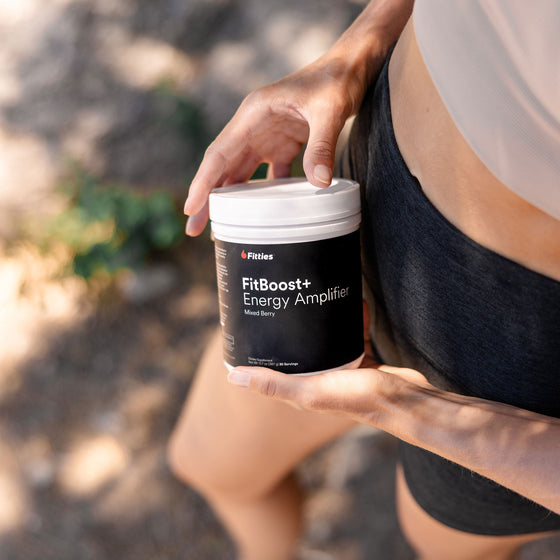
FitBoost+
FitBoost+ delivers 3 g of creatine monohydrate per scoop with 400 mg of Peak ATP, electrolytes, B vitamins, and 95 mg of caffeine. Zero sugar, with the creatine dose printed in plain sight.
Shop FitBoost+Does creatine make women bulky?
No. This is the single biggest reason women skip creatine, and it is based on a misread of the scale. Creatine does not contain calories that turn into fat, and it does not magically add slabs of mass. Building visible muscle takes progressive resistance training, enough protein, and time, and even then women build muscle more slowly than men because of lower testosterone.
What creatine does do, especially in the first week or two, is pull a small amount of water into your muscle cells. That can show up as 1 to 3 pounds on the scale. It is intramuscular water, which actually makes muscle look fuller, not the puffy, "bloated" water that sits under your skin. The number on the scale is not body fat, and it is not the same as getting bigger.
What are the benefits of creatine for women?
Most of the strongest evidence is tied to training. In pooled trials, creatine raised lean mass when combined with resistance training but not without exercise (Delpino et al., 2022). Creatine is not a stimulant and you will not "feel" it like caffeine. The benefit shows up in the work you can do over weeks and months.
| Area | What the research shows |
|---|---|
| Strength and power | Gains show up in some trials, such as leg-press strength in postmenopausal women taking 5 g or more a day with resistance training (Naddafha et al., 2026), but a 2025 meta-analysis found clear strength and power gains in men and not in women (Kazeminasab et al., 2025) |
| Lean muscle | A small lean-mass gain in postmenopausal women training on 5 g or more a day (Naddafha et al., 2026); across all ages, pooled trials found a significant gain in men but not in women (Delpino et al., 2022) |
| Training capacity | A 2021 review concluded creatine appears to improve exercise performance in premenopausal women (Smith-Ryan et al., 2021) |
| Across the lifespan | Studied in women from training age through the post-menopausal years, including older women doing resistance training |
Researchers are also studying creatine beyond the gym, including memory. A 2023 meta-analysis of trials in healthy people found memory improved overall, mostly in adults aged 66 to 76 (Prokopidis et al., 2023), but that work is younger and less settled.
Is creatine safe for women?
Creatine monohydrate is considered safe for short-term use by healthy adults, and the evidence shows several years of use is safe too (NIH Office of Dietary Supplements). A few of the scarier rumors do not hold up.
- It does not "bloat" you. The water creatine draws in sits inside the muscle, not under the skin. Most people notice nothing beyond a small early scale change.
- It does not wreck healthy kidneys. In healthy people, controlled research shows recommended doses do not cause kidney damage or dysfunction (Antonio et al., 2021). If you have a kidney condition, that is a conversation for your provider before you start.
- The hair-loss claim is thin. It traces back to a single 2009 study in male rugby players that measured a hormone marker, not actual hair loss (van der Merwe et al., 2009), and a 2025 trial in men that measured hair directly found no rise in that marker and no change in hair (Lak et al., 2025). There is no solid evidence creatine causes hair loss in women. A 2021 expert review found no study reporting hair loss in anyone taking it (Antonio et al., 2021).
The most common real side effect is minor stomach upset, usually from taking a large dose at once on an empty stomach. Splitting it or taking it with food fixes that. If you are pregnant or breastfeeding, or you take medication or have a health condition, talk to your healthcare provider before starting creatine or any new supplement.
How much creatine should women take, and when?
The protocol is refreshingly boring, which is a good thing. Consistency beats clever timing every time.
| Question | The simple answer |
|---|---|
| How much? | 3 to 5 grams of creatine monohydrate per day |
| Do I need to "load"? | Optional. Loading (about 20 g split into 4 doses for 5 to 7 days) fills your stores faster, but a steady 3 to 5 g daily gets you to the same place in a few weeks |
| When? | Any time of day. Around your workout is fine; so is morning. Daily consistency is what matters |
| Rest days? | Yes, take it daily, including rest days, to keep your muscle stores topped up |
Give it time. Without a loading phase, it takes a few weeks of daily use for your muscle stores to saturate and for the training benefits to show up.
How to choose a creatine supplement
This is where the industry earns its bad reputation. Plenty of brands take plain creatine monohydrate, wrap it in a pastel "for her" label, hide the dose inside a proprietary blend, and charge more for less. You are smarter than that. Here are three things to check.
- The form. Creatine monohydrate is the most researched form by a wide margin. The vast majority of studies of creatine's effects have used it (Kreider et al., 2017). The exotic "advanced" versions usually cost more and have not been proven better (NIH Office of Dietary Supplements). Here is why creatine HCl does not beat monohydrate.
- The dose, in plain sight. You want to see the actual gram amount on the label, not creatine buried inside a "proprietary blend" that hides how much you are really getting.
- What else is in the scoop. Some products keep it to standalone creatine. Others build it into a performance formula.
For the second route, FitBoost+ puts 3 grams of creatine monohydrate per scoop alongside 400 mg of Peak ATP®, electrolytes, Albion chelated minerals, activated B vitamins, and 95 mg of caffeine, with zero sugar. The creatine is listed at a clear 3 grams, not buried, so you can see exactly how much creatine you are getting. Because it contains caffeine, it is built as a pre-workout style scoop, not the pick if you are avoiding stimulants or are pregnant or breastfeeding. If you want creatine on its own terms, a plain monohydrate works too. Either way, the creatine dose you are paying for should be spelled out on the label, not left to guesswork. The same rule runs the protein aisle, where the best protein powder for women is decided by five specs on the back panel, not the pastel tub on the front.
FitBoost+
FitBoost+ delivers 3 g of creatine monohydrate per scoop with 400 mg of Peak ATP, electrolytes, B vitamins, and 95 mg of caffeine. Zero sugar, with the creatine dose printed in plain sight.
Shop FitBoost+