The Fitties Journal
Micronutrients for Athletes: What to Know
Key Takeaways
Here's what matters most if you're short on time.
- Athletes have higher micronutrient demands than the general population due to increased metabolic turnover, sweat losses, and tissue repair.
- Iron, vitamin D, magnesium, and zinc are among the most common micronutrient shortfalls in active individuals.
- B vitamins play a central role in energy metabolism, converting food into ATP your muscles can actually use.
- A quality multivitamin with bioavailable mineral forms can help fill gaps that even a solid whole-foods diet may leave open.
- Electrolytes like sodium, potassium, and magnesium require active replenishment during intense or prolonged training.
You track your protein. You count your calories. You probably have opinions about creatine timing. But ask most athletes about their vitamin D status or magnesium intake, and you'll get a blank stare.
That's a problem. Micronutrients, the vitamins and minerals your body needs in smaller quantities, drive hundreds of processes that directly affect how you perform, recover, and hold up over time. They don't provide calories, but they make calorie metabolism possible. They don't build muscle on their own, but without them, the machinery stalls.
This guide covers which micronutrients matter most for athletes, where the common gaps show up, and how to close them without overthinking it.
Why Athletes Have Higher Micronutrient Needs
The general population already falls short on several key micronutrients. Analysis of 2005-2016 NHANES data found widespread inadequacy. 45% of U.S. adults fell short on vitamin A, 46% on vitamin C, 95% on vitamin D, 84% on vitamin E, and 15% on zinc. Athletes face additional demands on top of that baseline deficit.
Intense training increases metabolic turnover across the board. Your body uses more B vitamins to convert fuel into ATP. You lose more minerals through sweat than someone sitting at a desk. Tissue repair after hard sessions requires zinc, vitamin C, and other cofactors in greater amounts. And if you're restricting calories for body composition goals, you're compressing your nutrient window even further.
The result is that even athletes who eat well can develop micronutrient gaps that quietly erode performance, slow recovery, and compromise immune function over time. Understanding which nutrients carry the highest stakes is the first step toward closing those gaps.
FitNutrients+
FitNutrients+ pairs metabolically active B vitamins, such as methylcobalamin and pyridoxal 5'-phosphate, with Albion chelated minerals in a four-capsule daily serving. Not a generic one-a-day; a comprehensive formula built for people who push harder than average.
Shop FitNutrients+Key Vitamins for Athletic Performance
B Vitamins
The B-vitamin complex (B1, B2, B3, B5, B6, B7, B9, and B12) is central to energy metabolism. These vitamins act as coenzymes in many of the reactions that turn macronutrients into usable energy (Kennedy, 2016). Vitamin B12 is also needed to form healthy red blood cells, according to the NIH Office of Dietary Supplements, and red blood cells carry oxygen to working muscles.
Athletes with higher energy expenditures have correspondingly higher B-vitamin needs. Whole grains, legumes, nuts, seeds, and leafy greens are solid dietary sources. For supplementation, look for metabolically active forms like methylcobalamin (B12) and pyridoxal 5'-phosphate (B6), which your body can use without additional conversion steps. FitNutrients+ delivers activated B vitamins alongside a full spectrum of vitamins and minerals in a single daily formula designed for active individuals.
Vitamin C
Vitamin C functions as a potent antioxidant, helping protect cells from oxidative stress generated during intense exercise. It also plays a role in collagen synthesis, supporting the structural integrity of connective tissue, joints, and tendons. Additionally, vitamin C supports healthy immune function, which can be temporarily suppressed after prolonged high-intensity training. How vitamin C and six other popular ingredients hold up against the primary research is covered in our guide to immune support supplements.
Citrus fruits, berries, bell peppers, kiwi, and broccoli are rich dietary sources. Heavy training does not mean more is better, though. Large doses of vitamin C and E supplements may blunt some of the adaptations training produces, according to the NIH Office of Dietary Supplements.
Vitamin D
Vitamin D supports calcium absorption and bone mineralization, muscle function, and immune regulation. A 2015 meta-analysis of 23 studies covering 2,313 athletes found that 56% had vitamin D levels below 32 ng/mL, the cutoff that review used for inadequacy, with higher risk in winter and spring, in indoor sports, and at higher latitudes (Farrokhyar et al., 2015). People with darker skin also make less vitamin D from sunlight, according to the NIH Office of Dietary Supplements.
Fatty fish, fortified dairy products, egg yolks, and direct sunlight exposure contribute to vitamin D status. Because dietary sources alone are often insufficient, vitamin D is one of the most commonly recommended individual supplements for athletes. It is often sold alongside vitamin K2, and whether that pairing earns its price is covered in vitamin D3 and K2. FitNutrients+ includes 12.5 mcg (500 IU) of vitamin D3 as cholecalciferol in each four-capsule serving.
Vitamin E
Vitamin E is a fat-soluble antioxidant that helps protect cell membranes from oxidative damage. It works synergistically with vitamin C and selenium to maintain the body's antioxidant defense systems. Food sources include nuts, seeds, vegetable oils, and leafy greens. Natural vitamin E (d-alpha tocopherol) counts for twice as much as the synthetic form (dl-alpha tocopherol). The NIH Office of Dietary Supplements treats 1 mg of the natural form as equal to 2 mg of the synthetic.
Essential Minerals for Athletes
Iron
Iron is critical for oxygen transport. It's a core component of hemoglobin in red blood cells and myoglobin in muscle tissue. Athletes, especially female athletes and endurance athletes, are at elevated risk for iron insufficiency due to increased red blood cell turnover, foot-strike hemolysis, and menstrual losses. Iron deficiency can bring fatigue, lower aerobic capacity, and slower times in performance trials, according to the NIH Office of Dietary Supplements, though the evidence is conflicting on whether milder deficiency without anemia hurts performance.
Red meat, poultry, fish, legumes, and fortified cereals are good dietary sources. Pairing iron-rich foods with vitamin C can enhance absorption. If you suspect low iron, work with a healthcare professional to test ferritin levels before supplementing, as excess iron carries its own risks.
Magnesium
Magnesium is a cofactor in more than 300 enzyme systems, including those for protein synthesis and muscle and nerve function, and it is needed for energy production, according to the NIH Office of Dietary Supplements. Despite its importance, magnesium is one of the most common mineral shortfalls in Western diets, and athletes lose additional magnesium through sweat.
Nuts, seeds, whole grains, legumes, and dark leafy greens are the best food sources. When supplementing, the form matters. Magnesium that dissolves well in liquid is absorbed better, and the aspartate, citrate, lactate and chloride forms tend to have higher bioavailability than magnesium oxide, according to the NIH Office of Dietary Supplements. FitNutrients+ provides 65 mg of magnesium as Albion di-magnesium malate per four-capsule serving.
Zinc
Zinc supports immune function, protein synthesis, and cellular repair. It also plays a role in testosterone production, which is relevant for maintaining lean mass and recovery capacity. Like magnesium, zinc is commonly under-consumed and lost through sweat during exercise.
Red meat, poultry, seafood (especially oysters), whole grains, and legumes provide dietary zinc. FitNutrients+ provides 2 mg of zinc per four-capsule serving, as zinc bisglycinate chelate.
Calcium
Calcium is fundamental to bone mineralization, muscle contraction, and nerve signaling. Athletes involved in high-impact or weight-bearing activities place significant mechanical stress on their skeletal system, making adequate calcium intake particularly relevant. Dairy products, fortified plant milks, leafy greens, and fish with edible bones (like sardines) are strong dietary sources.
Electrolytes: Sodium and Potassium
Sodium and potassium are electrolytes that regulate fluid balance, nerve transmission, and muscle contraction. Athletes lose both through sweat, and the rate of loss scales with training intensity, duration, and environmental heat. Inadequate electrolyte replacement during prolonged exercise can contribute to fatigue, cramping, and impaired performance.
Sodium is easily obtained from food and purposeful hydration strategies. Potassium-rich foods include bananas, potatoes, avocados, and leafy greens. For athletes training hard in hot conditions, an electrolyte supplement can provide a more precise and convenient replenishment strategy. A dedicated electrolyte supplement provides sodium, potassium, and magnesium alongside B vitamins to help replace what is lost through sweat.
Signs You May Have Micronutrient Gaps
Micronutrient insufficiencies don't always announce themselves with dramatic symptoms. More often, they show up as subtle, persistent issues that are easy to attribute to overtraining or poor sleep. Watch for these patterns.
- Persistent fatigue that doesn't resolve with rest (may relate to iron, B12, or vitamin D status)
- Frequent illness or slow recovery from minor infections (may relate to vitamin C, D, or zinc)
- Muscle cramps or spasms during or after training (may relate to magnesium, potassium, or sodium)
- Slow wound healing or prolonged soreness (may relate to zinc or vitamin C)
- Mood changes, difficulty concentrating, or low motivation (may relate to B vitamins, vitamin D, or iron)
These signals warrant a conversation with a healthcare professional, not a guessing game with individual supplements. Blood work can identify specific deficiencies and guide targeted intervention.
How to Build a Micronutrient Strategy
The foundation is always food. A diet built on varied whole foods, including colorful vegetables, quality protein sources, whole grains, nuts, seeds, and healthy fats, covers a lot of ground. But U.S. intake data show shortfalls from food are common (USDA, NHANES 2017 to March 2020), and a 2016 joint position statement from the Academy of Nutrition and Dietetics, Dietitians of Canada and the American College of Sports Medicine notes that training may increase the need for some micronutrients (Thomas et al., 2016).
A high-quality multivitamin serves as a practical baseline. Not all multivitamins are equal, though. The form of each nutrient matters as much as the dose on the label. Magnesium is one example. Magnesium oxide tends to be less bioavailable than forms such as magnesium citrate or chloride, according to the NIH Office of Dietary Supplements. FitNutrients+ spells out its forms on the label, with Albion chelated minerals such as zinc bisglycinate chelate and di-magnesium malate, vitamin E as d-alpha tocopheryl succinate, metabolically active B vitamins such as methylcobalamin and pyridoxal 5'-phosphate, and Quatrefolic® methylfolate, for people who want to see exactly which forms they're getting.
Beyond a multivitamin, athletes should consider their individual risk factors. Endurance athletes and menstruating women should monitor iron status. Athletes who train indoors should test vitamin D levels. Heavy sweaters should have an electrolyte replenishment strategy. The goal isn't to take more supplements; it's to take the right ones based on your actual needs.
Closing the Gap
Micronutrients don't get the attention that protein and creatine do, but they underpin everything from energy production to immune defense to connective tissue integrity. Ignoring them is like tuning an engine's horsepower while running low-grade oil. It works for a while, until it doesn't.
Start with a solid diet. Identify your individual risk factors. Fill the remaining gaps with targeted, high-quality supplementation. And if you're experiencing persistent symptoms that might point to a deficiency, consult a healthcare professional before reaching for a bottle. The data should drive the decision, not the marketing.
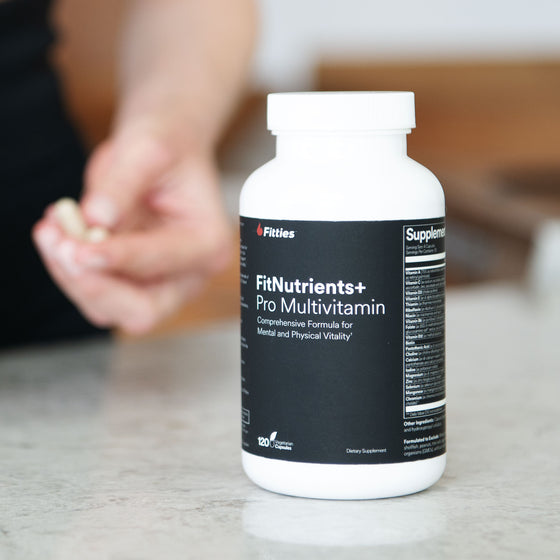
FitNutrients+
FitNutrients+ pairs metabolically active B vitamins, such as methylcobalamin and pyridoxal 5'-phosphate, with Albion chelated minerals in a four-capsule daily serving. Not a generic one-a-day; a comprehensive formula built for people who push harder than average.
Shop FitNutrients+