The Fitties Journal
How to Read a Pre-Workout Label
Key Takeaways
Here's what matters most if you're short on time.
- The Supplement Facts panel is where a pre-workout label carries comparable numbers; read it before anything else.
- A caffeine figure you can trust is one listed against caffeine itself; inside a blend or a botanical extract the exact amount can be hidden.
- Transparent dosing of key performance ingredients like creatine matters more than total ingredient count.
- Third-party testing claims are only meaningful if the brand provides a way to verify them.
- Design intensity and ingredient list length tell you about marketing budget, not formula quality.
Most pre-workout labels are designed to sell, not to explain. Oversized numbers, aggressive typography, and long ingredient lists create the impression of power, but they rarely help you understand what you are actually consuming. The amounts per serving are buried in the Supplement Facts panel, and most people skip it entirely.
That is a problem, because the Supplement Facts panel is the section that carries standardized, comparable numbers. It is not the only regulated part of the label. FDA rules cover the whole package, and front-of-package claims have to be truthful and not misleading. What the front does not have to be is comparable. The claims, the marketing language, the bold design all exist to shape perception. If you want to make an informed decision about what you put in your body before training, you need to know how to read the part that gives you numbers.
This guide walks through how to evaluate a pre-workout label step by step, what to focus on, what to ignore, and how to tell whether a formula is built for performance or just for packaging.
Start With the Supplement Facts Panel
The Supplement Facts panel is the single most important section on any pre-workout label. For most supplements it is required by the FDA under 21 CFR 101.36, follows a standardized format, and lists the dietary ingredients, their amounts per serving (or a single total for a proprietary blend), and percent daily values where applicable.
Before reading anything else on the package, look here. This panel tells you the serving size, how many servings the container holds, and what each serving actually delivers. If a pre-workout cannot survive scrutiny at this level, the front-of-package claims are irrelevant.
Here are three things to check immediately.
- Serving size provides context for every number that follows. Compare products per serving, not by scoop size or container weight. A bigger scoop does not mean a better formula.
- Active ingredient amounts should be listed individually. If key performance ingredients are grouped into a single blend total, evaluation becomes much harder.
- Other Ingredients is the section listing flavoring agents, sweeteners, and mixability aids. These affect taste and texture, not performance, and should not distract from functional ingredients.
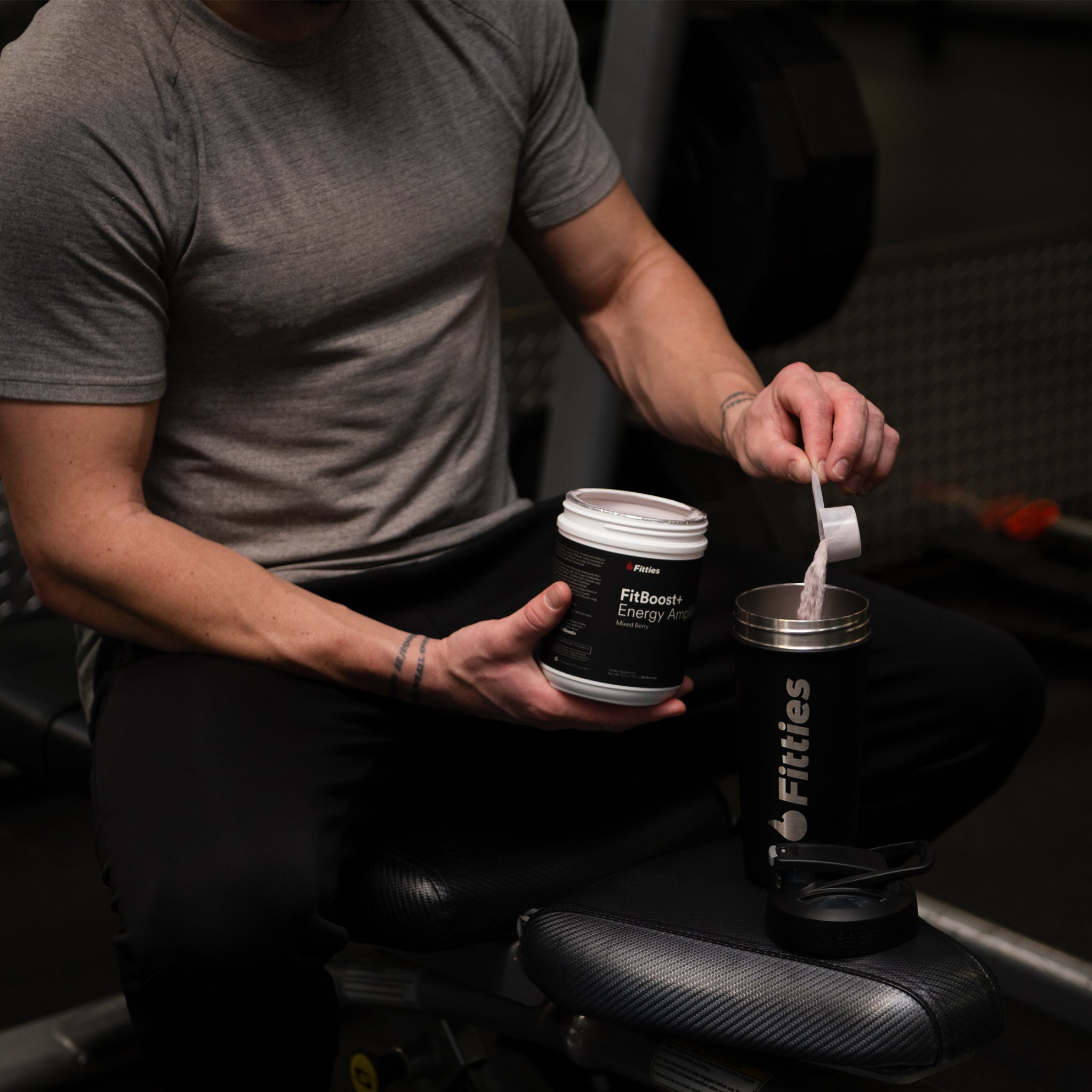
FitBoost+
95 mg of caffeine from a blend that includes a caffeine pterostilbene co-crystal. Creatine, Peak ATP, and electrolytes individually dosed. No artificial sweeteners, no synthetic colors, no guessing.
Shop FitBoost+Know What the Product Is Designed to Do
Not every pre-workout is built for the same purpose. Some focus on immediate energy and alertness. Others emphasize endurance, focus, or sustained performance across longer sessions. Some are designed for occasional high-stimulation use, while others are formulated for consistent daily training.
Understanding the intended purpose helps you evaluate whether the ingredient profile makes sense. A pre-workout claiming to support explosive energy, razor focus, and maximum endurance with a single proprietary blend of 300 mg is making promises the formula cannot support. Purpose-driven formulas are specific about what they do and how the ingredients contribute.
Score Your Pre-Workout Label
You now know where to look on the panel. Before going further, go get whatever is in your cabinet and run it through the scorecard. Seven questions, about two minutes, and you will know where your current product stands. The sections that follow explain why each of those seven questions matters.
Transparent Dosing vs. Proprietary Blends
Transparent dosing means each ingredient is listed with its individual amount per serving. This allows you to evaluate the formula, compare products, and determine whether the ingredient levels align with the product's stated purpose.
A proprietary blend groups multiple ingredients under a single total weight. For example, a label might list "Performance Blend: 500 mg" followed by five ingredients in descending order by weight, but without individual amounts. This makes it impossible to know how much of each ingredient you are getting.
Proprietary blends are not inherently unsafe. But they make evaluation difficult, which is why they tend to favor the manufacturer over the consumer. When evaluating a product that uses a blend, focus on whether the most critical ingredients, specifically caffeine, creatine, and any primary performance compounds, are dosed individually and disclosed clearly. A formula that individually doses its key ingredients but groups supporting herbs and amino acids into a blend is far more transparent than one that hides everything under a single number.
Caffeine: The Non-Negotiable Disclosure
Caffeine is the most widely used ingredient in pre-workout supplements, and its dosage should never be hidden. It should always be listed with an exact milligram amount per serving, either as a standalone line item or with a clear total caffeine disclosure.
When caffeine is buried inside a proprietary blend, or comes from a botanical extract whose listed weight counts the extract rather than the caffeine in it, managing your intake becomes guesswork. The same is true when several stimulant sources are stacked without a clear total. That matters because caffeine sensitivity varies widely, and many people consume caffeine from multiple sources throughout the day.
High-stimulation pre-workouts may feel powerful in the short term, but excessive or unpredictable caffeine intake often reduces consistency, disrupts sleep quality, and increases the likelihood of energy crashes. A formula designed for repeatable daily use typically keeps caffeine moderate and clearly disclosed.
Performance Ingredients Worth Looking For
Beyond caffeine, only a few ingredients have good evidence for improving exercise performance, and creatine is one of them (Maughan et al., 2018); electrolytes and B vitamins play supporting roles. When evaluating a pre-workout, look for whether these ingredients are present and whether they are dosed transparently.
Creatine monohydrate is one of the most thoroughly studied performance ingredients in sports nutrition (NIH Office of Dietary Supplements). It plays a role in energy production during high-intensity exercise and has been studied extensively for its effects on strength, power output, and exercise capacity. If a pre-workout includes creatine, it should be dosed individually, not hidden in a blend.
Electrolytes support hydration, muscle contraction, and nerve signaling during exercise. Sodium, potassium, and magnesium are the key minerals to look for. Many pre-workouts include electrolytes at token levels that look good on a label but contribute little functionally. Check amounts, not just presence.
B vitamins are essential parts of the biochemical processes that convert food into cellular energy. Activated forms (like pyridoxal 5'-phosphate for B6, methylcobalamin for B12) indicate a formula designed for bioavailability rather than label decoration.
Other ingredients like adenosine triphosphate (ATP), taurine, and L-arginine alpha-ketoglutarate appear in some formulas with varying levels of research support. Evaluate them in context. Are they individually dosed, and do they align with the product's stated purpose?
Third-Party Testing: What It Means and How to Verify
"Third-party tested" is one of the most common claims on supplement labels, and one of the least consistently meaningful. The term indicates that an independent lab has verified some aspect of the product, whether that is ingredient identity, purity, potency, or the absence of contaminants.
The claim matters only if you can verify it. Meaningful verification includes batch or lot numbers on the packaging, certificates of analysis available on request or through a website, QR codes linking to test results, or clear identification of the testing organization.
If a product says "third-party tested" with no way to confirm that claim, it is functioning as marketing language, not a quality assurance signal. Manufacturing in a cGMP-compliant facility (current Good Manufacturing Practices, as defined by the FDA) is a meaningful quality baseline, but it is also the legal minimum. Every supplement sold in the United States has to be made that way. cGMP applies to the manufacturing process, not the final product's efficacy.
What to Ignore on a Pre-Workout Label
Some elements of a pre-workout label exist entirely to influence perception. Recognizing them saves time and prevents buying decisions based on packaging rather than substance.
- Long ingredient lists without clear purpose. More ingredients do not mean a better formula. If a label lists 15+ ingredients but groups most of them into a single proprietary blend, many are likely present at trace amounts.
- Oversized numbers without context. A front-of-package claim like "5,000 mg formula" tells you nothing about what those milligrams contain or how they are distributed.
- Sensation-focused language. Words like "explosive," "insane," "extreme," and "maximum overdrive" describe a marketing angle, not a functional effect.
- Aggressive packaging design. Label design reflects marketing budget and target demographic, not formula quality. Some of the best-formulated products on the market use the simplest packaging.
What a Clean Pre-Workout Label Looks Like in Practice
FitBoost+ is a useful example of a pre-workout label built around the principles covered in this guide. Its creatine monohydrate (3 g) and Peak ATP® adenosine triphosphate (400 mg) are individually dosed outside of any blend. Caffeine content is clearly disclosed at 95 mg per serving, from a blend that includes a caffeine pterostilbene co-crystal.
The formula also includes electrolytes (sodium, potassium, and magnesium), B vitamins in their activated forms, and antioxidants including vitamin C and s-acetyl-L-glutathione. It uses no artificial sweeteners, no synthetic colors, and is manufactured in a GMP compliant facility. The supporting herbs and amino acids are grouped in a proprietary blend, but the total caffeine yield is disclosed, and the primary performance compounds stand on their own.
That kind of label structure makes evaluation straightforward. You can see what you are getting, compare it against your needs, and decide whether it fits your training approach.
Using This Knowledge Going Forward
A pre-workout label is not decoration. It is the most direct source of information about what a product contains and how it is formulated. Once you understand how to read the Supplement Facts panel, evaluate caffeine disclosure, and verify quality claims, most products either qualify or eliminate themselves quickly.
The best pre-workout for your training is not the loudest, the most expensive, or the one with the longest ingredient list. It is the one whose label you can actually read, understand, and trust, and whose formula supports the kind of training you do consistently. And if you would rather skip the tub altogether, there are effective natural pre-workout options built from whole foods.
If you are adding a pre-workout to your supplement routine, take the time to read the label the same way you would read a nutrition label on food. Your training deserves the same level of scrutiny. And as always, consult a healthcare professional before starting any new supplement, especially if you take medication or have a sensitivity to caffeine.


FitBoost+
95 mg of caffeine from a blend that includes a caffeine pterostilbene co-crystal. Creatine, Peak ATP, and electrolytes individually dosed. No artificial sweeteners, no synthetic colors, no guessing.
Shop FitBoost+