The Fitties Journal
How to Read Supplement Labels
Key Takeaways
Here's what matters most if you're short on time.
- The Supplement Facts panel is required by the FDA and is where the label carries numbers you can compare.
- Ingredients are listed by weight, but the form of each ingredient matters as much as the amount.
- Proprietary blends hide individual dosages, making it impossible to evaluate whether a formula delivers effective amounts.
- "Other Ingredients" reveals sweeteners, fillers, and allergens that the front label rarely mentions.
- Third-party testing and cGMP manufacturing claims only matter if they can be verified.
Most people pick up a supplement, glance at the front label, and make a decision based on whatever bold claim caught their eye. That is exactly what the packaging is designed to do.
The front of a supplement label sells. The back informs. Both are regulated, but the back is where the numbers are. Learning to read it, specifically the Supplement Facts panel, is the single most useful skill for anyone spending money on supplements. It takes five minutes to learn and saves you from years of buying overpriced formulas that look impressive but deliver very little.
This guide walks through every section of a supplement label, explains what each part actually tells you, and shows you how to spot the differences between transparent formulas and ones designed to obscure what you are really getting.
The Supplement Facts Panel: Where the Numbers Are
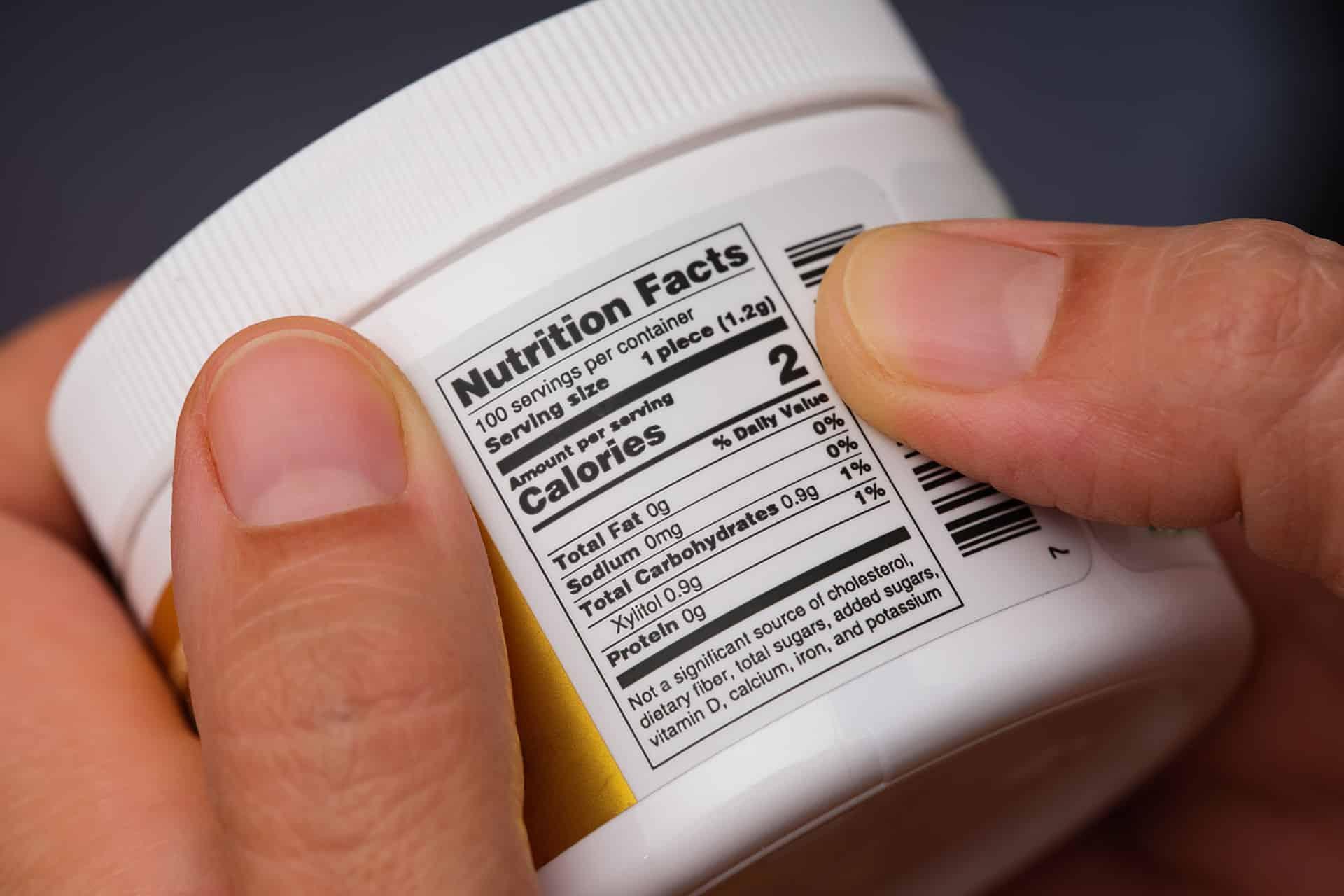
The FDA requires every dietary supplement sold in the United States to carry a Supplement Facts panel, with narrow exemptions. This panel is where the label carries numbers you can verify and compare against another product. It is not the only regulated part of the package. FDA labeling rules reach the whole label, including the front, where the product name and the net quantity have to appear. What sets the panel apart is that front-of-label phrases like "maximum strength" or "advanced formula" have no standardized definition, while the panel is data.
Here is what each section tells you and why it matters.
Serving Size and Servings Per Container
Serving size defines the amount of product that corresponds to the nutrient amounts listed below it. This sounds straightforward, but it is one of the most common sources of confusion. A product might list impressive ingredient amounts per serving, but if the serving size is three capsules or two scoops, the per-unit amount is less impressive than it appears. Always check whether the serving size is realistic for daily use.
Servings per container tells you how long the product will last at the recommended dose. Divide the price by servings per container to get your actual cost per serving, which is the only meaningful way to compare value across products.
Active Ingredients and Amounts
This is the core of the panel. Each active ingredient is listed with its amount per serving and, where applicable, its % Daily Value. Two things matter here beyond just the ingredient names.
First, the form of the ingredient. Not all forms are created equal. Magnesium oxide, for example, is cheap and common, but forms that dissolve well in liquid, such as citrate, tend to be absorbed better, according to the NIH Office of Dietary Supplements. The same principle applies to B vitamins (methylcobalamin vs. cyanocobalamin), folate (methylfolate vs. folic acid), and minerals across the board. A label that specifies bioavailable forms is telling you something important about the manufacturer's priorities.
Second, the dosage. An ingredient can be present but underdosed. Seeing a compound listed on a label does not mean it is present in an amount that research supports as effective. This is where familiarity with key ingredients and their studied ranges becomes valuable over time.
FitNutrients+, for example, uses methylcobalamin for B12, pyridoxal 5'-phosphate for B6, Quatrefolic® methylfolate for folate, and Albion chelated minerals throughout its formula. Each of these is the metabolically active or highly bioavailable form, individually dosed on the label. That level of specificity is something you can verify yourself once you know what to look for.
% Daily Value
The % Daily Value (%DV) column shows how much of a nutrient one serving provides against the reference intake the FDA has set for it. For the vitamins and minerals on most supplement panels that reference is a fixed daily amount, not a share of a calorie target. The 2,000-calorie footnote you may see at the bottom of a panel applies only to the calorie-based nutrients such as total fat and carbohydrate. The %DV is a useful general benchmark, but context matters.
Water-soluble vitamins like B12 and vitamin C can appear at several hundred percent of the DV or more; the NIH Office of Dietary Supplements notes that basic multivitamins keep most nutrients at or below the DV, while high-potency formulas carry some well above it. That is fine for B12, which has no upper limit because it is generally considered safe even at high doses (NIH ODS). Vitamin C is different. Adults have an upper limit of 2,000 mg a day, because high doses can cause diarrhea, nausea, and cramps (NIH ODS). Fat-soluble vitamins (A, D, E, K) are stored in body tissue rather than excreted, so a very high intake is worth raising with your healthcare provider. The DV is not the line for that. It is the reference intake a serving is measured against, not a safety ceiling. Minerals like iron and zinc have established upper limits where excess intake can cause problems.
For nutrients without an established Daily Value, the label will show a symbol instead of a percentage, usually an asterisk, keyed to a footnote reading "Daily Value not established". This is common for newer or specialty ingredients like acetyl-L-carnitine, alpha-lipoic acid, or branded compounds. The absence of a DV does not mean the ingredient is unresearched; it means the FDA has not set a reference intake for it.
FitNutrients+
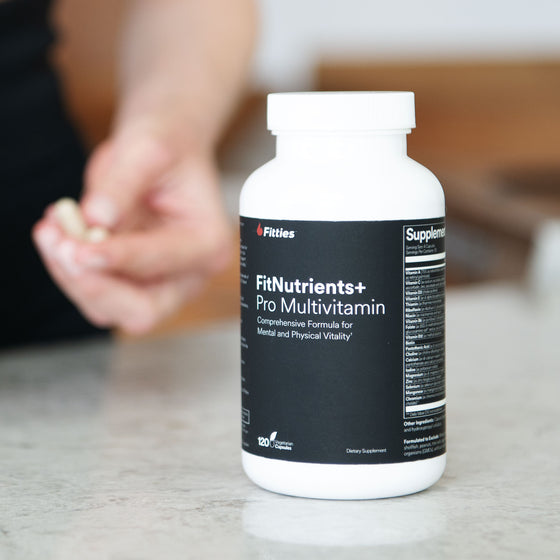
FitNutrients+ uses metabolically active B vitamins, Albion chelated minerals, and ingredients like 500 mg of acetyl-L-carnitine and 100 mg of alpha-lipoic acid. Every ingredient is individually dosed on the label. No proprietary blends, no mystery.
Shop FitNutrients+Proprietary Blends: What They Hide
A proprietary blend lists several ingredients under a single combined weight. The total weight of the blend is disclosed, but the individual amounts of each ingredient within it are not. The label might show "Energy Blend 500 mg" containing caffeine, taurine, green tea extract, and three other compounds, with no way to know whether the caffeine accounts for 400 mg of that total or 50 mg.
Companies sometimes justify proprietary blends as trade secret protection. In practice, they more often serve to mask underdosing. If a formula contains six ingredients at a combined 500 mg, simple math tells you that most of those ingredients cannot be present at meaningful amounts.
Transparent labeling, where every ingredient is individually dosed, removes the guesswork entirely. You can verify the formula yourself, compare it to published research, and make an informed decision. Most Fitties products follow this approach, listing each ingredient with its individual amount. Where a proprietary blend is used, the label still names every compound in it.
Not every proprietary blend is worthless. Some contain well-researched compounds at effective doses. But without individual amounts, you are trusting the manufacturer's word rather than verifying with your own eyes. When a brand gives you the information upfront, that tells you something about their confidence in the formula.
Other Ingredients: The Section Most People Skip
Below the active ingredients, you will find the "Other Ingredients" section. This lists everything in the product that is not an active compound, including capsule materials, sweeteners, flavoring agents, flow agents, preservatives, and colorants.
This section deserves more attention than it typically gets. It is where you will find artificial sweeteners (sucralose, acesulfame potassium), artificial colors (FD&C dyes), and common allergens. It is also where filler ingredients show up, things like maltodextrin, silicon dioxide, or magnesium stearate, which serve manufacturing purposes but add nothing to the formula's function. Sweeteners in particular reward a closer look, and our 6-point sweetener label check covers which sweeteners the FDA has approved as food additives, which are treated as Generally Recognized As Safe (GRAS) instead, and what quietly stands in for the approved ones.
A short Other Ingredients list with recognizable components is generally a positive signal. Fitties products, for example, are formulated to exclude artificial colors and artificial sweeteners. Most are also formulated to exclude wheat, gluten, soy, and dairy. That information is stated directly on each label under "Formulated to Exclude," which brings us to the next section worth reading.
Allergen Statements and Exclusion Lists
Allergen information can appear in several places on a supplement label, within the Other Ingredients section, as a separate "Contains" statement, or as a "Formulated to Exclude" list. If you manage food allergies or intolerances, check all of these areas.
"Formulated to Exclude" statements are proactive. Rather than only disclosing what the product contains, they tell you what the manufacturer intentionally left out. This is especially useful for people with multiple sensitivities. FitPlant+, for instance, is formulated to exclude wheat, gluten, yeast, soy protein, animal and dairy products, fish, shellfish, peanuts, tree nuts, egg, sesame, artificial colors, and artificial sweeteners.
Manufacturing and Quality Claims
Labels often include quality-related claims like "Made in the USA," "GMP Certified," or "Third-Party Tested." These mean different things, and not all of them are equally verifiable.
cGMP Compliance
Current Good Manufacturing Practices (cGMP) are FDA regulations that govern how supplements are manufactured, tested, and stored. cGMP compliance means the facility sets its own written specifications for identity, purity, strength and composition and for limits on contamination, verifies batches against them, and keeps records showing it did. It is a meaningful quality baseline, but it is also the legal minimum.
Third-Party Testing
Third-party testing means an independent laboratory has verified aspects of the product, which could include ingredient identity, potency, purity, or the absence of contaminants like heavy metals and pesticides. The value of this claim depends entirely on specifics. Look for named certification programs (NSF International, USP, Informed Sport) or accessible certificates of analysis. A vague "third-party tested" claim without supporting documentation is difficult to verify. Fitties products are manufactured in a GMP compliant facility. That is a manufacturing standard, not an independent product certification program, and Fitties does not claim one.
"Made in the USA"
Under the FTC's rule, this means all or virtually all of the product, ingredients included, is made and sourced in the United States. "Manufactured in the US" on its own counts as the same claim. That is a claim about where manufacturing happened, not extra FDA oversight. cGMP rules apply to any supplement sold in the United States, wherever it was made. It does not necessarily mean all raw ingredients were sourced domestically. Premium ingredient sourcing often involves international suppliers, particularly for patented or trademarked compounds. FitWhey+, for example, sources its whey protein concentrate from New Zealand cattle that are pastured, grass-fed, and raised without rBST or rBGH.
Front-of-Label Claims: Read With Skepticism
The front of a supplement label is where the marketing lives. The mandatory parts of it are tightly specified, but the descriptive claims around them are not. Terms like "clinical strength," "maximum potency," "doctor recommended," and "advanced formula" have no standardized definitions. They are designed to create an impression, not convey measurable information.
Structure/function claims like "supports immune health" or "promotes healthy energy production" are permitted, provided they describe an effect on the structure or function of the body and do not state or imply an effect on a disease or its characteristic signs or symptoms. These claims must be truthful, not misleading, and substantiated before they are made, and the manufacturer must notify the FDA no later than 30 days after first marketing a product bearing the claim. Such claims do not require pre-approval. A product carrying one must also bear the disclaimer, in wording that may not be paraphrased: "This statement has not been evaluated by the Food and Drug Administration. This product is not intended to diagnose, treat, cure, or prevent any disease." Where a label carries more than one such claim, it can repeat that disclaimer with each claim, or carry a single plural version instead, identical except for its opening sentence: "These statements have not been evaluated by the Food and Drug Administration."
The best approach is to treat front-of-label claims as a starting point, then verify everything against the Supplement Facts panel on the back. If the claims on the front do not align with what the panel shows, the panel wins.
Putting It All Together
Reading a supplement label is not about memorizing every ingredient or becoming a nutrition scientist. It is about knowing where to look and what questions to ask. Start with the Supplement Facts panel. Check ingredient forms. Look for individual dosing over proprietary blends. Read the Other Ingredients section. Verify quality claims where possible.
Once you build this habit, evaluating supplements takes less than a minute per product. Most products eliminate themselves quickly when you know what the label is actually telling you, and the ones that hold up under scrutiny are worth your investment. One more number worth understanding is the date. Here is what the best by date on protein powder means, since it signals quality rather than a safety cutoff.
As with any supplement, consult a healthcare professional before making changes to your regimen, especially if you take prescription medication or have specific health concerns.
FitNutrients+
FitNutrients+ uses metabolically active B vitamins, Albion chelated minerals, and ingredients like 500 mg of acetyl-L-carnitine and 100 mg of alpha-lipoic acid. Every ingredient is individually dosed on the label. No proprietary blends, no mystery.
Shop FitNutrients+