
The Fitties Journal
Albion Chelated Minerals and TRAACS: What 5 Human Trials Found
Key Takeaways
Here's what matters most if you're short on time.
- A chelated mineral is a mineral bound to an amino acid, such as glycine, in a ring-shaped structure.
- In small single-dose trials, zinc bisglycinate beat zinc gluconate and magnesium bisglycinate beat magnesium oxide on blood measures.
- In a 60-day trial of 46 healthy people, magnesium citrate gave the highest mean serum magnesium, ahead of an amino acid chelate.
- Europe's food safety authority found insufficient evidence that the di-magnesium and di-calcium malates it reviewed differ from ordinary malates.
- US adult upper limits apply to the mineral, whatever the form, and are 350 mg a day of supplemental magnesium and 40 mg a day of zinc.
- FitNutrients+ lists each mineral's form and amount per four-capsule serving, including di-magnesium malate and zinc bisglycinate chelate.
Albion® chelated minerals are mineral forms from Albion Laboratories, Inc. in which a mineral such as zinc or magnesium is bound to an amino acid such as glycine. The Albion name also covers malates such as di-magnesium malate. TRAACS®, DimaCal® and the Albion Gold Medallion® on the same labels are trademarks, not ingredients.
Do they absorb better? It depends on the mineral. In small single-dose trials in healthy volunteers, zinc bisglycinate beat zinc gluconate (Gandia et al., 2007), and magnesium bisglycinate beat magnesium oxide in an unpublished trial from Albion's dossier, as reported by the European Food Safety Authority (EFSA). But magnesium citrate, a plain organic salt, gave the highest mean serum magnesium in a 60-day trial of 46 people that included an amino acid chelate (Walker et al., 2003). Chelated is a chemistry term, not a promise.
What is a chelated mineral?
A chelate is a metal bonded to a molecule in a way that forms a ring. Albion's own patent (U.S. patent 7,838,042) describes a properly formed amino acid chelate as a stable product with one or more five-membered rings, made when the amino acid's carboxyl oxygen and alpha-amino group each bond to the metal. Its example is glycine, typically two per atom of a mineral like zinc or magnesium, the "bis" in bisglycinate.
Albion's malates pair the mineral with malic acid instead. Its European dossier described di-calcium malate as a salt of two calcium ions and one malic acid, and EFSA found insufficient evidence that either malate differs from the plain malates already permitted in EU food supplements (EFSA's opinions on di-calcium malate and di-magnesium malate).
FitNutrients+
FitNutrients+ is a daily multivitamin and mineral formula, four capsules per serving. Nine of its ten minerals include a form its label credits to Albion, such as di-magnesium malate and zinc bisglycinate chelate, and every amount is listed per serving.
Shop FitNutrients+What do Albion, TRAACS and DimaCal mean on a label?
They are brand marks on the supplier's forms, not extra ingredients or amounts. The FitNutrients+ label lists all four as registered trademarks of Albion Laboratories, Inc., while the FitPlant+ labels credit Albion and the Gold Medallion to Balchem Corporation or its subsidiaries.
- Albion: the brand name. Albion Laboratories, Inc. submitted the European dossiers on di-calcium malate and di-magnesium malate.
- TRAACS: the mark Fitties labels put on chelates such as the magnesium lysinate glycinate chelate in FitNeuro and the chromium nicotinate glycinate chelate in FitFast.
- DimaCal: listed among Albion's trademarks on the FitNutrients+ label, which does not say which ingredient carries it.
- Albion Gold Medallion: a registered design mark, the "Albion Gold Medallion Design" in the FitNutrients+ product research document.
Are chelated minerals better absorbed? What the research shows

Absorption is the whole sales pitch for chelates. A 2026 review of magnesium noted that manufacturers often promote different forms with claims of better absorption or organ-specific effects, and that many advertised magnesium benefits need more high-quality evidence (Sankararaman et al., 2026). So here is the human research, mineral by mineral.
Two cautions before the data. "Chelated" and "organic" are not the same thing. Magnesium citrate is an organic salt, not an amino acid chelate. And the trials below are small and short, and they measure mineral levels, not how anyone feels or performs. Still, the pattern against magnesium oxide is consistent. A 2021 systematic review of 14 studies comparing magnesium forms found that inorganic forms appear less bioavailable than organic ones and that the share absorbed depends on the dose. It also found that all the magnesium supplements studied could maintain normal levels in healthy people without a prior shortfall (Pardo et al., 2021).
Magnesium
In a randomized, double-blind trial, 46 healthy people took 300 mg of magnesium a day for 60 days as an amino acid chelate, citrate or oxide, or a placebo (Walker et al., 2003). By 24-hour urinary magnesium, the two organic forms, citrate and the chelate, showed greater absorption than oxide at 60 days. Citrate gave the highest mean serum magnesium 24 hours after the first dose and at 60 days, and oxide showed no differences from placebo.
In an unpublished 2007 crossover trial from Albion's dossier, described by EFSA, 14 healthy volunteers took single 150 mg doses of magnesium on separate visits as bisglycinate chelate, buffered bisglycinate chelate, di-magnesium malate and oxide, and oxide's serum response was significantly lower than the other three (EFSA's di-magnesium malate opinion). EFSA judged that if di-magnesium malate dissociates, its magnesium availability would appear similar to other permitted sources. Our magnesium supplements guide covers the other common forms.
Zinc
In a crossover study of 12 healthy female volunteers, a single 15 mg dose of zinc bisglycinate produced 43.4 percent higher bioavailability than zinc gluconate (Gandia et al., 2007). In a 6-week trial in 30 young adult women taking 60 mg of zinc a day, plasma zinc rose with zinc glycinate but showed no significant change with gluconate or placebo (DiSilvestro et al., 2015).
The caveats are that 60 mg is above the 40 mg a day adult upper limit, which the National Academies based on zinc's effect on copper status (National Academies zinc report), and a 2024 review funded by a supplement company and written mostly by its employees cautions that there are few studies per zinc form (Devarshi et al., 2024).
What about the other Albion forms?
For magnesium lysinate glycinate chelate, selenium glycinate complex and the chromium, manganese, molybdenum and vanadium chelates on Fitties labels, our Europe PMC searches found no published human trials comparing them with other forms of the same mineral. That is not evidence they absorb poorly.
Is dicalcium malate better than calcium citrate?
We found no published trial comparing dicalcium malate directly with calcium citrate. The one human comparison we found is in Albion's dossier. In a 2007 crossover trial, 15 healthy volunteers took single 900 mg doses of calcium on separate occasions as di-calcium malate, two calcium amino acid chelates and calcium carbonate. Total absorption (area under the curve) did not differ significantly, and carbonate appeared to be absorbed most efficiently. EFSA noted that such a high dose may saturate calcium uptake and hide differences, and judged that calcium from di-calcium malate would appear similar to other permitted sources (EFSA's di-calcium malate opinion).
The National Academies report that calcium citrate depends less on stomach acid than carbonate, so it can be taken without food, and appears better absorbed, though studies disagree on whether that holds with food. Citrate is about 21 percent calcium by weight, versus 40 percent for carbonate (National Academies calcium report), and Albion's dossier put di-calcium malate at 29 percent or more.
So the evidence does not say dicalcium malate beats citrate. The five trials above, side by side (Walker et al., 2003; EFSA's di-magnesium malate opinion; Gandia et al., 2007; DiSilvestro et al., 2015; EFSA's di-calcium malate opinion, above).
| Mineral | Who and how much | What was found |
|---|---|---|
| Magnesium | 46 healthy people, 300 mg a day for 60 days | Citrate and an amino acid chelate beat oxide on urinary magnesium; citrate had the highest serum magnesium |
| Magnesium | 14 healthy volunteers, single 150 mg doses (unpublished) | Oxide significantly lower than bisglycinate chelate, buffered bisglycinate chelate and di-magnesium malate |
| Zinc | 12 healthy female volunteers, single 15 mg dose | Bisglycinate 43.4% more bioavailable than gluconate |
| Zinc | 30 young adult women, 60 mg a day for 6 weeks | Plasma zinc rose with glycinate, not with gluconate or placebo |
| Calcium | 15 healthy volunteers, single 900 mg doses | No significant difference between di-calcium malate, two calcium amino acid chelates and carbonate |
Are chelated minerals safe? Side effects and cautions
Upper limits are set for the mineral, not the form, and for adults at 350 mg a day of supplemental magnesium and 40 mg a day of zinc from all sources (National Academies magnesium and zinc reports). Diarrhea is the first sign of too much magnesium from nonfood sources, and magnesium from food does not count toward that limit.
Kidney function matters. Too much magnesium in the blood can occur with impaired kidney function, most often alongside large nonfood intakes such as antacids. In the small trials above, no one left the 14-person magnesium study over side effects (EFSA's di-magnesium malate opinion) and zinc bisglycinate was reported as well tolerated (Gandia et al., 2007).
If you take medication, are pregnant or nursing, or have a kidney or other health condition, talk to your healthcare provider first. The FitNutrients+ label says to consult your healthcare professional before use, that individuals taking medication should discuss potential interactions with their healthcare professional, and not to use it if the tamper seal is damaged.
How much should you take, and when?
Take the amount on the label and count every product toward the same upper limits. The FitNutrients+ directions are four capsules daily, or as directed by your healthcare professional. On timing, calcium citrate can be taken without food, while carbonate relies more on stomach acid (National Academies calcium report), and food likely counteracts the osmotic, diarrhea-causing effect of magnesium salts (National Academies magnesium report).
Which Fitties formulas use Albion minerals?

Six Fitties formulas list Albion forms on their Supplement Facts panels. The featured one here is FitNutrients+, a daily multivitamin and mineral formula of four capsules per serving, with 30 servings in 120 vegetarian capsules. Nine of its ten minerals include a form its label footnotes to Albion. Calcium and potassium are split. Part comes from di-calcium malate and potassium glycinate complex, and part from forms such as calcium ascorbate and potassium ascorbate. Iodine comes from potassium iodide, with no Albion footnote.
None of the trials in this article tested a Fitties formula, so read them as research on mineral forms, not as results for any product. The FitNutrients+ label carries the whole story on amounts. Each mineral, its form and its amount per serving is printed, with no proprietary blend hiding a number and each form named in parentheses, such as "Magnesium (as di-magnesium malate)." Our guide to reading supplement labels covers how to read a panel like this.
| Mineral | Form on the label (Albion form listed first) | Per serving |
|---|---|---|
| Calcium | Di-calcium malate, d-calcium pantothenate, calcium ascorbate | 17 mg |
| Magnesium | Di-magnesium malate | 65 mg |
| Zinc | Zinc bisglycinate chelate | 2 mg |
| Selenium | Selenium glycinate complex | 17 mcg |
| Manganese | Manganese bisglycinate chelate | 0.09 mg |
| Chromium | Chromium nicotinate glycinate chelate | 89 mcg |
| Molybdenum | Molybdenum glycinate chelate | 8 mcg |
| Potassium | Potassium glycinate complex, potassium ascorbate | 17 mg |
| Vanadium | Vanadium nicotinate glycinate chelate | 134 mcg |
Five other formulas use Albion forms, per serving.
- FitNeuro (3 capsules): 200 mg of magnesium from di-magnesium malate and TRAACS magnesium lysinate glycinate chelate, both footnoted to Albion, plus magnesium L-threonate (split not stated).
- FitWell (2 capsules): magnesium 70 mg as magnesium lysinate glycinate chelate, zinc 3 mg as zinc bisglycinate chelate and selenium 50 mcg as selenium glycinate complex, footnoted to Albion and TRAACS.
- FitBoost+ (1 scoop; also contains caffeine): magnesium 150 mg as di-magnesium malate, plus zinc, manganese and chromium chelates, footnoted to Albion and TRAACS.
- FitPlant+ (2 scoops): calcium 45 mg, part as dicalcium malate, magnesium 25 mg as di-magnesium malate, and seven more minerals with a form footnoted to Albion.
- FitFast (1 capsule): chromium 7.5 mcg as chromium nicotinate glycinate chelate, footnoted as TRAACS, alongside berberine HCl and a brown seaweed blend.
Each label lists its own directions and cautions.
So, is chelated good or bad?
Neither, by default. Magnesium and zinc chelates beat oxide and gluconate in small trials (EFSA's di-magnesium malate opinion; Gandia et al., 2007), but the one magnesium chelate tested against citrate did not beat it (Walker et al., 2003). Read the amount first, the form second and the marketing last. More in all Fitties ingredient spotlights.
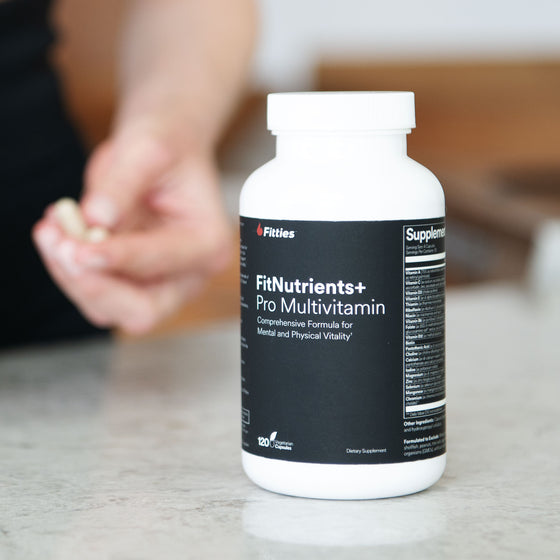
FitNutrients+
FitNutrients+ is a daily multivitamin and mineral formula, four capsules per serving. Nine of its ten minerals include a form its label credits to Albion, such as di-magnesium malate and zinc bisglycinate chelate, and every amount is listed per serving.
Shop FitNutrients+