The Fitties Journal
Berberine Supplements and InSea2: What the Research Shows
Key Takeaways
Here's what matters most if you're short on time.
- Berberine is a plant alkaloid with centuries of traditional use (Neag et al., 2018), and much of its modern clinical research looks at blood glucose metabolism (Imenshahidi and Hosseinzadeh, 2019).
- Most clinical trials have studied berberine in clinical populations, not healthy adults, so context matters when evaluating claims (Imenshahidi and Hosseinzadeh, 2019).
- In lab and animal research, berberine has been studied for a multi-pathway mechanism, including AMPK activation, gut microbiome modulation, and enzyme inhibition in the digestive tract (Zhou et al., 2007; Habtemariam, 2020; Liu et al., 2010).
- FitFast pairs 500 mg of berberine HCl with 250 mg of InSea2® in each capsule.
- Dosing in clinical studies has generally ranged from 500 to 1,500 mg per day, split into two or three doses (Dong et al., 2012).
- InSea2 is a polyphenol blend from two brown seaweeds; lab work shows it inhibits carbohydrate-digesting enzymes, while human trials so far are few and inconsistent (Roy et al., 2011; Keleszade et al., 2021).
If you've spent any time on health-focused social media in the last two years, you've probably seen berberine described as "nature's Ozempic," a "metabolic game-changer," or some variation of a miracle compound that the pharmaceutical industry doesn't want you to know about.
None of that is quite right. But the truth about berberine is more interesting than the hype. This is a compound with genuine research behind it, centuries of traditional use, and a mechanism of action that's worth understanding. The problem isn't berberine itself. The problem is that viral content has a way of turning nuanced science into irresponsible marketing copy.
So let's do this differently, starting with the short answer. Berberine is a plant alkaloid tested in numerous randomized clinical trials, mostly in clinical populations (Imenshahidi and Hosseinzadeh, 2019), usually at 500 to 1,500 mg a day (Dong et al., 2012). InSea2 is a polyphenol blend from two brown seaweeds with a much smaller, inconsistent human record (Keleszade et al., 2021). Here's what each one is, what the studies found, and how the two differ.
What Is Berberine?
Berberine is a naturally occurring plant alkaloid, a type of bioactive compound found in the roots, bark, and stems of several plant species. The most well-known sources include barberry (Berberis vulgaris), goldenseal (Hydrastis canadensis), and Oregon grape (Mahonia aquifolium).
Plants that contain berberine have a long history of use in traditional medicine in many parts of the world (Neag et al., 2018).
FitFast
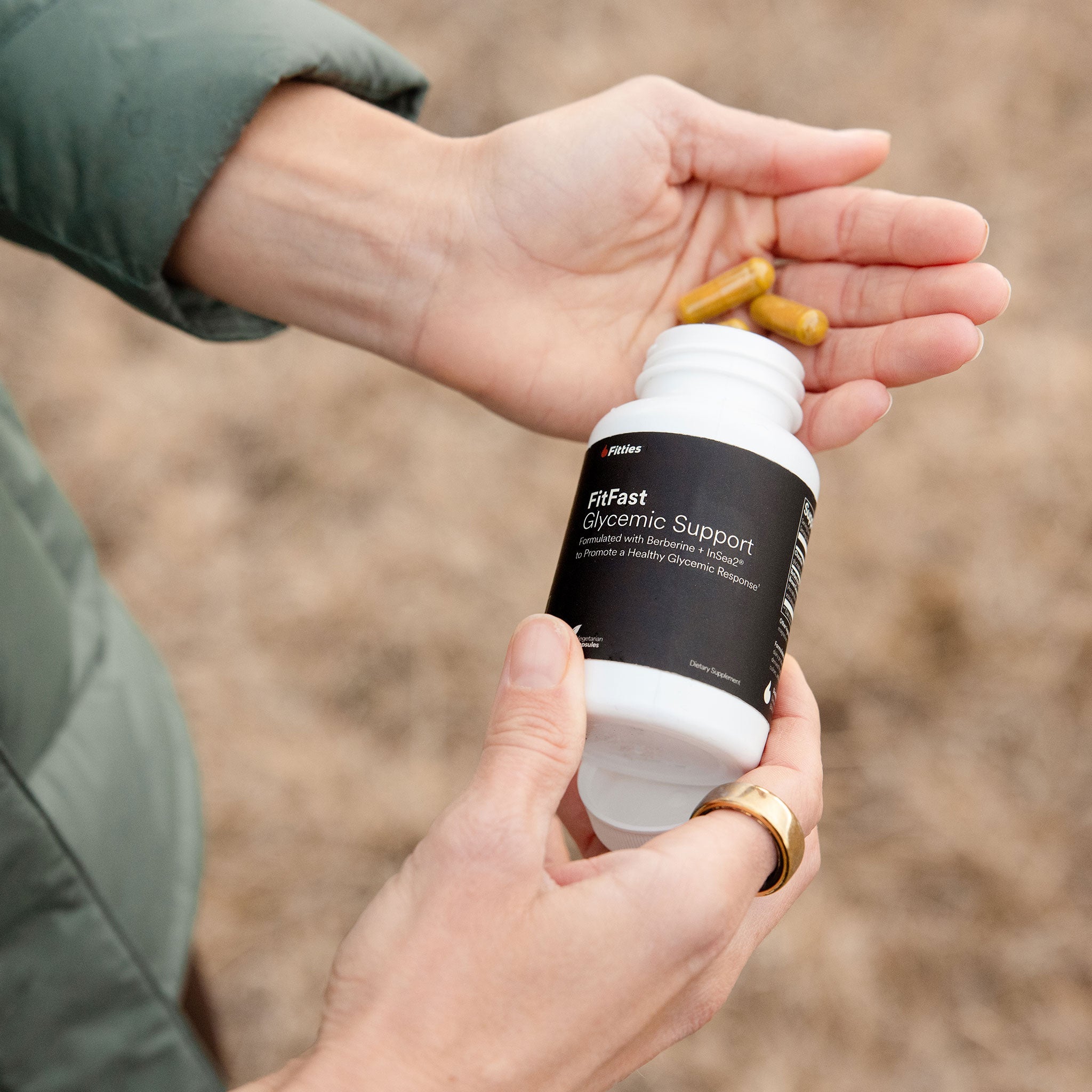
Each FitFast capsule pairs 500 mg of berberine HCl with 250 mg of InSea2, a brown seaweed polyphenol blend (Ascophyllum nodosum and Fucus vesiculosus). The label directs one capsule twice daily before meals. Formulated to exclude artificial sweeteners and ingredients derived from GMOs.
Shop FitFastHow Does Berberine Work?
What makes berberine interesting from a biochemistry perspective is that it doesn't appear to work through a single pathway. Laboratory and animal research points to a multi-pathway mechanism that touches several aspects of glucose metabolism, from glucose use in fat and muscle cells to glucose absorption in the gut (Pirillo and Catapano, 2015).
One pathway researchers have focused on involves AMP-activated protein kinase (AMPK), an enzyme that has been called a "metabolic master switch" (Winder and Hardie, 1999). AMPK works as a cellular energy sensor, and when it is activated it switches on energy-producing processes, including glucose uptake into cells (Hardie et al., 2012). In fat cells grown in the lab, berberine activated AMPK (Zhou et al., 2007), and a mouse study linked it to changes in the JNK and PPAR-alpha pathways as well, both involved in glucose and lipid metabolism (Zhang et al., 2011).
Beyond these signaling pathways, berberine has been observed to inhibit disaccharidases, the intestinal enzymes that break down sugars such as sucrose and maltose. In rat and cell studies, it lowered disaccharidase activity, and in normal rats it also lowered the rise in blood glucose after a sucrose or maltose load (Liu et al., 2010).
There's also a growing body of research into berberine's effects on the gut microbiome. One review argues that changes in the gut microbiota may help explain berberine's wide-ranging effects, including on blood glucose, despite how poorly it is absorbed (Habtemariam, 2020). For those interested in the gut health angle, our breakdown of the research on the B420 probiotic strain is worth reading alongside the berberine research.
What Does the Berberine Research Show?
The bulk of clinical research on berberine has been conducted in clinical populations, not healthy adults (Imenshahidi and Hosseinzadeh, 2019). This is a critical distinction that most viral berberine content ignores entirely. The trials have generally used 500 to 1,500 mg of berberine per day (Dong et al., 2012). Their results describe those patient groups, not healthy adults.
What we can say with confidence is that berberine has been tested in numerous randomized clinical trials (Imenshahidi and Hosseinzadeh, 2019), and the body of evidence is substantial enough to warrant serious attention. What we can't say is that it will produce the same effects in every population or that it's comparable to prescription medications. Those are different claims entirely.
What Is InSea2?
InSea2 is a branded blend of polyphenols derived from two species of wildcrafted brown seaweed, Ascophyllum nodosum and Fucus vesiculosus, from the North Atlantic Ocean.
It is a trademark of innoVactiv Inc., and it is an extract rather than ground-up whole seaweed. It is made from the seaweeds' polyphenols, including phlorotannins, which are found in some species of brown seaweed (Roy et al., 2011).
What Does the InSea2 Research Show?
The short version is a clear mechanism in the lab and a thin, mixed record in people. A company-funded 2021 review found that the evidence on these two seaweeds relies mainly on cell and small animal studies, with few studies in humans, and that many of the effects seen so far are inconsistent (Keleszade et al., 2021).
What happens in the lab and in animals
Alpha-amylase and alpha-glucosidase are digestive enzymes involved in breaking down carbohydrates. In lab work, this extract inhibited both in a dose-dependent way, and in animals it reduced the normal rise in blood glucose after a meal (Roy et al., 2011). That is a reason to run human trials, not a human result.
What the human trials found
For healthy adults, the published glucose evidence is thin. In a double-blind, placebo-controlled crossover trial, 23 healthy adults aged 19 to 59 took a single 500 mg dose 30 minutes before eating 50 g of carbohydrate from bread, and their blood glucose was tracked for three hours (Paradis et al., 2011). The glucose response did not differ significantly from placebo, and no adverse events were linked to the capsules.
Longer trials of this seaweed blend have been run in clinical populations rather than healthy adults (Keleszade et al., 2021), so the same caution about extrapolating from clinical research to healthy adults applies here too.
Are all brown seaweed extracts the same?
Brown seaweed extracts are not interchangeable. Extraction and processing methods likely change what they do, which may explain the inconsistent results (Keleszade et al., 2021). A different extract, made from Fucus vesiculosus alone, did not lower the blood glucose response in 38 healthy adults at 500 mg or 2,000 mg, in a trial partly funded by its maker (Murray et al., 2018). A label that just says "brown seaweed extract" tells you very little.
InSea2 vs Berberine: How Do They Differ?
They share a label in FitFast, but they are different ingredients with very different evidence bases. The doses and timing below come from the berberine trial review (Dong et al., 2012) and the InSea2 crossover trial (Paradis et al., 2011).
| At a glance | Berberine | InSea2 |
|---|---|---|
| What it is | A plant alkaloid | A polyphenol blend from two brown seaweeds |
| Main research focus | AMPK signaling, gut enzymes and the gut microbiome | Inhibiting alpha-amylase and alpha-glucosidase |
| Dose in the trials cited here | 500 to 1,500 mg a day, split into two or three doses | 500 mg once, 30 minutes before a carbohydrate meal |
| Human evidence | Numerous randomized trials, mostly in clinical populations | Few human studies, with inconsistent results |
None of the trials in this guide tested the two together, so the pairing is a formulation choice built on two separate bodies of research.
How Does FitFast Use Berberine and InSea2?
FitFast combines both ingredients at 500 mg of berberine HCl and 250 mg of InSea2 per capsule, along with 7.5 mcg of chromium as chromium nicotinate glycinate chelate.
The label lists the seaweed blend as Ascophyllum nodosum and Fucus vesiculosus at 20% polyphenols and directs one capsule twice daily before meals. Each dose therefore carries 250 mg of the blend, not the single 500 mg dose from the crossover trial, so that trial describes the ingredient, not FitFast's own dosing.
Dosing, Timing, and What to Look For
Clinical research has generally used 500 to 1,500 mg per day, split into two or three doses (Dong et al., 2012). FitFast delivers 500 mg of berberine HCl per capsule, with a recommended intake of one capsule twice daily before meals, totaling 1,000 mg per day. Those trials were run in clinical populations, not healthy adults, and none of them tested FitFast.
The "before meals" timing isn't arbitrary. It mirrors how the InSea2 research was run. In the crossover trial, participants took the extract 30 minutes before a 50 g carbohydrate meal (Paradis et al., 2011).
When evaluating any berberine supplement, here's what to look for.
- Berberine HCl form. It is the form used in trials like the one by Yin and colleagues, who call it the most popular form of berberine (Yin et al., 2008). If the label doesn't specify the form, that's a red flag.
- Adequate dose per serving. If a product delivers less than 500 mg per capsule, check how many capsules a serving takes. Some products use low doses per serving to keep costs down while creating the impression of a complete formulation.
- Transparent labeling. Every active ingredient should have its own line item with a specific milligram amount. Proprietary blends that lump berberine in with other ingredients without disclosing the individual dose are not giving you the information you need. If you're new to reading supplement labels, the guide to decoding supplement labels is a good starting point.
- Clean formulation. Check the "Other Ingredients" and "Formulated to Exclude" sections. FitFast is formulated to exclude wheat, gluten, yeast, soy, dairy, fish, shellfish, peanuts, tree nuts, egg, GMOs, artificial colors, and artificial sweeteners.
For a broader framework on how to evaluate supplements across categories, the supplement buyer's guide covers the quality markers that separate serious formulations from shelf fillers.
Who Should Consider Berberine
Most berberine research comes from clinical populations, so it can't tell healthy adults what to expect. If you use it, make it one part of a routine built on mindful carbohydrate management, consistent physical activity, and smart nutrition habits.
If you already structure how you eat, for example with time-restricted eating patterns, think of berberine as a small addition to that routine, not a substitute for it.
Are Berberine and InSea2 Safe? Side Effects and Cautions
In trials, berberine's reported side effects have mostly been mild and digestive. A 2019 review of 77 clinical studies found very low toxicity in usual doses, with mild gastrointestinal reactions in some patients (Imenshahidi and Hosseinzadeh, 2019), and trials in a 2012 review reported cases of mild diarrhea and mild-to-moderate constipation (Dong et al., 2012).
That said, berberine is not for everyone. If you are currently taking any medication that affects blood glucose levels, you should consult your healthcare professional before adding berberine to your routine. This isn't a disclaimer for the sake of disclaimers. Berberine's influence on glucose metabolism is well-documented enough that combining it with prescription medications without guidance could lead to unintended interactions. The FitFast label says to consult your healthcare professional prior to use, especially if you have a current medical condition or take prescription drugs, and not to use it if the tamper seal is damaged. Any berberine product without that kind of warning should raise questions about how seriously the manufacturer takes your safety.
Berberine can also change how the body handles other drugs. In a crossover study in 18 healthy young men, 300 mg three times a day for two weeks lowered the activity of three drug-metabolizing enzymes, CYP2D6, CYP2C9 and CYP3A4 (Guo et al., 2012).
Pregnant or lactating women should also consult their healthcare professional before use. The NIH's National Center for Complementary and Integrative Health notes that the berberine in goldenseal can be harmful to newborns and says women who are pregnant or breastfeeding should not use goldenseal.
For InSea2, the crossover trial linked no adverse events to the capsules (Paradis et al., 2011). Brown seaweed extracts can contain iodine, though (Keleszade et al., 2021), so if you have a thyroid condition or take iodine, mention any seaweed-based ingredient to your healthcare professional.
The Bottom Line
Berberine is a legitimately interesting compound. The multi-pathway mechanism has solid support from laboratory and animal research, the clinical trials, mostly in patient groups, are often small and of low methodological quality (Dong et al., 2012), and the traditional use history adds context that most trending supplements lack entirely.
What it doesn't deserve is the viral hype. Calling berberine "nature's Ozempic" doesn't just oversimplify the science; it sets expectations that no dietary supplement can meet and undermines the real value of the compound. The supplement industry has a long history of taking promising ingredients and hyping them into irrelevance. Berberine deserves better than that.
InSea2 is a different kind of ingredient, with a clear enzyme mechanism in the lab and a thin human record so far (Keleszade et al., 2021). Judge it on that record, not on the marketing around it.
If you're evaluating berberine supplements, focus on the research, the formulation, and the transparency of the brand behind it. Look for a disclosed dose of every ingredient and a company willing to show you exactly what's in the bottle. That's the standard, even if most of the market doesn't meet it.
And as with any supplement that influences metabolic pathways, talk to your healthcare professional before starting, especially if you have existing health conditions or take prescription medications. Smart supplementation starts with informed decisions.
For more breakdowns like this one, browse all Fitties ingredient spotlights.

FitFast
Each FitFast capsule pairs 500 mg of berberine HCl with 250 mg of InSea2, a brown seaweed polyphenol blend (Ascophyllum nodosum and Fucus vesiculosus). The label directs one capsule twice daily before meals. Formulated to exclude artificial sweeteners and ingredients derived from GMOs.
Shop FitFast