
The Fitties Journal
Keto Electrolytes: The 3 Minerals You Have to Replace (and How Much)
Key Takeaways
Here's what matters most if you're short on time.
- Keto lowers insulin, which prompts your kidneys to flush out sodium, potassium, and water, so mineral loss is fastest in the first days.
- The three electrolytes to prioritize on keto are sodium, potassium, and magnesium.
- Adults are advised to get 2,600 to 3,400 mg of potassium and 310 to 420 mg of magnesium a day, and most people fall short even before cutting carbs.
- Zero-sugar electrolyte sources fit keto, while sugary sports drinks add back the carbs keto removes.
- Keto flu symptoms usually appear within 2 to 3 days and ease within 2 to 4 weeks as you replace fluids and minerals.
On a ketogenic diet, the three electrolytes you have to replace are sodium, potassium, and magnesium. Cutting carbs lowers your insulin, and low insulin tells your kidneys to flush out sodium and the water attached to it instead of holding on. Potassium and magnesium go with it. That mineral drain, not the missing bread, is what leaves people headachy, crampy, and flat in their first week of keto. Put the minerals back and most of that goes away. Here is exactly which keto electrolytes matter, how much you need, and how to get them without pouring sugar back into your diet.
Why does keto flush out your electrolytes?

Insulin does more than manage blood sugar. It also signals your kidneys to hold on to sodium. When you eat carbs, insulin rises and sodium stays put. When you cut carbs on keto, insulin falls, that hold-on-to-sodium signal fades, and your kidneys start shedding sodium and water. Researchers call this the natriuresis of fasting, and the losses are steepest in the first one to four days of going low-carb. A 2025 scoping review found that fasting and keto-induction significantly lower serum sodium and potassium levels (Skartun et al., 2025).
This is also why the scale drops so fast in week one. Most of that early loss is water your body was holding along with its sodium. The problem is that the same flush strips out the electrolytes your muscles and nerves rely on to fire, and that is where the trouble starts.
Sugary sports drinks are the wrong tool for this. They solve a problem you do not have, topping off carbs, and ignore the one you do, replacing minerals. A drink built on sugar has no business in a diet built on cutting it. This is the part the mainstream hydration aisle quietly gets backwards.
FitBoost+
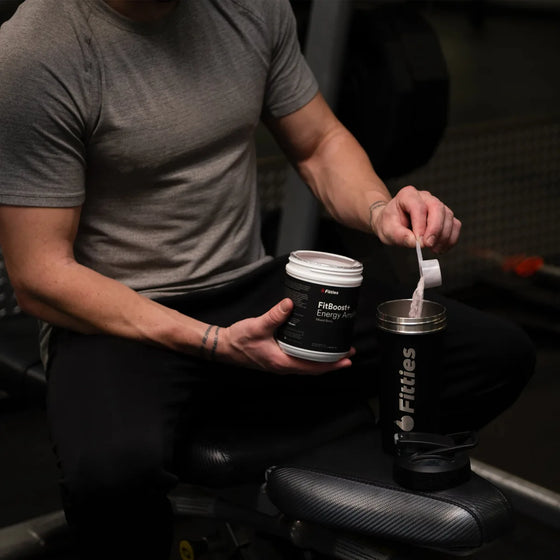
Each scoop of FitBoost+ has 150 mg of magnesium, 215 mg of potassium, and 135 mg of sodium, with 5 g of carbohydrate. It layers creatine and Peak ATP on top for training, with no added sugar and no artificial sweeteners. Just add water and skip the sugary hydration aisle.
Shop FitBoost+What is keto flu, and why do electrolytes help?
"Keto flu" is the cluster of symptoms that can hit in the first days of low-carb eating. They are headache, fatigue, brain fog, muscle cramps, dizziness, irritability, and constipation. It is not an actual infection, and it is usually short-lived. The same scoping review reports that symptoms typically appear within two to three days of starting keto and resolve within two to four weeks, and that they are rarely severe. Across the studies reviewed, reported rates in adults ran roughly 18 to 25 percent for fatigue, 8 to 25 percent for headache, and 3 to 37 percent for muscle cramps (Skartun et al., 2025).
Because those symptoms track the sodium, potassium, and water your kidneys are shedding, replacing fluids and minerals is the most commonly cited way to blunt them. Electrolytes will not make keto effortless, but they are the single biggest lever most people have in that first rough week.
The 3 electrolytes to replace on keto (and how much)
Three minerals do the heavy lifting. Here is what each one does, roughly how much adults need, and where to get it. Use the numbers as starting points, not prescriptions, and read the note on medications near the end if any of it applies to you.
| Electrolyte | Why it matters on keto | Rough daily target for adults | Good sources |
|---|---|---|---|
| Sodium | The first and biggest loss; low levels drive the headaches, fatigue, and cramps of keto flu | Add about 1 to 2 g of extra sodium per day during adaptation | Salt your food, 1 to 2 cups of broth or bouillon |
| Potassium | Works with sodium for muscle and nerve signaling, and is lost in the same flush | 2,600 mg (women) to 3,400 mg (men) baseline (NIH ODS); Volek and Phinney's low-carb guide suggests about 4 g (Skartun et al., 2025) | Avocado, leafy greens, salmon, nuts, seeds |
| Magnesium | Supports muscle and nerve function; most people run low before they ever cut carbs | 310 to 420 mg per day | Pumpkin seeds, spinach, almonds, supplements |
Sodium is the one most people underdo, because we are trained to fear it. On keto, that instinct works against you, and sodium is also the fastest to fix. A well-salted meal or a cup of broth covers a lot of ground. The commonly cited target is roughly 1 to 2 grams of extra sodium a day during adaptation, though the 2025 review that reports it is blunt that quantified salt recommendations for keto induction do not appear to exist, and that this figure rests on clinical experience rather than trials (Skartun et al., 2025). Potassium and magnesium are harder to hit from food alone. Adults are advised to get 2,600 to 3,400 mg of potassium a day, yet most people in the US already fall short, which is why it is flagged as a nutrient of public health concern (NIH Office of Dietary Supplements). Magnesium sits between 310 and 420 mg a day for adults, and 49 percent of Americans fall below their estimated average requirement from food and beverages (USDA survey data, 2017 to March 2020).
How do you get electrolytes on keto without the sugar?

Food first. Salt your meals without apology, work in a cup or two of broth, and build plates around avocados, leafy greens, salmon, nuts, and seeds. That combination covers a surprising amount of your sodium, potassium, and magnesium in one shot, and it does it with real food rather than a label full of promises.
The gap is convenience and consistency, especially in week one or around training, when losses spike and appetite can dip. That is where a zero-sugar electrolyte drink earns its place, as long as it is genuinely dosed and not a pinch of salt sold as science. This is where FitBoost+ fits. Each scoop mixes into water and provides 150 mg of magnesium, 215 mg of potassium, and 135 mg of sodium with zero added sugar and 5 g of carbohydrate, which sits inside most keto macros. It is formulated without gluten, dairy, or soy, and it is a pre-workout as much as an electrolyte mix, with 3 g of creatine monohydrate and 400 mg of Peak ATP® in each scoop. It carries 95 mg of caffeine, about a cup of coffee's worth, so keep it to mornings and pre-workout rather than the evening.
Whatever you reach for, read the label the way you would read a nutrition panel. Check the actual milligrams of sodium, potassium, and magnesium, and walk past anything with added sugar or no per-serving numbers. If you want the full checklist, see our guide to choosing a sugar-free electrolyte powder.
When and how often should you take electrolytes on keto?
Front-load the first one to two weeks. That is when sodium and potassium losses peak and when keto flu is most likely, so it is the time to be deliberate about salt, broth, and a mineral top-up. Fluids matter alongside it, though the same review found the recommendation in the literature is not quantified and is generally stated as liberal fluid intake (Skartun et al., 2025).
Timing around training helps too. If you work out fasted or in the heat, some sodium and potassium before or during the session can take the edge off the dizziness and flatness that low electrolytes cause. Once you are keto-adapted, usually a few weeks in, the flush slows and your needs settle closer to normal, though they never drop to zero, especially if you train hard or stay low-carb for the long haul. If you started keto recently, our guide to the ketogenic diet covers the rest of the adaptation.
One caution before you load up
Sodium and potassium are not a free-for-all for everyone. If you take medication for blood pressure, use diuretics, or have kidney or heart conditions, added sodium and potassium can interact with your treatment, so talk with your healthcare provider before you start loading electrolytes or overhaul your diet. Keto is a real metabolic change, and it is worth a short conversation if you are managing a condition or taking prescriptions.
FitBoost+
Each scoop of FitBoost+ has 150 mg of magnesium, 215 mg of potassium, and 135 mg of sodium, with 5 g of carbohydrate. It layers creatine and Peak ATP on top for training, with no added sugar and no artificial sweeteners. Just add water and skip the sugary hydration aisle.
Shop FitBoost+