The Fitties Journal
Body Types Explained: Ectomorph, Mesomorph, Endomorph and Combined Types
Key Takeaways
Here's what matters most if you're short on time.
- A body type rating describes your build (fatness, muscle and bone, slenderness), not your metabolism or how you'll respond to training.
- The ectomorph/mesomorph/endomorph model originated in the 1940s and lacks strong empirical support as a training system.
- Most people rate as a mix, such as an endomorphic mesomorph (3-5-1), and the ratings change as your body composition changes.
- What actually drives results is training response, body composition data, progressive overload, and consistent nutrition.
- Adequate protein supports healthy body composition and muscle recovery regardless of somatotype.
Walk into any gym and the differences are obvious. One person gains muscle quickly with minimal effort. Another eats freely without gaining weight. Someone else trains consistently but struggles to lose body fat. These aren't simply differences in motivation or discipline. They reflect real variation in how individual bodies build muscle, store fat, and respond to training.
Body type classification, the ectomorph/mesomorph/endomorph model, attempts to organize these differences into a useful framework. And at a general level, it does. But the model is also one of the most misapplied concepts in fitness. It gets treated as a training system when it's really just a set of rough descriptions. It gets presented as science when its origins are closer to pseudoscience. And it leads people to build their entire approach around a label instead of around what their body is actually telling them.
This guide covers what body type classification gets right, where it breaks down, and what to focus on if you want results that are based on your physiology rather than a category.
Where Body Type Classification Comes From
The somatotype system was developed in the 1940s by psychologist William Sheldon. His original goal wasn't fitness programming. It was linking body types to personality traits and behavioral tendencies. That connection has been thoroughly discredited.
What survived is the physical classification framework of ectomorph (lean, narrow frame), mesomorph (muscular, medium frame), and endomorph (wider frame, higher fat storage tendency). Over the decades, the fitness industry adopted these terms and built training and diet templates around them.
The problem is that the model was never designed for that purpose. It describes general tendencies. It doesn't prescribe training protocols.
That doesn't make the categories useless. It means they need to be understood for what they are, a rough starting vocabulary, not a blueprint.
FitWhey+
FitWhey+ features 21g of New Zealand whey protein per serving from grass-fed, rBST/rBGH hormone-free cattle. Includes Aminogen (fungal proteases). No added sugar or stevia.
Shop FitWhey+What do ectomorph, mesomorph and endomorph mean?
In the measured version of the system, each part is a rating, not a box. Endomorphy rates relative fatness, mesomorphy rates musculoskeletal robustness (how much muscle and bone you carry for your height), and ectomorphy rates linearity, how long and slender your build is (Campa et al., 2025).
Ectomorph means slenderness is the highest rating. Think of a long, narrow build that is light for its height.
Mesomorph means muscle and bone robustness is the highest rating. Think of a broad, solid build.
Endomorph means relative fatness is the highest rating. Think of a rounder build that carries more of its weight as fat.
None of these ratings measures metabolism, and none tells you how you will respond to a program. Most people are a blend, which is why the measured system gives everyone three numbers.
What are the combined body types?
Combined types are the rule, not the exception. In the Heath-Carter method, the standard way researchers rate body type, everyone gets three numbers, always in the order endomorphy, mesomorphy, ectomorphy. In a rating of 3-5-1, mesomorphy is the strongest component, endomorphy comes second and ectomorphy is lowest. The pattern of the three numbers places you in one of 13 categories (Campa et al., 2025).
What is an endo-mesomorph?
"Endo-mesomorph" usually means one of two categories. An endomorphic mesomorph has muscle and bone robustness as the strongest component and relative fatness second, such as 3-5-1. A mesomorph-endomorph has the two about equal, both above slenderness, such as 4-4-2. In everyday terms, a solid, muscular build that also carries some fat.
What is a meso-ectomorph?
Also two categories. An ectomorphic mesomorph is muscle-dominant with slenderness second, such as 2-5-3. A mesomorph-ectomorph has the two about equal, both above fatness, such as 2-4-4. In everyday terms, a lean, athletic build.
| Category | What it means | Example rating |
|---|---|---|
| Balanced endomorph | Fatness highest, the other two about equal | 4-2-2 |
| Mesomorphic endomorph | Fatness highest, muscle second | 5-3-2 |
| Mesomorph-endomorph | Fatness and muscle about equal, slenderness lowest | 4-4-2 |
| Endomorphic mesomorph | Muscle highest, fatness second | 3-5-1 |
| Balanced mesomorph | Muscle highest, the other two about equal | 2-5-2 |
| Ectomorphic mesomorph | Muscle highest, slenderness second | 2-5-3 |
| Mesomorph-ectomorph | Muscle and slenderness about equal, fatness lowest | 2-4-4 |
| Mesomorphic ectomorph | Slenderness highest, muscle second | 2-3-4 |
| Balanced ectomorph | Slenderness highest, the other two about equal | 2-2-4 |
| Endomorphic ectomorph | Slenderness highest, fatness second | 4-2-3 |
| Ectomorph-endomorph | Fatness and slenderness about equal, muscle lowest | 4-3.5-2.5 |
| Ectomorphic endomorph | Fatness highest, slenderness second | 5-2-4 |
| Central | No rating more than 1 point from the others | 3-3-4 |
Mixed ratings are what researchers usually find. In 341 young adults in Italy, the men's average rating fell in the endomorphic mesomorph category and the women's in mesomorph-endomorph (Campa et al., 2025). Among 477 male athletes across 43 sports in Mexico, 52.4% rated endomorphic mesomorph, and fewer than 1 in 5 rated as a balanced, single-component type (Martínez-Mireles et al., 2025).
None of this changes the practical advice below. A combined rating describes your build today. It doesn't come with its own diet or training plan.
How is a body type measured?
Properly, with calipers, a tape and a scale rather than a mirror. The Heath-Carter method calculates endomorphy from skinfolds, mesomorphy from bone breadths at the elbow and knee plus arm and calf girths, and ectomorphy from height and weight (Campa et al., 2025). Calipers are the same tool our skinfold calculators use, though the Heath-Carter sites are different. Online quizzes that sort you by wrist size or how easily you gain weight are not the same thing.
Can your body type change?
Yes. A somatotype rating describes your build as it is now, and researchers use the ratings to track change over time, for example across a training season (Campa et al., 2025). Your bone structure won't change, but your fat and muscle can, and the rating moves with them. That's another reason not to build a program around a label.
Body Type vs. Body Shape
These terms get used interchangeably, but they describe completely different things.
Body shape is visual, meaning shoulder width, waist measurement, hip distribution. Common shapes include hourglass, pear, apple, and rectangular. Body shape tells you about proportions and fat distribution patterns. It does not tell you how your body responds to training or nutrition.
Body type, in the measured sense, is a rating of your build, meaning how much fat, muscle and bone you carry for your height and how slender your frame is. Neither body shape nor body type tells you how you will respond to training or nutrition. You learn that by tracking it.
Two people with the same body shape can have completely different training responses. Confusing the two leads to misguided strategies. Someone with a pear shape might assume they're an endomorph and aggressively restrict calories, even if their muscle development and metabolic response suggest otherwise.
Where the Model Falls Short
If the somatotype framework is useful as a starting vocabulary, it's misleading as a training system. Here's why.
It's static, and you're not. Body composition changes over time in response to training, nutrition, stress, sleep, aging, and hormonal shifts. A label assigned today might not describe you in two years. What doesn't change much is skeletal frame size and certain metabolic tendencies, but everything else is adaptable.
It ignores the variables that matter most. Progressive overload, training volume, recovery quality, caloric balance, protein intake, sleep, and stress management drive results far more than body type category. Two people with the same somatotype label will get completely different results if one is sleeping seven hours and the other five, or if one is eating adequate protein and the other isn't.
It creates false ceilings. Labels can become self-fulfilling limitations. "I'm an ectomorph, so I can't gain muscle." "I'm an endomorph, so I'll always be heavy." These are descriptions of tendencies, not predictions of outcomes. Body composition is highly modifiable for virtually everyone.
It lacks granularity. Telling someone to "eat more because you're an ectomorph" or "do more cardio because you're an endomorph" ignores their actual body composition, training history, caloric needs, recovery status, and goals. Useful programming requires specificity that labels can't provide.
What to Pay Attention to Instead
If body type labels are just a starting point, what replaces them as the basis for smart training and nutrition decisions? Your own data.
Track your training response. How does your body respond to resistance training? Do you gain strength quickly or slowly? How long do you need between sessions to recover? Does high-volume training drive progress or run you into the ground? These observations are more useful than any somatotype label because they're specific to you and they change as you adapt.
Measure body composition, not just weight. Scale weight tells you almost nothing useful. Two people at the same weight can have vastly different levels of muscle mass, body fat percentage, and metabolic health. Tracking body composition over time gives you the signal. Tracking scale weight gives you noise.
Monitor how you respond to caloric changes. Do you gain fat quickly when calories increase? Do you lose muscle before fat when you cut? How sensitive is your body weight to changes in carbohydrate intake? These patterns matter far more than body type for dialing in nutrition.
Prioritize recovery metrics. Sleep quality, soreness duration, energy levels, mood, and performance trends all tell you whether your training and nutrition are working. If recovery is consistently poor, no amount of body-type-optimized programming will help.
Nutrition Principles That Apply Regardless of Body Type
The fundamentals don't change based on which somatotype box you check. What changes is the degree of precision required.
Protein is the constant. Regardless of body type, adequate protein intake supports healthy body composition, retention of lean muscle mass, and recovery from training. This is one of the better-supported areas of nutrition research. In a meta-analysis of 49 trials, protein supplementation added to strength and fat-free mass gains from resistance training (Morton et al., 2018).
If you use a protein powder to hit your daily target, FitWhey+ uses New Zealand whey protein concentrate from grass-fed, rBST/rBGH hormone-free cattle, with Aminogen®, a blend of fungal proteases. For those who prefer a plant-based option, FitPlant+ combines pea protein isolate and rice protein concentrate, and its label lists all nine essential amino acids.
Calories are the lever. Fat loss requires a sustained caloric deficit. Muscle gain requires a surplus. Body recomposition requires careful management around maintenance. The principle is the same whatever your body type.
Micronutrients are the foundation. Vitamins and minerals play a part in energy production, recovery and immune function, and a shortfall can undermine progress however well your macros are dialed in. If you use a multivitamin to cover gaps that food alone may not, FitNutrients+ is one example, a four-capsule formula with metabolically active B vitamins and Albion chelated minerals.
Training Principles That Apply Regardless of Body Type
Like nutrition, the fundamentals of effective training don't shift based on somatotype. What shifts is emphasis and degree.
Progressive overload drives adaptation. Whether you tend toward ectomorph or endomorph, muscle growth and strength require progressively increasing the demands placed on the musculature. This can come from added weight, additional reps, greater time under tension, or improved technique. Without progressive overload, training becomes maintenance.
Compound lifts are universally efficient. Squats, deadlifts, presses, and rows recruit large muscle groups and produce the greatest return on training time. This is true for someone trying to gain mass and equally true for someone trying to improve body composition through resistance training.
Recovery determines the rate of progress. Muscle adaptation happens between sessions, not during them. Sleep quality, stress management, and nutritional support for recovery are non-negotiable regardless of body type. If you use HMB, FitRestore pairs 3 g of calcium HMB with 12.5 mcg of vitamin D3 in each six-capsule serving.
Conditioning should match goals, not labels. The blanket advice to "do less cardio" for ectomorphs or "do more cardio" for endomorphs oversimplifies. Cardiovascular training should be programmed based on your actual goals, current body composition, recovery capacity, and sport demands. The American College of Sports Medicine says the same, that a program should be adjusted to a person's exercise responses and goals (Garber et al., 2011). High-intensity interval training can complement resistance work effectively when volume and recovery are managed.
How to Use Body Type Information Without Being Defined by It
The honest position on body type classification is this. It's useful context and bad strategy.
It's useful because it gives you language to describe your tendencies. If you've always been lean and struggle to gain weight, understanding that this is a common ectomorph pattern helps you calibrate expectations and prioritize caloric surplus. If you gain fat readily and respond well to strength training, understanding endomorph tendencies helps you structure your nutrition with appropriate precision.
It's bad strategy because it encourages you to train for a category instead of training for your body. Your body gives you real-time feedback every day in how you recover, how your composition changes, how your performance trends, how your energy and mood respond to changes in training and nutrition. That feedback is infinitely more valuable than any label.
Use the categories as a starting hypothesis. Then test, measure, adjust, and progress based on what's actually happening. That's how you build a physique and a training practice that works for your body, not for a classification system designed eighty years ago for a completely different purpose.
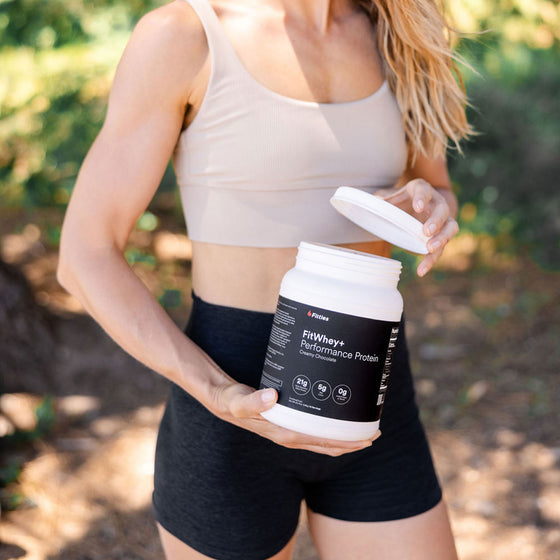
FitWhey+
FitWhey+ features 21g of New Zealand whey protein per serving from grass-fed, rBST/rBGH hormone-free cattle. Includes Aminogen (fungal proteases). No added sugar or stevia.
Shop FitWhey+