The Fitties Journal
When to Take Creatine: Timing, Dose, and Rest Days
Key Takeaways
Here's what matters most if you're short on time.
- Total daily intake and consistency matter more than the exact time of day you take creatine.
- A standard maintenance dose is 3 to 5 grams of creatine monohydrate per day.
- Taking creatine close to your workout, slightly favoring after, had a small edge in some studies (Cribb and Hayes, 2006; Antonio and Ciccone, 2013), though reviews call the evidence too limited for a firm rule.
- On rest days, timing does not matter; just take your usual daily dose.
- A loading phase of about 20 grams a day for 5 to 7 days saturates muscles faster but is optional.
The honest answer most brands will not give you is that the exact time you take creatine barely matters. What actually drives results is taking 3 to 5 grams of creatine monohydrate every single day until your muscles are fully saturated, and then not missing days. Total daily intake and consistency beat clever timing every time. If you want to optimize at the margins, a few small studies hint at a slight edge for taking it close to your workout, leaning just after you train, though a 2022 review found the evidence too thin to recommend a set time (Candow et al., 2022). On rest days, take it whenever you will remember. That is the whole answer. The rest of this guide explains why, and how to get the dose, the loading question, and the food-and-caffeine details right.
When is the best time to take creatine?
The best time to take creatine is the time you will actually stick to, every day, for months. Creatine works by building up the phosphocreatine stores in your muscles, and that is a slow, cumulative process, not a pre-workout switch you flip. Your muscles either reach saturation or they do not, and that depends on your daily dose over weeks, not on the clock.
That said, a few head-to-head studies give a small edge to training-adjacent timing. In a 10-week trial, men who took a protein, creatine and glucose supplement right before and after training gained more lean mass and strength than men who took it morning and evening (Cribb and Hayes, 2006). In a four-week trial, recreational bodybuilders who took creatine right after training gained more fat-free mass and slightly more bench-press strength than those who took it right before, though neither difference reached statistical significance (Antonio and Ciccone, JISSN, 2013). A 2021 review was more cautious still, concluding the evidence base is limited and that timing is not a real concern for most people (Ribeiro et al., Nutrients, 2021). The keyword there is marginal. Consistency is the main event; timing is a rounding error you can capture if you want to.
FitBoost+
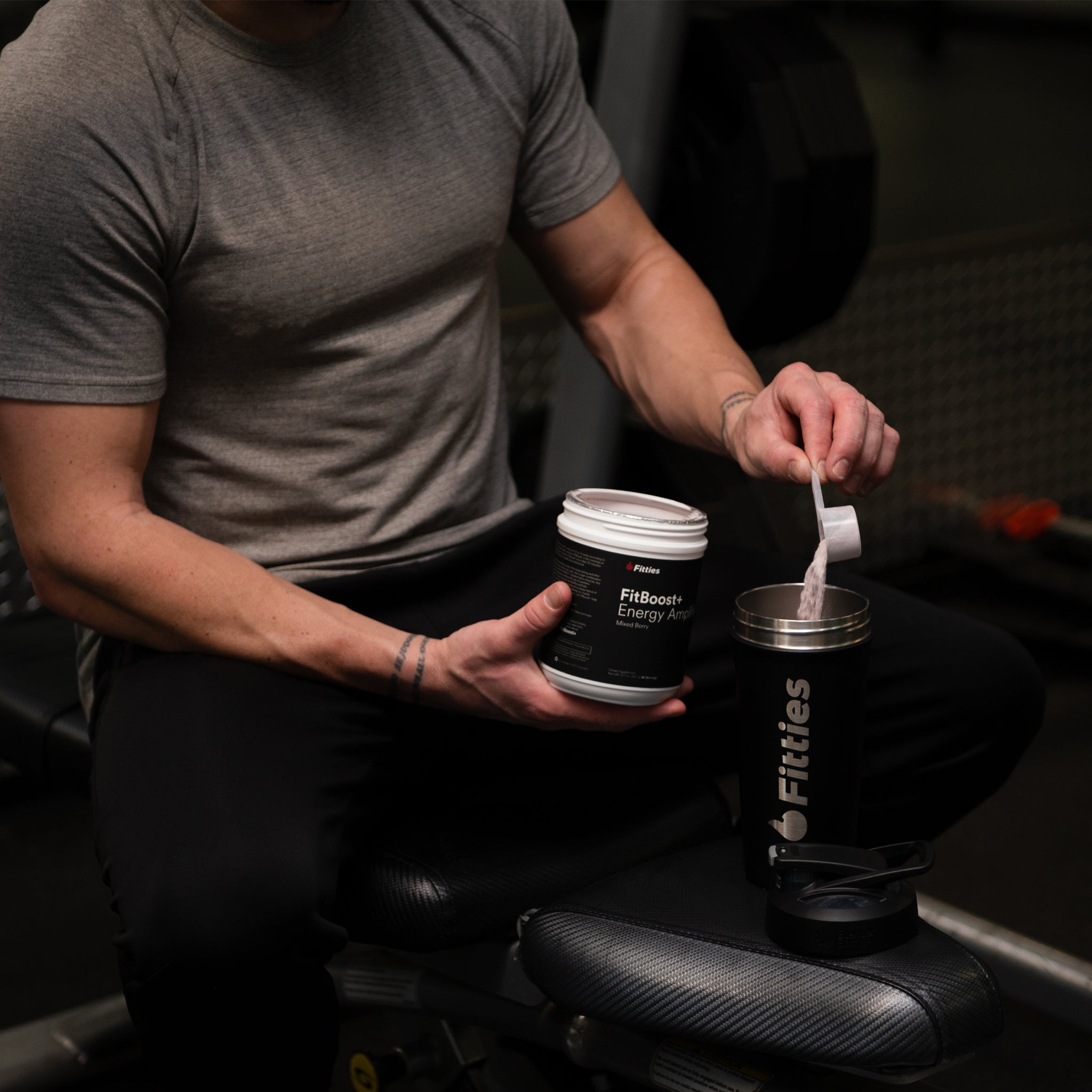
FitBoost+ is a daily around-workout blend with creatine monohydrate, 400 mg of Peak ATP, electrolytes, and a measured 95 mg of caffeine from a blend that includes a caffeine-pterostilbene co-crystal. Its label keeps timing simple, one scoop 30 minutes before training or in the morning on rest days.
Shop FitBoost+Should you take creatine before or after a workout?
If you are going to take it around your session anyway, the research leans slightly toward after. In a four-week study of recreational bodybuilders, the group taking creatine post-workout saw modestly better improvements in body composition and strength than the group taking it pre-workout, though neither difference reached statistical significance (Antonio and Ciccone, JISSN, 2013). A later review of creatine timing around exercise reached a similar, cautious conclusion. Post-workout may hold a small advantage, but the effect is not large enough to lose sleep over (Ribeiro et al., Nutrients, 2021).
Here is the practical version, without the noise.
| Timing | What the research says | Bottom line |
|---|---|---|
| After your workout | A possible small edge for body composition in a four-week trial, not statistically significant (Antonio and Ciccone, JISSN, 2013) | The marginal winner if you want to pick one |
| Before your workout | Effective; slightly behind post-workout in head-to-head data | Totally fine, especially if it is easier to remember |
| Any other time of day | Still works; saturation is driven by daily dose, not clock time | The best choice if it is the only one you will keep up |
Do not overthink this. The difference between the best and worst option here is small compared to the difference between taking creatine daily and skipping it twice a week. Pick a slot that anchors to a habit you already have, whether that is your post-lift shake or your morning coffee, and keep it there.
When should you take creatine on rest days?
On rest days, timing genuinely does not matter. There is no workout to be adjacent to, so the only job is keeping your muscle stores topped up. Take your usual 3 to 5 grams whenever fits your day, with breakfast, with a meal, or alongside your other supplements. The ISSN guidance is built around maintaining saturation with a consistent daily dose, and a rest day is just another day you hit that dose (Kreider et al., JISSN, 2017).
The one mistake to avoid is treating rest days as optional. Skipping creatine on days you do not train is the fastest way to keep your muscles perpetually half-full. Daily means daily.
How much creatine should you take per day?
The standard maintenance dose is 3 to 5 grams of creatine monohydrate per day for most people (Kreider et al., JISSN, 2017). That number is not a marketing figure; it is the dose used across decades of research and the amount that keeps muscle creatine stores saturated once you get there. Larger athletes at the top of the weight range may sit closer to 5 grams or a touch above, but 3 to 5 grams covers the vast majority of people. For dosing by body weight and whether to bother loading, see our full guide on how much creatine to take per day.
Creatine monohydrate is the most studied and most cost-effective form (NIH Office of Dietary Supplements), which is why it remains the reference standard the fancier, pricier forms are measured against. If you are weighing one of those, our breakdown of how creatine HCl stacks up against monohydrate runs the numbers. You do not need a "buffered" or "micronized-is-magic" upgrade to get results. You need the dose, daily. If you want the full breakdown of forms and what to look for, our guide to buying creatine covers it.
Do you need a creatine loading phase?
No, but it is a legitimate shortcut. Loading means taking roughly 20 grams per day, split into four 5-gram doses, for 5 to 7 days, then dropping to the normal 3 to 5 grams. This saturates your muscles in about a week (Kreider et al., JISSN, 2017). Skip loading and just take 3 to 5 grams a day, and you reach the same saturation point in roughly three to four weeks. The end state is identical; loading only changes how fast you get there.
Loading has one common downside. Taking 20 grams a day can cause mild bloating or stomach discomfort in some people, mostly because that much creatine at once pulls water into the gut. If you have a competition or a training block you want to prime for quickly, load. If you are playing the long game, the slow, steady 3 to 5 grams is gentler and just as effective in the end.
Should you take creatine with food, water, or carbs?
Water is the only true requirement, because creatine draws water into your muscle cells and you want to stay hydrated. Mixing your dose into 8 to 12 ounces of water or into a shake with your protein powder is all the "with food" you strictly need. If you take it during a fasting window, that plain water dose is calorie-free, so here is whether creatine breaks a fast and how to time it.
Taking creatine alongside carbohydrates, or a carb-and-protein meal, can modestly improve how much your muscles retain (Kreider et al., JISSN, 2017). In practice this is a minor optimization, not a rule. Pairing creatine with your post-workout meal or shake is an easy way to capture it without any extra effort, but plain water works fine too.
Does taking creatine with caffeine cancel it out?
This is one of the most persistent myths in the gym. It traces back to a 1996 study in which caffeine taken during a six-day creatine load cancelled creatine's performance benefit in nine men (Vandenberghe et al., J Appl Physiol, 1996), but the evidence since then has been inconsistent (Elosegui et al., IJSNEM, 2022), and multi-ingredient supplements have combined the two for years (Trexler and Smith-Ryan, IJSNEM, 2015). The evidence here is mixed. A 2022 systematic review concluded that daily caffeine taken during creatine loading could interfere with creatine's benefit, while creatine loading does not seem to interfere with the effect of a single pre-exercise caffeine dose (Elosegui et al., IJSNEM, 2022). We break down the research in our creatine and caffeine guide.
This is also why a daily around-workout formula can carry both. Our own FitBoost+ pairs 3 g of creatine monohydrate with 95 mg of total caffeine from a proprietary blend that includes a caffeine-pterostilbene co-crystal, alongside Peak ATP® and electrolytes, in a single scoop you take around training. Caffeine does have its own considerations, though. If you are sensitive to stimulants, watch your total daily caffeine, avoid stacking several stimulant products at once, and if you take medication or have a heart-rhythm condition, talk to your healthcare provider before adding a caffeinated supplement. That is standard caffeine guidance, not a creatine problem.
How long does creatine take to work?
Timeline depends on your approach. With a loading phase, muscles saturate in about a week. Without loading, at 3 to 5 grams a day, you reach full saturation in roughly three to four weeks (Kreider et al., JISSN, 2017). Either way, the strength and performance benefits show up once your stores are full, not on day one, which is exactly why the daily habit matters more than the time on the clock. If you want to see what is happening at each stage, we walked through the 28-day saturation timeline week by week. Set it, keep it, and let saturation do the work.
For where creatine fits alongside your other supplements and when to take each one, our supplement timing guide maps out the full day.

FitBoost+
FitBoost+ is a daily around-workout blend with creatine monohydrate, 400 mg of Peak ATP, electrolytes, and a measured 95 mg of caffeine from a blend that includes a caffeine-pterostilbene co-crystal. Its label keeps timing simple, one scoop 30 minutes before training or in the morning on rest days.
Shop FitBoost+