
The Fitties Journal
Supplement Timing: When to Take What for Training and Recovery
Key Takeaways
Here's what matters most if you're short on time.
- What you eat around training matters more than obsessing over exact minute-by-minute timing windows, but general timing principles can support better performance and recovery.
- Pre-workout nutrition should prioritize carbohydrates and moderate protein 2-4 hours before training; post-workout nutrition should include protein and carbohydrates within roughly 2 hours after.
- Fat-soluble vitamins (A, D, E, K) absorb better with a meal containing dietary fat, while most water-soluble vitamins and minerals can be taken any time with consistency being the priority.
- Protein supplements are most commonly used after training to support normal muscle recovery, but total daily intake matters more than any single timing window.
You can buy the highest-quality supplements on the market and still leave results on the table if you are taking them at the wrong time. Timing is not everything, but it is not nothing either. The difference between a pre-workout meal that fuels a great session and one that sits like a brick in your stomach? Timing. The difference between a protein shake that supports recovery and one your body barely registers? Also timing.
This guide covers two things, how to structure your nutrition around training sessions for better performance and recovery, and when to take common daily supplements so your body can actually use them. No pseudoscience, no obsessing over 30-second windows. Just practical frameworks you can apply immediately.
Why Supplement and Nutrient Timing Matters
Your body does not process nutrients the same way at every hour of the day. Digestive enzyme production, gastric acidity, metabolic rate, and even gut motility fluctuate throughout a 24-hour cycle. This means the same supplement taken at different times can be absorbed and utilized differently.
That said, the supplement industry has overcomplicated this. The most important factor for any supplement is consistent daily intake. Timing is the optimization layer you add after you have the basics dialed in. The right products, the right doses, taken regularly. Think of it as the difference between a B+ and an A. Worth pursuing, but not at the expense of fundamentals.
FitWhey+
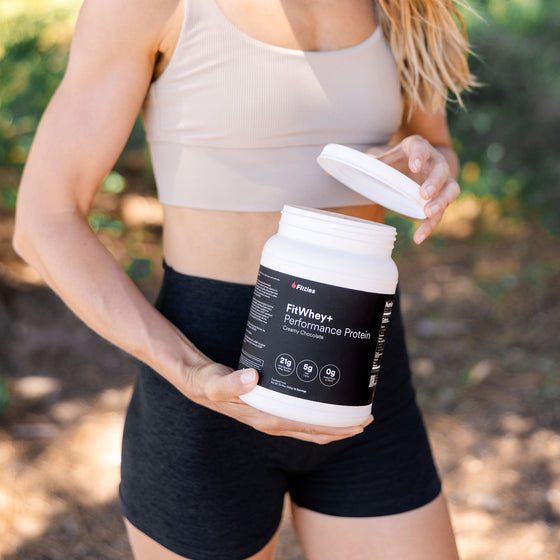
FitWhey+ delivers 21g of 100% New Zealand whey protein per serving, sourced from grass-fed, rBST/rBGH hormone-free cattle, and includes Aminogen, an enzyme ingredient listed on the label as fungal proteases. Sweetened with monk fruit, with no added sugar, stevia, or artificial sweeteners.
Shop FitWhey+Pre-Workout Nutrition (2-4 Hours Before)
If you train seriously, the hours surrounding your workout are where timing has the biggest impact. Of the three windows that matter, what you eat before training sets the tone for everything that follows.
The goal is straightforward. Top off energy stores without creating digestive discomfort. A meal consumed 2-4 hours before exercise gives your body enough time to break down food and shuttle nutrients where they are needed.
Carbohydrates are the priority here. Glycogen is the primary fuel source for high-intensity work, and starting a session with depleted glycogen stores means less power output and earlier fatigue. Whole grains, fruits, and starchy vegetables are solid choices. Aim for a moderate-to-high carbohydrate meal that also includes a moderate portion of protein to support muscle tissue. Healthy fats can be included but should be kept moderate since fat slows gastric emptying, and a heavy, high-fat meal close to training can cause GI distress.
If your schedule puts you closer to training (under 60 minutes out), go smaller and simpler, with a banana, a small portion of oats, or a light smoothie. The closer to your session, the less complex the meal should be.
For those using a pre-workout energy formula, timing matters here too. FitBoost+, for example, is taken 30 minutes before training on workout days, per its label directions. Each scoop has 95 mg of caffeine from a blend that includes a caffeine pterostilbene co-crystal, plus B vitamins and electrolytes, with 135 mg of sodium, 215 mg of potassium and 150 mg of magnesium.
Hydration starts well before your session. Drinking 16-20 ounces of water 2-3 hours before exercise helps ensure you begin training in a hydrated state.
During Your Workout
For sessions under 60 minutes, water is usually sufficient. For longer or higher-intensity sessions, intra-workout nutrition can help maintain blood glucose levels and delay fatigue.
If you are training for 60 minutes or more, consuming 30-60 grams of carbohydrates per hour from easily digestible sources (sports drinks, energy gels, or simple carbohydrates like dried fruit) can help sustain performance. Electrolyte replenishment, particularly sodium and potassium, becomes increasingly important as session length and sweat rate increase. Sipping 7-10 ounces of water every 10-20 minutes is a reasonable baseline, adjusted based on your sweat rate and conditions.
Post-Workout Nutrition (Within 2 Hours)
The post-workout period is when your body shifts from breaking down to building back up. This is where protein and carbohydrates work together to support recovery.
Research supports consuming protein after resistance training to support normal muscle recovery and adaptation (Kerksick et al., 2017). The often-cited "30-minute anabolic window" has been somewhat overstated in the literature; the window is wider than that. For a closer look at what current research actually shows, see the anabolic window section below. Still, if you trained fasted or semi-fasted, getting protein in sooner rather than later is a smart move.
Aim for 20-30 grams of high-quality protein in your post-workout meal or shake. If you are unsure whether to have your protein shake before or after a workout, current research says either works (Schoenfeld et al., 2017), so choose what fits your routine. Whey protein is one of the most researched options for post-exercise recovery due to its rapid digestion rate and rich amino acid profile (Jäger et al., 2017). FitWhey+ provides 21g of 100% New Zealand whey protein per serving, with Aminogen®, an enzyme ingredient listed on its label as fungal proteases. For those who prefer a plant-based option, FitPlant+ offers a pea and rice protein blend with the same Aminogen enzyme system.
Pair your protein with carbohydrates to help replenish glycogen stores. A commonly referenced ratio is 3:1 or 4:1 carbohydrates to protein, though the exact ratio matters less than simply getting both macronutrients in a reasonable timeframe. Healthy fats (avocados, nuts, olive oil) can round out your post-workout meal without urgency; they support overall recovery but are not time-sensitive the way protein and carbs are.
Do not forget hydration. Rehydrate with water or an electrolyte-containing beverage to replace fluids lost through sweat. Continue drinking water throughout the rest of the day.
The Anabolic Window: What the Research Actually Shows
The "anabolic window" is the idea that there is a brief post-exercise period during which the body is primed to absorb nutrients and direct them toward muscle repair and growth. For years, the standard advice was that you had roughly 30 minutes after training to consume protein or risk leaving gains on the table. The actual science is more nuanced than that.
Post-exercise, the body does enter a state of elevated muscle protein synthesis, increased insulin sensitivity, and enhanced glycogen replenishment. These processes are real. What has changed is our understanding of how long they last and how much the timing matters relative to your total daily intake.
Current research supports a broader window than a narrow 30-minute deadline. The International Society of Sports Nutrition's position stand says protein taken anywhere from immediately to two hours after exercise stimulates muscle protein synthesis (Kerksick et al., 2017), and a 2013 review suggests keeping pre- and post-workout meals within about 3 to 4 hours of each other (Aragon and Schoenfeld, 2013). More importantly, a 2013 meta-analysis of randomized trials found that once other factors were accounted for, protein timing made no significant difference to strength or muscle growth, and that total protein intake was the strongest predictor of muscle growth (Schoenfeld et al., 2013). If your overall nutrition is dialed in, the exact timing of your post-workout meal matters less than the fitness industry once claimed.
That said, timing still matters in certain scenarios. If you train fasted or several hours after your last meal, getting protein in sooner supports recovery more than waiting. If you train after a recent meal, the urgency decreases because amino acids from that meal are still circulating.
| Scenario | Post-Workout Priority | Recommended Window |
|---|---|---|
| Trained fasted (no food for 4+ hours) | High. No circulating amino acids to support recovery. | Within 1 hour |
| Trained 2-3 hours after a meal | Moderate. Some amino acids still available, but diminishing. | Within 2 hours |
| Trained shortly after a protein-rich meal | Lower. Amino acids from pre-workout meal are still circulating. | Normal meal schedule (within 3-4 hours) |
| Endurance or high-volume session (90+ min) | High. Glycogen depletion is significant; both protein and carbs are priorities. | Within 1 hour |
The practical takeaway is this. Do not stress about sprinting to a shaker bottle 30 seconds after your last set. But do not wait 6 hours either. For most people training with reasonable pre-workout nutrition, consuming 20-30 grams of protein within 2 hours post-exercise is a sensible, evidence-supported approach (Kerksick et al., 2017). What matters far more than the timing is whether you are hitting your total daily protein target consistently. For more on how to calculate that target, see our protein intake guide.
Daily Supplement Timing: A Practical Guide
Beyond training-day nutrition, many people take daily supplements for general health. Here is when to take the most common categories for better absorption and utilization.
- Multivitamins: Morning with breakfast. B vitamins play a role in energy production, and taking them earlier in the day aligns with your body's natural metabolic rhythm. FitNutrients+, for example, includes the fat-soluble vitamins A, D3 and E (it has no vitamin K), so take its four capsules with a meal that includes some fat.
- Vitamin D: With a meal containing dietary fat, morning or midday. Vitamin D is fat-soluble and absorbs significantly better when paired with fat rather than taken on an empty stomach. For the full breakdown, see our guide to when to take vitamin D.
- Magnesium: Evening or bedtime. Magnesium has a calming effect for many people and plays a role in muscle relaxation and sleep quality support. FitNeuro provides 200 mg of magnesium per three-capsule serving from three forms, which are Magtein® magnesium L-threonate, Albion di-magnesium malate and magnesium lysinate glycinate chelate. For the full breakdown, see our guide to the best time to take magnesium by goal and form.
- Omega-3 fatty acids: With any meal containing fat. The specific time of day is less important than consistency and pairing with food.
- Probiotics: On an empty stomach when gastric acid levels are lower, such as first thing in the morning or right before bed. This gives beneficial organisms a better chance of surviving the acidic stomach environment. FitProbio+ uses gastro-resistant DRcaps™ capsules, each holding 10 billion CFU of the B420 strain. For a deeper look at the best time to take probiotics, including whether to take them with food, see our full guide.
- Iron: On an empty stomach for best absorption, though taking it with a small amount of food is reasonable if it causes GI discomfort. Vitamin C can enhance iron absorption. Avoid taking iron at the same time as calcium, as they compete for absorption.
- Calcium: In smaller doses spread throughout the day rather than one large dose. Take with food to support absorption, and space it away from iron supplements.
- Collagen: Any time of day. Some people prefer mixing it into a morning coffee or smoothie, others take it at night. Consistency matters more than clock time.
Building Your Timing Routine
The best supplement timing routine is one you actually follow. Here are a few principles to keep it simple.
First, anchor your supplements to existing habits. Morning supplements go with breakfast. Post-workout protein goes with your gym bag. Evening magnesium goes with your bedtime routine. Habit stacking makes consistency effortless.
Second, do not overthink the precision. Research supports general timing windows, not exact minutes (Schoenfeld et al., 2013). Taking your protein shake 45 minutes after training instead of 30 minutes is not going to derail your progress. Consistency across weeks and months is what drives results, not perfection on any given day.
Third, adjust based on your body's response. Some people tolerate certain supplements on an empty stomach; others do not. Some people find B vitamins too stimulating in the afternoon; others have no issue. General guidelines are a starting point. Your individual response is the final arbiter.
Finally, remember that supplements are exactly that, supplemental. They fill gaps in an otherwise solid nutrition foundation. No amount of timing optimization compensates for a poor diet, inadequate sleep, or inconsistent training.
Conclusion
Timing your nutrition and supplements is a practical tool, not a magic bullet. Structure your training-day nutrition around a pre-workout meal rich in carbohydrates and moderate protein, stay hydrated during your session, and get protein plus carbohydrates in within a couple of hours after. For daily supplements, pair fat-soluble vitamins with meals, consider circadian alignment for things like B vitamins (morning) and magnesium (evening), and above all, be consistent.
The fundamentals always win. Quality nutrition, quality products, and the discipline to show up day after day. Get those right, and timing becomes the edge that compounds over time.
As with any changes to your supplement routine, consult a healthcare professional for advice tailored to your individual needs, especially if you take prescription medication or have specific health concerns.
FitWhey+
FitWhey+ delivers 21g of 100% New Zealand whey protein per serving, sourced from grass-fed, rBST/rBGH hormone-free cattle, and includes Aminogen, an enzyme ingredient listed on the label as fungal proteases. Sweetened with monk fruit, with no added sugar, stevia, or artificial sweeteners.
Shop FitWhey+