The Fitties Journal
US Navy Body Fat Calculator and 2026 Standards
Key Takeaways
Here's what matters most if you're short on time.
- The classic US Navy formula estimates body fat from your height and your neck and waist measurements, plus hips for women.
- Since January 2026 the Navy screens sailors by waist-to-height ratio first, with body fat limits of 26% for men and 36% for women.
- In studies against DXA scans, tape formulas missed by about 1.3 to 6 percentage points on average and read lean people high.
- Measure the same way every time, and check against another method when the number matters.
The US Navy body fat formula estimates your body fat from your height and a few tape measurements. Men measure the neck and waist, and women add the hips. No calipers, no lab, no partner. Enter your numbers below for an instant estimate.
One thing changed in 2026. The Navy no longer uses this formula to test its own sailors. A new two-step method, announced on December 30, 2025 and implemented in January 2026, measures only height, waist and weight (NAVADMIN 264/25). The next section covers it, along with the limits sailors have to meet.
The calculator uses the classic formula, which comes from Navy research by Hodgdon and Beckett in 1984 (Institute of Medicine, 1998). It's an estimate, not a lab result, and you'll find how far off it can be further down. It costs nothing and takes about five minutes.
For a broader look at all body fat measurement methods, including caliper and lab-based options, see our complete guide to measuring body fat.
What are the US Navy body fat standards in 2026?
Sailors must stay at or under 26% body fat for men and 36% for women, the same at every age. Since January 2026 the Navy checks this in two steps, measuring only height, weight and the waist at the belly button (Navy PRP Guide-4, June 2026).
Step 1, waist-to-height ratio. Divide waist by height. A ratio of 0.5499 or lower passes, and that's the end of it. At 0.5500 or higher, the sailor moves to step 2.
Step 2, body fat estimate. The Navy subtracts waist from height and reads an estimated body fat percentage off its own tables, using that difference and body weight. Above 26% for men or 36% for women is not within standards.
No other method counts for the official test. The guide rules out skinfold calipers, bioimpedance, underwater weighing and BMI. The calculator on this page uses the classic formula, so its number won't match the Navy's tables.
| Height | Largest waist that passes step 1 |
|---|---|
| 5'0" (60 in) | 32.5 in |
| 5'2" (62 in) | 34 in |
| 5'4" (64 in) | 35 in |
| 5'6" (66 in) | 36 in |
| 5'8" (68 in) | 37 in |
| 5'10" (70 in) | 38 in |
| 6'0" (72 in) | 39.5 in |
| 6'2" (74 in) | 40.5 in |
| 6'4" (76 in) | 41.5 in |
So a sailor who is 5'10" passes step 1 with a waist up to 38 inches (38 divided by 70 is 0.5429). At 39 inches the ratio is 0.5571, and step 2 decides. The full table runs from 48 to 83.5 inches tall in the Navy's guide.
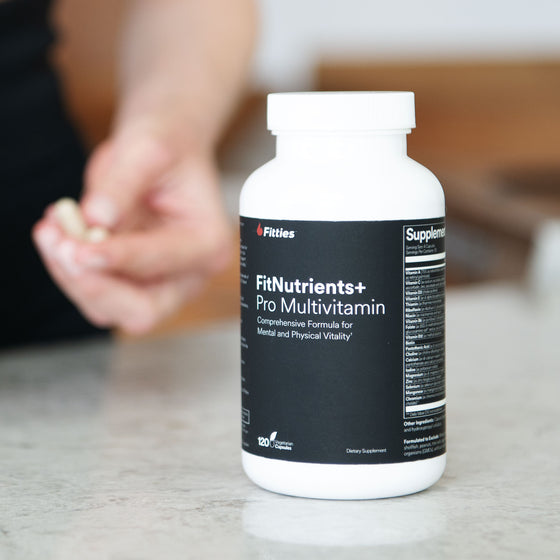
FitNutrients+
A premium multivitamin/mineral formula, four capsules a day, with metabolically active B vitamins such as methylcobalamin and methylfolate, 12.5 mcg (500 IU) of vitamin D3 and Albion mineral chelates. It contains no iron.
Shop FitNutrients+What You Need
| Item | Notes |
|---|---|
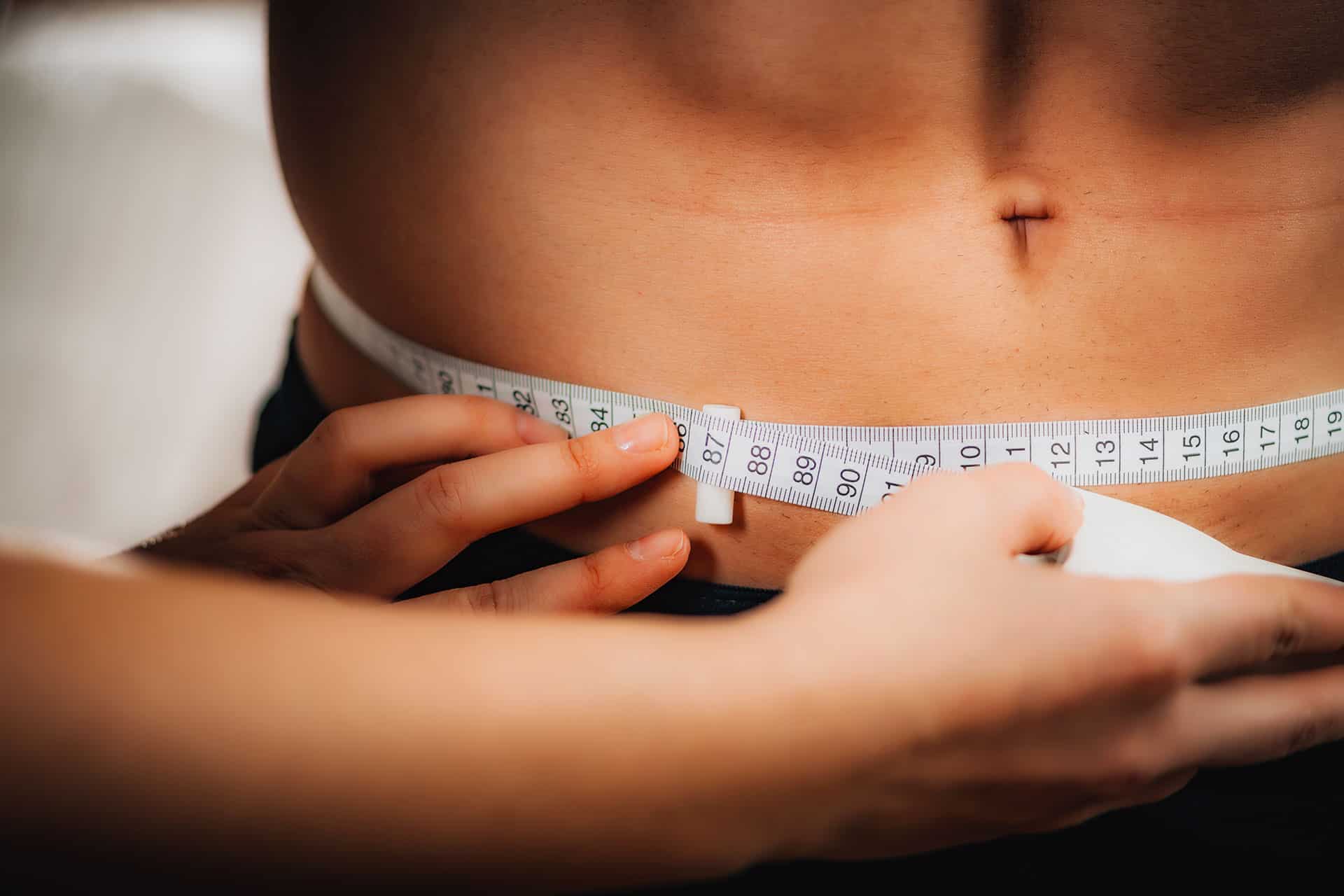
| Flexible tape measure | Non-stretch, ideally fiberglass. The Navy's guide says not to use cloth or steel tapes. |
| Your height | In inches for the standard formula. |
| A calculator | The formula uses log10 (common logarithm). Any scientific calculator or smartphone calculator in scientific mode will work. |
Measurement Locations for Males
Males need two circumference measurements at the neck and waist.
| Site | Location | Tips |
|---|---|---|
| Neck | Circumference just below the larynx (Adam's apple) | Tape level, not angled. Do not flare the tape at the front of the neck. |
| Waist | Circumference at the level of the navel (belly button) | Do not suck in your stomach. Stand relaxed, measure at the end of a normal exhale. The tape should be level all the way around. |
Measurement Locations for Females
Females need three circumference measurements at the neck, waist, and hip.
| Site | Location | Tips |
|---|---|---|
| Neck | Circumference just below the larynx (Adam's apple) | Same as males. Tape level, not angled. |
| Waist | Circumference at the natural waist, the narrowest point between the bottom of the breastbone and the belly button | Stand relaxed, measure at end of normal exhale. Tape level all the way around. |
| Hip | Circumference at the widest point of the hips/buttocks (greatest protrusion of the gluteal muscles) | Stand with feet together. Tape level and horizontal. Do not compress. |
US Navy Body Fat Formula for Males
All measurements in inches, height included. This is the classic Navy equation, with the constants as published in Potter et al., 2022.
| Formula |
|---|
| Body Fat % = 86.010 x log10(waist - neck) - 70.041 x log10(height) + 36.76 |
US Navy Body Fat Formula for Females
All measurements in inches, height included. The women's equation adds the hip measurement.
| Formula |
|---|
| Body Fat % = 163.205 x log10(waist + hip - neck) - 97.684 x log10(height) - 78.387 |
Note that you should use log10 (common logarithm), not ln (natural logarithm). On most calculators, the "log" button is log10 by default.
Example Calculation: Male
| Measurement | Value |
|---|---|
| Height | 70 inches (5'10") |
| Neck | 15.5 inches |
| Waist | 34 inches |
Step 1: Calculate waist - neck
34 - 15.5 = 18.5
Step 2: Calculate log10 values
log10(18.5) = 1.2672
log10(70) = 1.8451
Step 3: Plug into the formula
Body Fat % = 86.010 x 1.2672 - 70.041 x 1.8451 + 36.76
Body Fat % = 108.99 - 129.23 + 36.76
Body Fat % = 16.5%
Example Calculation: Female
| Measurement | Value |
|---|---|
| Height | 65 inches (5'5") |
| Neck | 13 inches |
| Waist | 29 inches |
| Hip | 38 inches |
Step 1: Calculate waist + hip - neck
29 + 38 - 13 = 54
Step 2: Calculate log10 values
log10(54) = 1.7324
log10(65) = 1.8129
Step 3: Plug into the formula
Body Fat % = 163.205 x 1.7324 - 97.684 x 1.8129 - 78.387
Body Fat % = 282.74 - 177.09 - 78.387
Body Fat % = 27.3%
How to Take Accurate Measurements

The US Navy method lives or dies on measurement consistency. Small changes in where the tape sits or how tight it is change the result. Follow these guidelines every time.
Measure at the same time of day. Morning measurements before eating and drinking produce the most consistent readings. Hydration, food intake, and even posture change throughout the day and affect circumference measurements.
Use the same tape measure every time. Different tapes can vary slightly in calibration, and cloth tapes stretch. A non-stretch fiberglass tape is the safest choice.
Keep the tape level and snug, not tight. The tape should sit flat against the skin at the same height all the way around. It should not indent the skin. Think "contact without compression."
Take each measurement twice. If the two readings differ by more than an inch, take a third and average the two closest, the same rule the Navy uses. This matters most for the waist, which has the biggest impact on the result.
Stand relaxed. Breathe normally. Do not suck in your stomach, flex, or hold your breath. Take the reading at the end of a normal exhale.
Measure the waist at the right spot for the formula. For the classic formula, men measure at the level of the navel (belly button) and women at the natural waist, the narrowest point between the bottom of the breastbone and the belly button (Institute of Medicine, 1998). The Navy's 2026 test measures everyone at the belly button.
For the neck, keep the tape just below the Adam's apple. Do not angle the tape. It should be level and horizontal.
How accurate is the US Navy body fat calculator?
It's an estimate with a known margin. When the Navy built the equations against underwater weighing, their standard error, a measure of the typical miss, was about 3.5 percentage points for men and 3.7 for women (Institute of Medicine, 1998).
Newer checks against DXA scans found misses of a similar size or larger. In 609 fit US Marines, the equations read men about 2.5 points low and women 1.3 to 2.3 points high on average, with the biggest overestimates among the leanest women (Potter et al., 2022). In 1,407 Army recruits, the Navy-developed equations read about 6 points low at the start of basic training. Over 8 weeks they understated the drop in body fat in men and showed no change in women, while DXA found clear losses in both (Foulis et al., 2023).
In practice, that means three things.
- Lean and very muscular people get the least reliable readings. The formula tends to read lean people high, and a thick, muscular waist reads the same as fat to a tape.
- Short-term change can hide. Over a few weeks the tape may not show a real drop, so don't judge a training block by it alone.
- Fat in your legs or arms isn't measured at all, since the formula uses only the neck, waist and, for women, hips.
If you want a second estimate to compare, a skinfold method like the Jackson-Pollock 3-site skinfold calculator or the Durnin-Womersley formula measures a different way, and a DEXA scan measures fat directly.
How the US Navy Method Compares to Other Formulas
| Method | Equipment | Best For |
|---|---|---|
| US Navy (this article) | Tape measure only | Most accessible, no equipment, solo measurement |
| JP 3-Site | Calipers | Quick caliper estimate, beginners |
| JP 4-Site | Calipers | Same sites both genders, good accuracy |
| JP 7-Site | Calipers | Most comprehensive JP method |
| Durnin-Womersley | Calipers | Broad age range (16-72), age-specific equations |
| Yuhasz | Calipers | Athletes and highly fit individuals |
| Parillo | Calipers | Most measurement sites (9), simplest formula |
Where do supplements fit?
The Navy's numbers come down to your waist, height and weight, and no capsule changes that math. Your training and your diet do. If you use a multivitamin to cover gaps that food alone may not, FitNutrients+ is one example, a four-capsule daily formula with metabolically active B vitamins such as methylcobalamin and methylfolate, 12.5 mcg (500 IU) of vitamin D3 and Albion mineral chelates. It contains no iron.
Conclusion
The classic US Navy formula gives you a free estimate in about five minutes, with a tape measure, two or three readings, your height and the calculator above. It isn't a lab number, and it reads lean people high, so use it as a rough gauge.
If you're preparing for the Navy's own test, the standard since January 2026 is simpler. Keep your waist below 55% of your height, or, if you go to step 2, stay at 26% body fat or less for men and 36% or less for women on the Navy's tables.
For a more detailed picture, try a skinfold method like the Jackson-Pollock 3-site or Durnin-Womersley formula, or see our guide to DEXA scans.
Start with what you have. A tape measure is enough.

FitNutrients+
A premium multivitamin/mineral formula, four capsules a day, with metabolically active B vitamins such as methylcobalamin and methylfolate, 12.5 mcg (500 IU) of vitamin D3 and Albion mineral chelates. It contains no iron.
Shop FitNutrients+