The Fitties Journal
Does Creatine Make You Gain Weight? What's Really Happening
Key Takeaways
Here's what matters most if you're short on time.
- Creatine can raise the number on the scale, but the early increase is water held inside your muscle cells, not body fat.
- Most of the change shows up in the first one to four weeks, and it is faster and larger if you do a high-dose loading phase.
- A steady 3 to 5 grams a day skips the loading spike, so any water-weight change is smaller and more gradual.
- A 2021 review in the Journal of the International Society of Sports Nutrition concluded that creatine does not increase fat mass across a variety of populations; longer-term gains with training reflect lean muscle.
- The scale is a poor tracker on creatine. Progress photos, measurements, and how your clothes fit tell you more.
Yes, creatine can make you gain weight, but it is almost certainly not the kind of weight you are worried about. The early jump you see on the scale is mostly water held inside your muscle cells, not body fat, according to a 2021 review in the Journal of the International Society of Sports Nutrition. Creatine tops up the energy stores inside your muscle tissue, and it holds a little extra water in there along with it. That water is the whole reason the number moves early on. And on the part people actually care about, the research is consistent. Creatine does not increase body fat. So if the scale creeping up a couple of pounds has you spooked, this is the good kind of heavier. Here is exactly what that weight is, how much to expect, and how to keep it under control.
Why does creatine make the scale go up?
Your muscles power hard efforts using a molecule called phosphocreatine. Supplementing with creatine raises how much your muscle cells can store, and creatine is osmotically active, which is a technical way of saying it draws water in alongside it. More creatine inside the cell means more water inside the cell. That is the water shift in muscle tissue the scale is picking up, and a 2021 review of creatine studies in the Journal of the International Society of Sports Nutrition attributes it mainly to extra water inside the cells rather than fluid under your skin.
This is also why the change is fast. Within days to a couple of weeks of starting, your muscle creatine stores climb toward full and the associated water comes with them. It is not a slow fat gain that sneaks up over months. It is a one-time top-up that then holds steady, which is a very different thing from the weight gain most people are actually afraid of.
FitBoost+
FitBoost+ delivers 3 g of creatine monohydrate per scoop alongside 400 mg of Peak ATP®, real electrolytes, and 95 mg of caffeine. No 20 g loading phase, no sugar, and the creatine dose printed in plain sight.
Shop FitBoost+Is it water, muscle, or fat?
All "weight" is not the same, and this is where the scale lies to you. The couple of pounds creatine adds fall into two honest buckets, and neither one is fat. Here is how the three types of weight compare.
| Type of weight | What it is | When it shows up | Does it last? |
|---|---|---|---|
| Water weight | Water drawn into your muscle cells along with creatine | First 1 to 4 weeks | No. It drops back off if you stop taking creatine |
| Lean muscle | Muscle you build through training, which creatine helps fuel | Gradually, over months of consistent work | Yes, as long as you keep training |
| Body fat | Not caused by creatine at all | Not applicable | Creatine does not add fat |
The takeaway is simple. Early on, the number moves because of water. Later on, if it keeps climbing while you train, that is lean muscle doing its job. Fat is never part of the creatine equation, which is exactly why the scale alone is a terrible way to judge what is happening.
How much weight will creatine add, and how fast?
The size of the early water-weight bump depends almost entirely on how you dose, and there are two ways to start creatine that behave very differently on the scale.
Loading means taking a large dose, about 20 grams a day split into four servings for 5 to 7 days, to saturate your muscles quickly. It works, but it front-loads the entire water shift into a single week, which is where most of the dramatic "I gained four pounds overnight" stories come from.
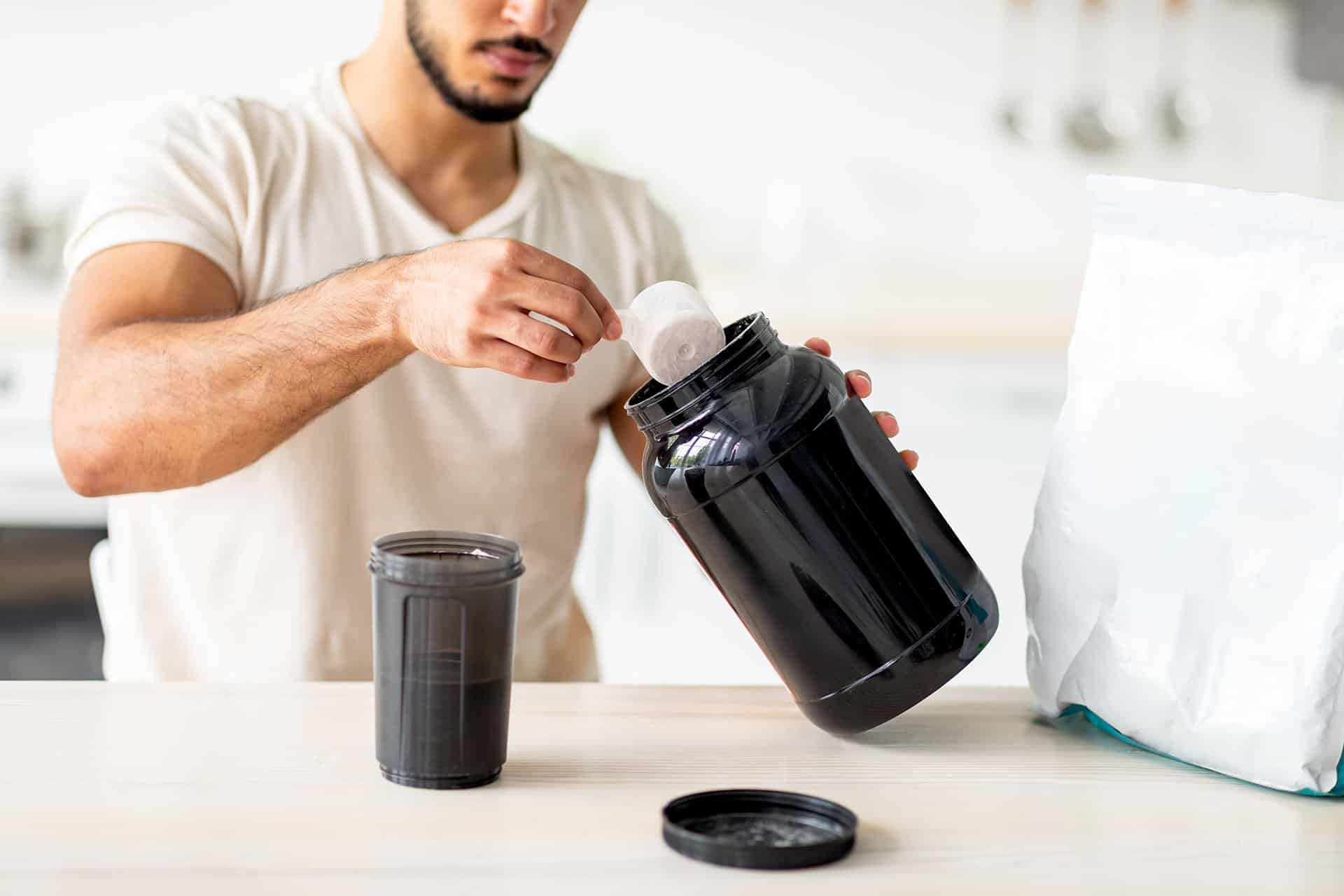
The steady approach skips loading entirely. You take a smaller 3 to 5 grams a day and let your muscles fill up over three to four weeks instead. You end up in the same place, the water comes on gradually, and the scale barely reacts. It just takes a little longer to get there.
That gentler routine is the whole design logic behind a daily creatine like FitBoost+, which provides 3 grams of creatine monohydrate per scoop for exactly this no-loading approach. The mediocre corner of the supplement aisle loves to sell a loading phase, partly because a bigger scoop empties the tub faster. Your muscles do not need the theater.
Does creatine make you look bloated or puffy?
Here is the reassuring part. The water creatine holds is intracellular, meaning it goes inside the muscle, not subcutaneous, which is the layer just under your skin that makes you look soft or puffy. If anything, water inside the muscle tends to make it look and feel fuller, not smoother. So the fear that creatine will blur your definition has the biology backwards.
What about people who genuinely feel bloated? That is usually a gut issue rather than a whole-body one, and it is most often reported with large loading doses taken all at once. The controlled evidence does not support the association. The ISSN position stand reports no evidence that creatine supplementation increases the incidence of gastrointestinal upset. If a single large dose does not sit well with you, drop to a standard 3 to 5 gram daily dose, take it with plenty of water, and see our rundown of creatine side effects.
Does creatine cause weight gain if you do not work out?
The short answer is that the water-weight part still happens, because it is basic chemistry and does not require a gym. Your muscles will store creatine, and the water that comes with it, whether or not you train.
What changes without training is the second kind of weight. Creatine's muscle gains come through training. The ISSN position stand explains that it lets you do more work over a series of sets or sprints, and that better-quality training is what leads to greater gains in strength and muscle. No training means no new muscle, but it also means no new fat from the creatine itself. You would simply carry the small, steady water-weight increase and nothing more.
How to take creatine without the water-weight spike
If you want the benefits of creatine while keeping the scale drama to a minimum, keep it simple.
- Skip the loading phase. Take 3 to 5 grams a day from the start. You reach full muscle saturation within a few weeks with a far gentler change on the scale.
- Take it daily and consistently. Timing barely matters for creatine. Total daily intake over weeks is what counts, so pick a moment you will not forget.
- Drink enough water. Creatine pulls water into muscle, so staying well hydrated supports the process and helps head off any early gut discomfort.
- Stop weighing yourself every day. The scale cannot tell water from fat from muscle. Use progress photos, how your clothes fit, and monthly measurements instead. A body composition scan tells you far more than a single morning number.
If you are pregnant or nursing, have a medical condition, or take any medication, talk to your healthcare provider before starting creatine or any new supplement.
Women often ask whether creatine will make them bulk up or gain weight in an unwanted way. The same rules apply, and we cover the specifics in our guide to creatine for women. If you are still deciding on a product, our guide to choosing a creatine supplement walks through dosing, forms, and what actually matters on the label. And if you have run into the other big creatine rumor, here is what the research really says about creatine and hair loss.
The bottom line is that creatine can nudge the scale up by a few pounds of water, and that is a feature of how it works, not a warning sign. Judge it by your training, your measurements, and the mirror instead of a single number, and the whole thing makes a lot more sense.

FitBoost+
FitBoost+ delivers 3 g of creatine monohydrate per scoop alongside 400 mg of Peak ATP®, real electrolytes, and 95 mg of caffeine. No 20 g loading phase, no sugar, and the creatine dose printed in plain sight.
Shop FitBoost+