
The Fitties Journal
Meal Replacement Shakes: Are They Healthy, and How to Choose a Good One
Key Takeaways
Here's what matters most if you're short on time.
- A meal replacement shake is meant to stand in for a meal, so it needs real protein, fiber, and nutrients, not just calories.
- Quality varies enormously. Many popular shakes are high in added sugar and light on protein.
- Look for roughly 20 grams or more of protein, low added sugar, and a complete protein source.
- Always read the allergen line, since 'plant-based' does not mean a shake is free of milk, soy, or nuts.
- Meal replacements are a convenience tool, not a requirement; whole food is still the default.
Yes, a meal replacement shake can be healthy, but plenty of them are not. A genuinely good one stands in for a real meal. It delivers meaningful protein, some fiber, a real spread of nutrients, and a controlled amount of sugar. A bad one is a milkshake with a health halo, long on sugar and cheap carbs and short on everything that makes a meal worth eating. The category is full of both. This guide covers what a meal replacement shake actually is, whether it belongs in a healthy routine, how it differs from a plain protein shake, and how to tell a well-built shake from a glorified dessert.
What exactly is a meal replacement shake?
A meal replacement shake is a drink formulated to take the place of a full meal, usually breakfast or lunch. Unlike a plain protein shake, which is mostly protein and not much else, a meal replacement aims to cover what a plate would, with protein, carbohydrates, fat, fiber, and a range of vitamins and minerals, in a controlled calorie count. Most are built to land in the range of a light meal rather than a snack or a full feast.
The idea is convenience without a nutritional cliff. Instead of skipping breakfast or grabbing a pastry, you get something closer to a balanced meal in about thirty seconds. That only holds if the formula is actually built like a meal. Many are not, which is where the category earns its mixed reputation.
You will find them as ready-to-drink bottles or as powders you mix with water or milk. Powders tend to be cheaper per serving and let you control exactly what goes in the cup, which is usually the smarter buy.
FitPlant+
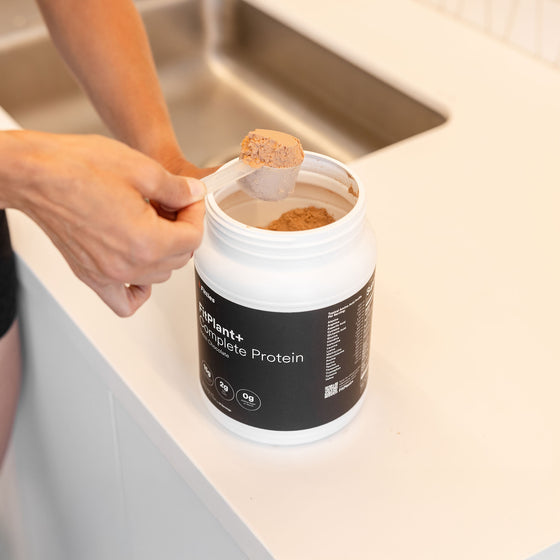
FitPlant+ is pea and rice protein with an array of added micronutrients, including vitamins C and B12 and activated B vitamins. It has 15g protein, 0g added sugar, sweetened with monk fruit. Not a full meal replacement on its own, but a protein-forward base to build one around.
Shop FitPlant+Are meal replacement shakes healthy, or just a sugar bomb?
It depends entirely on the formula, and the gap between good and bad is enormous. The best meal replacements are legitimately useful nutrition. The worst are dessert wearing a lab coat. A sweetener sits near the top of the ingredient list, protein is an afterthought, and the vitamin panel is a token gesture.
The single biggest red flag is added sugar. A shake that hides 15 grams or more of added sugar in a single serving spends a big chunk of that budget before you have eaten anything else. Some shakes marketed for wellness are closer to a bottled frappe than a meal.
The flip side matters too. A shake can be low in sugar and still be a poor meal replacement if it skimps on protein, fiber, and micronutrients. Healthy is not just the absence of sugar. It is the presence of the things a real meal gives you.
Meal replacement shake vs protein shake: what is the difference?
The two get used interchangeably, but they are built for different jobs. A protein shake is a supplement, mostly protein, meant to top up your intake around training or between meals. A meal replacement is meant to be the meal, which means protein plus carbohydrates, fat, fiber, and micronutrients in a fuller package. Use a protein shake to add protein to a day that already has meals. Use a meal replacement when a shake is standing in for one of those meals.
| Meal replacement shake | Protein shake | |
|---|---|---|
| Main job | Stand in for a meal | Top up daily protein |
| Protein | Meaningful, balanced with other nutrients | The main event, and most of the calories |
| Carbs and fiber | Included, part of the meal | Usually minimal |
| Vitamins and minerals | Often added, varies a lot by brand | Rarely a focus |
| Best used | When you are replacing a meal | Alongside meals you are already eating |
How do you choose a good meal replacement shake?
Ignore the front-of-pack promises and read the two panels that actually matter, the nutrition facts and the ingredient list. A handful of things separate a real meal replacement from a glorified milkshake.
| What to check | Why it matters | What good looks like |
|---|---|---|
| Protein | Protein drives fullness and protects muscle | Around 20 grams or more per serving |
| Added sugar | A meal should not spend your sugar budget | As low as possible, watch for syrups near the top |
| Protein source | Not all protein is complete or well absorbed | Whey, or a pea-and-rice blend that covers all amino acids |
| Fiber | Real meals have it, and it helps you stay full | A few grams from real sources |
| Micronutrients | A full meal-in-a-glass should replace a meal's nutrients | A real panel, or honest positioning if it is protein-forward |
Protein is the anchor, because it is the nutrient that keeps you full and protects lean muscle while you are eating fewer calories, which is exactly what most reviews of protein and appetite conclude (Leidy et al., 2015). Aim for a shake that makes protein the point, not the garnish. For a deeper look at how the rest of the formula is built, read our guide to the meal replacement ingredients that actually matter, and if you are unsure of your target, start with how much protein you need in a day.
One more filter that people skip is to read the allergen line. Many shakes contain milk, soy, or tree nuts, and the words "plant-based" on the front do not mean an allergen you avoid is absent. Check the label every time, not the marketing.
Can meal replacement shakes help with weight loss?
They can, but not because a shake is magic. Meal replacements help for a simple reason. A pre-portioned shake makes calorie control easier than a plate you serve yourself. Structured meal-replacement plans have been studied for weight management, and reviews of that research generally find they can support weight loss when they are used to replace meals within a reduced-calorie diet (Astbury et al., 2019). The mechanism is portion control and consistency, not a special fat-burning property.
Two honest caveats. First, the benefit comes from the overall calorie deficit, not the shake itself, so a shake added on top of your usual meals does the opposite of what you want. Second, the effect in that research grew with support. Diets using meal replacements led to about 1.4 kg more weight loss at a year than other diets, and about 6 kg more when the meal-replacement group also got extra support (Astbury et al., 2019). A shake only helps here if it is genuinely a meal's worth of nutrition for fewer calories than the meal it is replacing.
When does a meal replacement shake make sense?

A meal replacement earns its place when the realistic alternative is worse, not when it beats a good home-cooked meal. It rarely beats real food. It routinely beats what busy people actually do, which is skip the meal or grab something fried and sugary.
The strongest use cases are a rushed morning when the choice is a shake or nothing, travel and long workdays with no decent option in reach, a convenient way to cap the calories at one meal, or a fast and balanced option after training when you are nowhere near a kitchen. In each case the shake is not the ideal, it is the smart version of a compromise you were going to make anyway.
That is the bar a shake has to clear, and most of the category does not. Meal replacements run a spectrum, from full meal-in-a-glass formulas with a complete vitamin panel to protein-forward functional shakes that lead with protein and a few targeted extras. Neither is "better" in the abstract; the right one depends on whether you want a total meal stand-in or a high-protein base. FitPlant+ sits at the functional, protein-forward end. It has 15 grams of pea and rice protein with all nine essential amino acids, chitin-glucan fiber, and a full micronutrient panel, with no added sugar, sweetened with monk fruit. It is a clean protein base rather than a full meal in a glass, so for a complete meal you would build around it with the fiber, fats, and carbs this guide describes.
Are there any downsides to meal replacement shakes?
A few, and they are worth respecting. Leaning on shakes for most of your meals means missing the fiber, chewing, and variety that whole foods provide, and it gets monotonous fast. A shake also will not teach you how to build a balanced plate, which matters if the goal is long-term habits rather than a quick fix. And anyone who is pregnant or nursing, managing a health condition, or watching their blood sugar should talk to a healthcare provider before using shakes to replace meals regularly.
Used as a tool rather than a lifestyle, though, a good meal replacement is a reasonable, convenient option. The trick is the same as with any supplement. Read the label, respect what a real meal does, and do not let a health halo talk you into drinking your dessert.
FitPlant+
FitPlant+ is pea and rice protein with an array of added micronutrients, including vitamins C and B12 and activated B vitamins. It has 15g protein, 0g added sugar, sweetened with monk fruit. Not a full meal replacement on its own, but a protein-forward base to build one around.
Shop FitPlant+