The Fitties Journal
Pre-Workout Meal: What to Eat 3 Hours, 1 Hour, and 30 Minutes Out
Key Takeaways
Here's what matters most if you're short on time:
- Timing is the lever most people get wrong: a full meal wants 3 to 4 hours, a smaller meal or snack 1 to 3 hours.
- The research-backed protein dose per meal is 20 to 40 g, or 0.25 to 0.40 g per kg of body weight.
- The carb-loading advice you see everywhere comes from research on exercise lasting more than 90 minutes.
- Fat and fiber are the two things most likely to make a pre-workout meal sit badly.
- For a short session, the deciding factor is whether you feel good training, not glycogen.
How long before you train you eat matters more than what you put on the plate. A full meal wants 3 to 4 hours. A smaller meal or snack wants 1 to 3 hours, according to Mayo Clinic. Inside 30 minutes, keep it small and low in fat and fiber. The contents are simpler than the internet makes them sound: a protein dose of 20 to 40 g, or 0.25 to 0.40 g per kg of body weight, plus carbohydrate you digest easily, per the International Society of Sports Nutrition position stand on nutrient timing. That is the answer. The rest of this post is about why so much pre-workout meal advice was written for people racing for three hours and then quietly handed to people doing 50 minutes of squats.
How long before a workout should you eat?
This is the only part of the question with a clean answer, and it has nothing to do with performance. It is about your stomach. Food leaves the stomach at a rate you do not control, and the more fat and fiber in the meal, the slower it goes. Train too soon after a big meal and you are not underfueled, you are just uncomfortable.
Mayo Clinic sets the windows plainly: large meals at least 3 to 4 hours before exercising, and small meals or snacks about 1 to 3 hours before. If you train in the morning, they suggest finishing breakfast at least one hour before your workout.
| Time before training | What fits | What it looks like |
|---|---|---|
| 3 to 4 hours | A full meal: protein, carbohydrate, some fat | Chicken, rice, vegetables. Eggs, toast, fruit. |
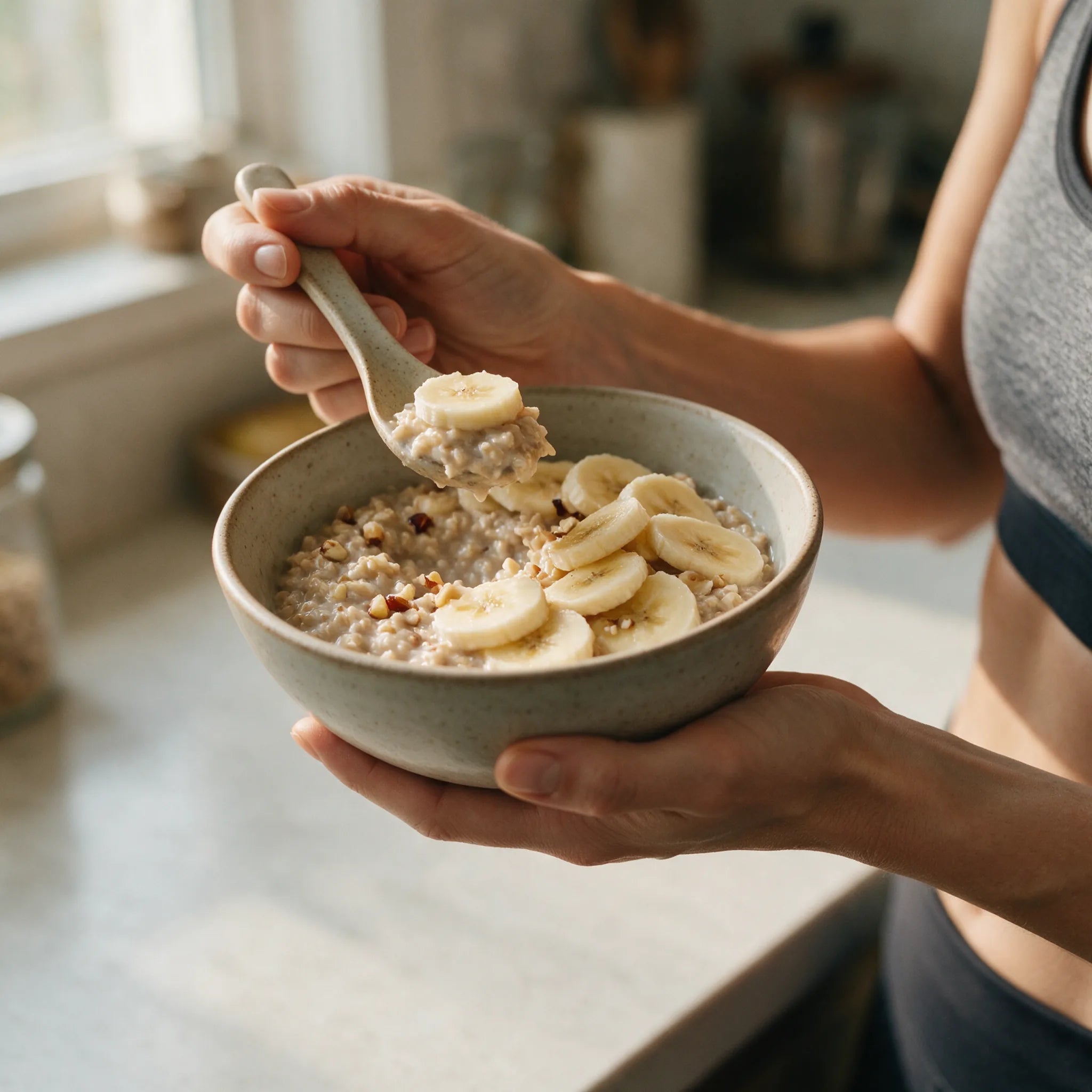
| 1 to 3 hours | A smaller meal: protein plus easy carbohydrate, low fat | Greek yogurt and berries. Oatmeal and a banana. |
| Under 60 minutes | A small snack, mostly carbohydrate, minimal fat and fiber | A banana. Rice cakes and honey. |
Notice what is missing from that table: a magic food. There isn't one. The windows do the work.
FitBoost+
One scoop 30 minutes before you train is what the FitBoost+ label calls for. The panel lists 3 g of creatine monohydrate, 400 mg of Peak ATP, and 95 mg of total caffeine from a caffeine pterostilbene co-crystal, plus electrolytes, in a low-carb, zero-sugar mix. No artificial sweeteners, no artificial colors.
Shop FitBoost+What should you eat 30 minutes before a workout?

Something small, mostly carbohydrate, and low in fat and fiber. A banana. Rice cakes with a thin layer of honey. A few dates. Half a serving of a protein shake if solid food sits badly on you.
Mayo Clinic notes that most people can eat small snacks right before exercise, and is honest about what that snack is doing: before a shorter workout, it will not add energy, but it may keep you from being hungry. That is a real benefit and it is worth having. It is just not the benefit the label on the granola bar is selling.
The mistake at this distance is treating 30 minutes like 3 hours. A chicken burrito eaten 25 minutes before deadlifts is not a pre-workout meal, it is a problem you will meet on rep four.
How much protein should a pre-workout meal have?
Here the research is specific, which is refreshing given how much of this category runs on vibes. The ISSN position stand on nutrient timing puts the effective dose at 20 to 40 g of protein, or 0.25 to 0.40 g per kg of body mass per dose, from a high-quality source, eaten every three to four hours. Its companion position stand on protein and exercise lands in the same place: roughly 0.25 g per kg per meal, or an absolute dose of 20 to 40 g, to maximally stimulate muscle protein synthesis, inside a total daily intake of 1.4 to 2.0 g per kg.
For a 175 lb (79 kg) lifter, that is about 20 to 32 g in the meal. Two eggs and a cup of Greek yogurt gets you there. So does a scoop of whey in oatmeal.
What that number is not is a reason to panic about timing. The same position stand notes that muscles stay sensitized to protein for at least 24 hours after a resistance training session, and the protein position stand says outright that the optimal time to eat it "is likely a matter of individual tolerance, since benefits are derived from pre- or post-workout ingestion." Hit the dose. Stop watching the clock. If you want the longer argument on that, we covered it in protein shake before or after your workout.
Do you need carbs before a 50-minute lifting session?
Probably not for fuel. And this is where the category has been quietly lying to you for twenty years.
Almost every "carb up before you train" recommendation traces back to endurance research. The ISSN nutrient timing stand is clear about the conditions: the carbohydrate strategies it describes apply to higher-intensity work above 70% VO2max lasting more than 90 minutes. On carbohydrate taken during exercise, it says the evidence for sessions under 70 minutes is "largely mixed in the literature," and that it is not until sessions meet or exceed 90 minutes that a carbohydrate solution delivers a consistent benefit.
Your 50-minute upper-body session is not that. That is the practical implication of those thresholds: over that distance, muscle glycogen is not what runs out first, assuming you have eaten normally in the last day. Carbohydrate before a short lift is there to make you feel good and stop you being hungry, which is a fine reason to eat it. It is not the difference between a PR and a bad day.
Where carbohydrate genuinely earns its keep: long rides, long runs, two-a-days, endurance events, or any session that runs past the 90-minute mark. Fuel those properly. Stop carb-loading for a lunch break.
Is it bad to train on an empty stomach?
For a short, normal session, no. The deciding factor is whether you feel good training that way, not glycogen.
Some people lift better fasted at 6 a.m. Some get lightheaded and hate every set. Both are legitimate. Given that the fuel case for a short session is weak by the position stand's own duration thresholds, the honest advice is to test it on yourself for two weeks and keep whichever version produces better sessions.
The two situations where training fasted is a genuinely bad idea: sessions over 90 minutes, and any session where you already feel lightheaded, shaky, or under-slept. Eat something in those cases. If you are managing a medical condition, take medication, or are pregnant or nursing, talk to your healthcare provider before changing how you eat around training.
What should you skip before you train?
Three things, and they are all about digestion speed rather than nutritional virtue.
- High fat. Fat slows gastric emptying. Peanut butter is a great food and a poor choice 30 minutes out.
- High fiber. Beans, big raw salads, and cruciferous vegetables are excellent at every other hour of the day. Not this one.
- Volume. The size of the meal matters more than its macros this close to training. A large meal 45 minutes out is a bad meal no matter how clean it is.
Nothing on that list is unhealthy. That is the point. "Pre-workout" is a timing category, not a moral one, and a lot of marketing depends on you not noticing the difference.
Where caffeine and creatine fit

Food covers fuel and comfort. The supplements people take before training are doing a different job, and they run on their own clocks.
Caffeine is worth timing deliberately rather than accidentally. We went through the dose and the timing in detail in coffee before a workout, including why a cup of coffee makes the dose almost impossible to pin down.
Creatine is the opposite of a timing question. It works by saturating muscle over days, so the useful thing is taking it consistently, not taking it at a clever moment.
If you would rather not run three separate decisions before every session, FitBoost+ puts them in one scoop. The label lists 3 g of creatine monohydrate, 400 mg of Peak ATP®, and 95 mg of total caffeine from a caffeine pterostilbene co-crystal, plus electrolytes, in a low-carb, zero-sugar mix with no artificial sweeteners or artificial colors. The directions on the pack say one scoop 30 minutes before your workout, which lands neatly inside the snack window above.
Whatever you end up taking before you train, read the amount printed next to each ingredient. A formula that names ingredients without naming doses is telling you something.
One caution worth reading rather than skimming: the FitBoost+ label advises that anyone taking medication, especially blood thinners, discuss potential interactions with their healthcare professional, that caffeine should not be combined with synephrine or ephedrine, and that it be used cautiously by anyone with a history of abnormal heart rhythm.
Putting it together
The whole thing collapses into three decisions. Pick your window based on how long you have. Get 20 to 40 g of protein into the day's meal nearest your session. Keep fat and fiber down as you get closer to training.
Everything past that is optimization on the margins, however much marketing money says otherwise.

FitBoost+
One scoop 30 minutes before you train is what the FitBoost+ label calls for. The panel lists 3 g of creatine monohydrate, 400 mg of Peak ATP, and 95 mg of total caffeine from a caffeine pterostilbene co-crystal, plus electrolytes, in a low-carb, zero-sugar mix. No artificial sweeteners, no artificial colors.
Shop FitBoost+