The Fitties Journal
Protein Shake Before or After Workout? What the Research Shows
Key Takeaways
Here's what matters most if you're short on time.
- Drinking a protein shake after a workout is a fine default, but a 10-week trial by Schoenfeld and colleagues found before versus after made little difference for muscle or strength.
- The 30-minute anabolic window is mostly a myth; muscle protein synthesis stays elevated for roughly 24 hours after training.
- Your total daily protein is what drives results, around 1.6 grams per kilogram of bodyweight for people who train.
- Aim for about 20 to 40 grams of protein per serving and spread it across the day rather than one big shake.
- Timing matters most when you train fasted or first thing in the morning, when a post-workout shake tops up amino acids.
Drink it after if you want a simple rule. But here is the honest answer the supplement industry buried under a decade of countdown timers. For building muscle and strength, whether you drink your protein shake before or after a workout barely matters. When researchers have put pre-workout and post-workout protein head to head in controlled trials, they have found almost no difference in muscle or strength gains (Schoenfeld et al., 2017; Candow et al., 2006). What actually decides your results is how much total protein you eat across the whole day, not the minute it hits your shaker. The one real exception is training on an empty stomach, which we will get to.
Should you drink a protein shake before or after a workout?
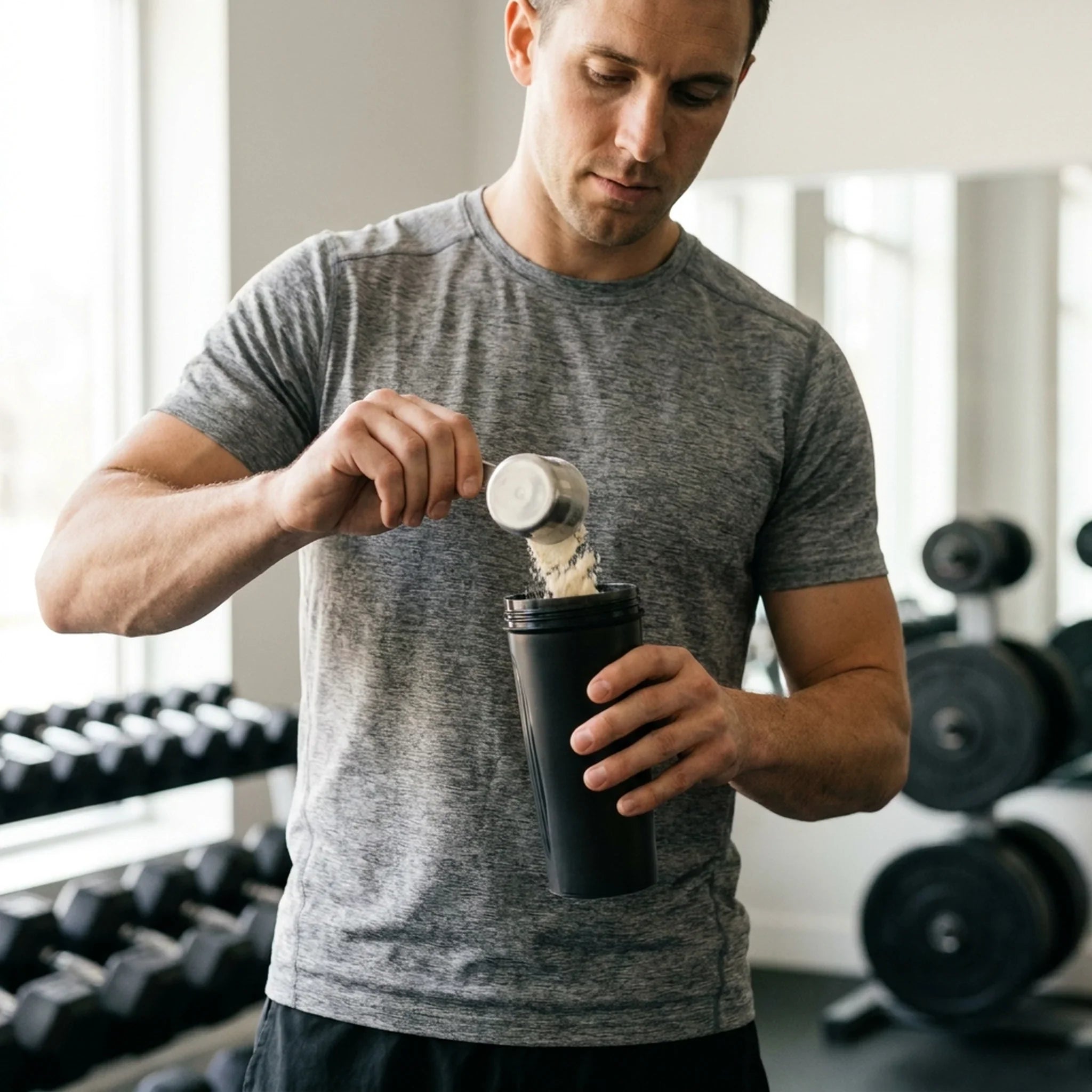
Either works, and the gap between them is smaller than almost anyone selling you protein will admit. In a 10-week controlled trial, lifters who took 25 g of whey immediately before training gained no more or less muscle and strength than those who took the same shake immediately after, according to a study published in PeerJ. Same protein, opposite timing, matching results.
So pick the side that fits your routine. If you ate a normal meal one to two hours before training, the amino acids from that food are still circulating, and a shake afterward is all you really need. If you are not sure how long before training to eat, our guide to pre-workout meal timing lays out the windows. If you lift first thing in the morning with nothing in the tank, lean toward drinking it after. And if you just want one rule you will never overthink again, have it within an hour or two on either side of your session and move on. The clock is not the variable that builds muscle.
FitWhey+
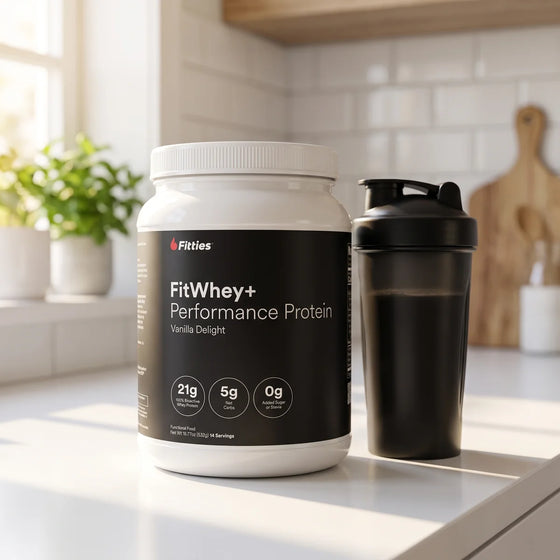
FitWhey+ delivers 21 g of 100% New Zealand grass-fed whey per serving, sweetened with monk fruit, with no added sugar or stevia. Drink it before or after training, whenever fits your day.
Shop FitWhey+Is the 30-minute anabolic window real?

Barely. The idea that you have a narrow 30-minute "anabolic window" to slam protein or waste your session is the most oversold rule in fitness nutrition, and the research does not back the panic. A detailed review in the Journal of the International Society of Sports Nutrition concluded that the post-exercise window is far wider than the old 30-minute figure suggested, likely stretching several hours around your workout rather than slamming shut after half an hour.
Two facts collapse the myth. First, muscle protein synthesis stays elevated for roughly 24 hours after a hard training session, so the anabolic response is a long window, not a flash sale. Second, if you ate protein before you trained, those amino acids are still in your bloodstream during and after the session, which means the "you missed your window" scare only ever applied to people training completely fasted. The countdown timer sold urgency. Your muscles never read the memo.
So what should you do with that window? Relax and widen it. Get a solid dose of protein somewhere in the few hours around your session, and let where it lands follow your day. After a fasted morning workout, sooner is smarter; if you ate a real meal beforehand, you are already covered on both ends. The timing that actually matters is measured in hours, not the frantic minutes a supplement label wants you counting. Anchor the protein to a habit you will keep, and the window takes care of itself.
Before or after a workout: how protein timing compares
Timing is not useless, it is just situational. Here is how to match the better option to your actual day rather than a stopwatch.
| Your situation | Better timing | Why |
|---|---|---|
| Ate a full meal 1 to 2 hours before | Either, or skip the shake | Amino acids from that meal are still circulating, so a post-workout shake is optional, not urgent. |
| Train fasted or first thing in the morning | After | You start with nothing in the tank, so a shake afterward tops up amino acids for recovery. |
| Long gap before your next meal | After | A shake bridges the gap so you are not going hours post-training with no protein. |
| Cutting in a calorie deficit | Whenever it curbs hunger | Protein is filling, so use the shake at the point in the day it keeps you from overeating. |
Notice what every row has in common. The "right" timing follows your schedule and your hunger, not a rule about muscle chemistry. That is because the real driver sits somewhere else entirely.
What matters more than protein timing?
Total daily protein. It is not close. A large meta-analysis in the British Journal of Sports Medicine found that the muscle and strength benefits of adding protein kept climbing until intake reached about 1.6 g of protein per kilogram of bodyweight per day, then leveled off. For a 75 kg (165 lb) lifter, that is roughly 120 g of protein a day. Hit that number and the exact timing of any single shake becomes a rounding error.
How you spread it helps too. The research points to servings of roughly 20 to 40 g rather than backloading it all into one giant post-workout shake, and the nutrient-timing review in the Journal of the International Society of Sports Nutrition suggests keeping your pre-training and post-training meals within about three to four hours of each other. So the question worth obsessing over is not "before or after," it is "am I hitting my daily total across the day." If you are unsure what your number is, our guide to how much protein you actually need does the math, and the supplement timing guide covers where everything else fits.
When does protein shake timing actually matter?
There are a few real cases where the clock earns its keep. If you train fasted, especially early in the morning before eating, a shake soon after your session matters more, because you have no circulating amino acids from a recent meal to work with. Getting protein in within an hour or so genuinely helps here.
Endurance athletes and anyone doing two sessions in a day are another case. Protein plus carbohydrate after the first session supports recovery before the next one, so you are not starting the second workout depleted. And 30 to 40 g of casein before bed raises muscle protein synthesis overnight, according to the International Society of Sports Nutrition, which is why the pre-sleep shake earned a following that, for once, has some evidence behind it. For most people lifting a few times a week and eating regular meals, though, none of these edge cases apply, and "before or after" stays a coin flip. If you want the deeper split between fast and slow proteins, see whey vs casein.
How do you pick a protein powder to drink around your workout?

Timing is the wrong thing to fuss over. Quality is the right one. Look for a complete protein delivering roughly 20 to 40 g per serving, a short ingredient list, minimal or no added sugar, and clear allergen labeling so you know exactly what you are drinking. Skip the products hiding a small protein dose behind a big tub and a proprietary blend.
FitWhey+ is built to that standard. Each serving provides 21 g of protein from 100% New Zealand grass-fed whey concentrate that is hormone-free (no rBST or rBGH), plus 6 g (Vanilla) or 3 g (Chocolate) of fiber from chicory inulin. It is sweetened with monk fruit extract, with no added sugar and no stevia, and includes Aminogen®, a fungal protease complex. It is manufactured in a GMP compliant facility, and formulated to exclude wheat, gluten, soy protein, and artificial sweeteners. It does contain milk. If you avoid dairy, FitPlant+ is a pea and rice option that hits the same job. As always, talk to your healthcare provider before starting a supplement if you are pregnant, nursing, or taking medication, and protein powders are meant to supplement meals, not replace them in a very-low-calorie diet without medical supervision.
The bottom line is to drink your protein shake before or after training, whichever fits your day, then spend your energy on the thing that actually builds muscle, which is hitting enough total protein, consistently, day after day.
FitWhey+
FitWhey+ delivers 21 g of 100% New Zealand grass-fed whey per serving, sweetened with monk fruit, with no added sugar or stevia. Drink it before or after training, whenever fits your day.
Shop FitWhey+