The Fitties Journal
Shilajit Benefits: What 3 Human Trials Found and the Heavy Metal Risk
Key Takeaways
Here's what matters most if you're short on time.
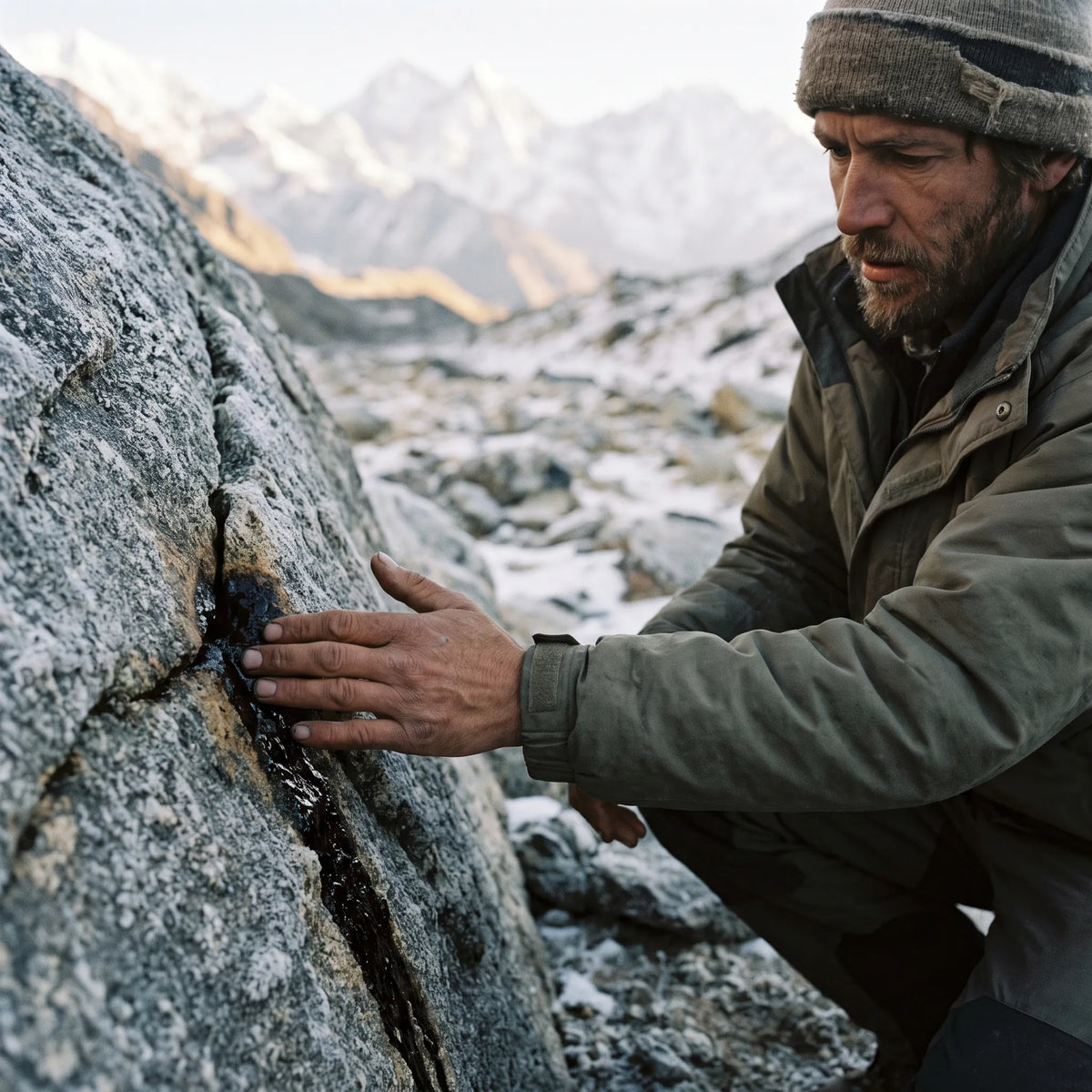
- Shilajit is a blackish-brown substance that oozes from mountain rock and is made up mostly of humic substances, including fulvic acid.
- Human studies are few and small; the three trials covered here lasted 8 to 14 weeks and used 250 to 1,000 mg of extract a day.
- Shilajit can contain heavy metals such as lead, cadmium, arsenic and mercury, and levels vary with where it comes from.
- In a 2008 study, about one in five Ayurvedic products bought online contained detectable lead, mercury or arsenic.
- A fulvic acid percentage describes active content, not heavy-metal content.
- FitNutrients+ lists 100 mg of shilajit, with 50% fulvic acids, per four-capsule serving.
Shilajit is a blackish-brown substance that oozes from high mountain rock, especially in the Himalayas between India and Nepal (Carrasco-Gallardo et al., 2012). It forms over centuries as plant matter decomposes, and it is made up mostly of humic substances, including fulvic acid, along with compounds called dibenzo-alpha-pyrones (DBPs).
On shilajit benefits, the human evidence is much thinner than the marketing. Only a few small studies have involved people, according to Operation Supplement Safety (OPSS), the Department of Defense's dietary supplement program. The bigger practical issue is purity. Shilajit can contain lead, cadmium, arsenic and mercury, and how much depends on where it comes from (Kamgar et al., 2025). Here is what the trials measured, what the heavy-metal data show, and how to think about dose.
What is shilajit?
Shilajit is an exudate, a sticky, gum-like material that oozes from mountain rock during the warm season (Kamgar et al., 2025). Beyond the Himalayas, it has been found in Russia, Tibet, Afghanistan and northern Chile, and it goes by other names, including shilajatu and mummiyo (Carrasco-Gallardo et al., 2012).
Humic substances, the breakdown products of organic matter, make up around 60% to 80% of shilajit, according to a 2012 review that names fulvic acid as the main biologically active compound and credits it with antioxidant activity (Carrasco-Gallardo et al., 2012). Alongside fulvic acid sit DBPs, a family of compounds that includes urolithins (Keller et al., 2019). Shilajit also carries minerals such as potassium, calcium and magnesium (Operation Supplement Safety).
Composition varies from region to region (Carrasco-Gallardo et al., 2012), which matters twice, for how much of the active fractions you get, and for what else comes along with them. In Ayurveda, shilajit is classed as a rasayana, a rejuvenating preparation associated with physical strength and general health.
A note before the research, because Fitties uses this ingredient. FitNutrients+ contains 100 mg of PrimaVie® shilajit per daily four-capsule serving. Every trial below used a larger daily amount, so read their results as ingredient science, not as a description of what our formula does.
FitNutrients+
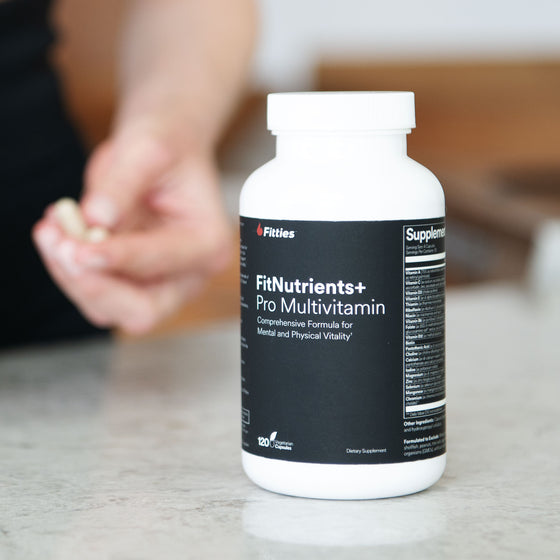
FitNutrients+ is a daily multivitamin and mineral formula taken as four capsules. Each serving lists 100 mg of PrimaVie shilajit with 50% fulvic acids, alongside the vitamins, minerals and other ingredients printed with their amounts on the label.
Shop FitNutrients+What does the research on shilajit show?
Less than the marketing implies. OPSS notes that most studies of shilajit's effects have been in rats and mice, and that some study results could be biased because their funding came from supplement companies selling shilajit products (Operation Supplement Safety). Its bottom line is that there is little reliable evidence that shilajit enhances energy, vitality, stamina, endurance or mental performance, which are the claims it is marketed on.
The three human trials below are placebo-controlled but small and short, and two of them state that Natreon, the company that owns the PrimaVie trademark, helped fund the work (Keller et al., 2019; Das et al., 2019). The strength trial's own authors describe the research on shilajit in humans as limited. None of that makes the results wrong. It makes them early and narrow, so here is exactly who took part in each trial, what they took and what was measured.
The four trials at a glance
All three trials compared shilajit with a placebo (Keller et al., 2019; Neltner et al., 2024; Das et al., 2019).
| Trial | Who took part | Daily dose | Length | What was measured |
|---|---|---|---|---|
| Keller et al., 2019 | 63 recreationally active men, average age 21 | 250 or 500 mg PrimaVie | 8 weeks | Strength loss after 100 leg extensions; hydroxyproline |
| Neltner et al., 2024 | 35 recreationally trained men, average age 21 | 500 or 1,000 mg shilajit | 8 weeks | Pro-c1α1, a collagen production marker |
| Das et al., 2019 | 45 healthy women aged 30 to 65 | 250 or 500 mg PrimaVie, split into two doses | 14 weeks | Skin blood flow, skin gene activity, hydration, elasticity |
Strength after a fatiguing workout
In an 8-week trial, 63 recreationally active men with an average age of 21 took 250 mg or 500 mg of PrimaVie a day, or a placebo (Keller et al., 2019). At the start and again at the end, they did 100 maximal leg extensions in about five minutes and the researchers measured the strength they lost. Across all 63 men, the 500 mg group lost less strength than the 250 mg group, 9.1% versus 15.7%. The difference from placebo reached significance in a subgroup, the 30 men with the highest starting strength, where the 500 mg group lost 8.9% versus 16.0% on placebo and the 250 mg dose did no better than placebo. Among the men with the highest starting hydroxyproline, a blood marker of collagen breakdown, levels ended lower with 500 mg than with 250 mg or placebo, although hydroxyproline did not differ between groups across all 63 men. Natreon funded the study, and no adverse events were reported.
A collagen marker in trained men
Several of the same researchers ran a second 8-week trial in 35 recreationally trained men, average age 21, who took 500 mg or 1,000 mg of shilajit a day, or a placebo (Neltner et al., 2024). Blood levels of pro-c1α1, a marker of type 1 collagen production, rose in both shilajit groups and did not change on placebo. Counting how many men cleared the study's threshold for a meaningful rise, the 1,000 mg group beat placebo, 75% versus 30%, while the 500 mg group, at 69%, did not differ significantly from placebo.
Skin blood flow in healthy women
In a 14-week trial, 45 healthy women aged 30 to 65 took a placebo, 125 mg of PrimaVie twice a day or 250 mg twice a day (Das et al., 2019). The higher dose, 500 mg a day in total, increased skin microperfusion compared with placebo, an estimate of blood flow in the skin's smallest vessels based on skin redness in processed images; the lower dose did not. Skin biopsies showed changes in genes linked to blood-vessel growth and the extracellular matrix. Skin hydration and elasticity did not differ from placebo, and no adverse effects were reported. Natreon supplied the capsules and part of the funding.
PrimaVie vs raw shilajit: what is the difference?

Raw shilajit is the material as it comes off the rock, and since its composition varies by region (Carrasco-Gallardo et al., 2012), unlabeled resin says little about its fulvic acid content. A basic shilajit extract is made by washing and filtering debris and impurities out of the raw material (Operation Supplement Safety).
PrimaVie is a trademarked shilajit ingredient from Natreon, Inc. The strength trial describes it as a purified and standardized form of shilajit with at least 50% fulvic acid and 10% DBPs, free and bound to proteins called chromoproteins (Keller et al., 2019). That standardization is what gives a trial dose meaning. 250 mg of an extract with a stated fulvic acid content is a defined amount, and 250 mg of unlabeled resin is not.
What standardization does not tell you is what else is in the ingredient. A fulvic acid percentage is a content specification, not a heavy-metal result. A 2012 review warned that eating shilajit without purification risks intoxication from mycotoxins, heavy metal ions, polymeric quinones and free radicals, and concluded that a purified, ready-to-use preparation must be used for human consumption (Carrasco-Gallardo et al., 2012). Even so, OPSS points out that without laboratory analysis there is no way to know whether a given shilajit product is free of heavy metals (Operation Supplement Safety).
Is shilajit safe? What to know about heavy metals
With shilajit, the safety conversation starts with contamination. OPSS lists lead, cadmium, arsenic and mercury among the heavy metals shilajit can contain and calls their presence particularly concerning, regardless of the amount (Operation Supplement Safety).
What lab analyses have found
Contamination is documented, not hypothetical. In a 2008 study of 193 Ayurvedic products bought online, 20.7%, about one in five, contained detectable lead, mercury or arsenic, and every product that contained metals exceeded at least one standard for acceptable daily intake of toxic metals (Saper et al., 2008). A US-made shilajit product was among those that contained lead.
A 2025 analysis found thallium, a highly toxic metal, in 11 of 13 raw shilajit samples from Iran, India, Nepal, Russia and Kyrgyzstan, with variation the authors attribute to the geology and soil where each formed, and some shilajit supplements bought online held more thallium than the raw samples (Kamgar et al., 2025). The amounts were small, up to 0.095 micrograms per pill against an estimated average intake from food of under 2 micrograms a day, but the authors flag long-term use as the concern and call for regular monitoring.
Not every analysis finds a problem. A 2026 study of 12 shilajit samples from different regions measured toxic metals below established toxicity thresholds (Kamgar et al., 2026). That spread is the point. Metal content depends on where shilajit comes from and how it is processed, and nobody can judge it by eye.
What government health agencies say
The NIH National Center for Complementary and Integrative Health (NCCIH) warns that some Ayurvedic preparations may contain lead, mercury or arsenic in amounts that can be toxic, and it notes an FDA warning that metals in some Ayurvedic products make them potentially harmful. OPSS is more specific about shilajit. Studies of up to 500 mg of shilajit extract suggest it may be safe for short-term use, but possible exposure to heavy metals is a concern (Operation Supplement Safety).
What side effects have been reported?
In the trials above, the strength study reported no adverse events over 8 weeks and the skin study reported none over 14 weeks (Keller et al., 2019; Das et al., 2019). OPSS also lists suspected side effects of shilajit that include allergic reactions, some of them life-threatening, increased blood pressure, disorientation and dizziness (Operation Supplement Safety). If you notice signs of an allergic reaction after taking it, stop and get medical help.
Who should avoid shilajit or check with a doctor first?
The trials enrolled healthy, active adults. The skin trial excluded pregnant women and people taking several cardiovascular medications (Das et al., 2019), and the other three enrolled only men, so the research says little about pregnancy, nursing or combining shilajit with medication. Talk to your healthcare provider before using shilajit if you are pregnant or nursing, have a health condition or take any medication; NCCIH gives similar advice for Ayurvedic products in general.
The FitNutrients+ label carries its own cautions. "Consult your healthcare professional before use. Individuals taking medication should discuss potential interactions with their healthcare professional. Do not use if tamper seal is damaged."
How much shilajit should you take, and when?
There is no official amount. Shilajit has no established Daily Value, which is how the FitNutrients+ label marks it, and for raw shilajit there are no specific guidelines on daily intake or how long to take it (Kamgar et al., 2025). What exists instead is the range used in the trials above, 250 to 1,000 mg of extract a day, taken once daily in the strength trial and split into two doses in the skin trial (Keller et al., 2019; Neltner et al., 2024; Das et al., 2019). None of the three compared times of day, so timing comes down to habit rather than evidence. Whatever you take, follow its label directions.
How does Fitties use PrimaVie shilajit?

FitNutrients+ is a daily multivitamin and mineral formula, and shilajit is a supporting line in it, not the headline. Each four-capsule serving lists 100 mg of PrimaVie shilajit, and the label spells out its specification as 10.3% dibenzo-α pyrones (DBPs) and dibenzo-α pyrone chromoproteins (DCPs), plus 50% fulvic acids with a DBP core nucleus.
That 100 mg is less than any daily dose used in the trials described above, so their results do not describe what this amount does, and we are not claiming they do. Shilajit is one of 37 ingredients on the FitNutrients+ Supplement Facts panel, and every one of them is listed with its amount. No proprietary blend, nothing hidden behind a total.
The label directions are four capsules daily, or as directed by your healthcare professional, and each bottle holds 120 vegetarian capsules, a 30-day supply. Still deciding on a multivitamin? Start with our breakdown of whether athletes need a multivitamin.
So, is shilajit worth taking?
Shilajit is a real natural substance with a long traditional history and a small, early body of human research, some of it funded by Natreon (Keller et al., 2019; Das et al., 2019). The trials report specific, measured changes in specific groups of healthy people, and OPSS finds little reliable evidence for the energy, vitality and stamina claims shilajit is marketed on (Operation Supplement Safety). The safety issue the agencies keep raising is heavy metals, which vary by source and cannot be judged by eye.
If you want to try it, choose an extract that states its fulvic acid content so the dose means something, stay within the amounts that have been studied, and talk to your healthcare provider first if you are pregnant, nursing, managing a health condition or taking medication. For what a label should tell you, see our guide on how to read supplement labels, or browse all Fitties ingredient spotlights.
FitNutrients+
FitNutrients+ is a daily multivitamin and mineral formula taken as four capsules. Each serving lists 100 mg of PrimaVie shilajit with 50% fulvic acids, alongside the vitamins, minerals and other ingredients printed with their amounts on the label.
Shop FitNutrients+