The Fitties Journal
Supplements for Sleep: 6 Ingredients Backed by Research
Key Takeaways
Here's what matters most if you're short on time.
- Six sleep supplement ingredients are worth understanding. They are melatonin, magnesium, L-theanine, glycine, GABA, and 5-HTP.
- Melatonin helps with sleep timing, like jet lag, more than with sedation, and more is not better.
- L-theanine, magnesium, and glycine are well-tolerated options for winding down.
- 5-HTP can interact with antidepressants and other serotonergic medications, so check with your provider first.
- A serious formula lists every dose on the label instead of hiding them in a proprietary blend.
If you are shopping for supplements for sleep, these are the six ingredients worth understanding. They are melatonin, magnesium, L-theanine, glycine, GABA, and 5-HTP. None of them is a sedative, and none replaces the basics of good sleep. Melatonin shifts the timing of your body clock. The others support relaxation and the brain chemistry involved in winding down. Below is what each one does, the doses used in studies, the cautions that matter, and how to tell a serious formula from a fairy-dust one.
Do supplements for sleep actually work?

Some do, within limits. Sleep supplements can make it easier to relax and drift off, but they are not sleeping pills, and they are not regulated with the same rigor as prescription drugs. The honest way to use them is as support for good sleep habits, not a replacement for them.
The demand is real. State-level rates of insufficient sleep ran from about 30% to 46% in 2022, measured against a recommended minimum of seven hours a night, according to the CDC. That gap is exactly what the supplement aisle is built to sell into, which is why it is crowded with mega-dose melatonin gummies and "sleep blends" that hide their real doses behind a proprietary label. Knowing what each ingredient actually does is how you avoid paying for the hype.
Here is a quick note before the list. Because these ingredients affect brain chemistry and can interact with medications, anyone who is pregnant or nursing, takes prescription drugs, or has an ongoing health condition should talk to a healthcare provider before starting one.
FitWell
FitWell is a melatonin-free formula that combines L-theanine (as Suntheanine), GABA, 5-HTP, and taurine with magnesium lysinate glycinate chelate and B vitamins. Every dose is listed on the label, and it is manufactured in a GMP compliant facility.
Shop FitWellMelatonin: best for timing, not for knocking you out
Melatonin is a hormone your body releases as it gets dark, signaling that it is time to sleep. As a supplement, it is most useful for problems of timing rather than problems of staying asleep. Research reviewed by the National Center for Complementary and Integrative Health (NCCIH) supports melatonin for jet lag and delayed sleep-wake phase disorder, but notes there is not enough strong evidence to recommend it for chronic insomnia.
Two practical points from that same NCCIH review are that melatonin is typically taken about an hour before your target bedtime, and more is not better. A low dose that nudges your clock is the goal, not a megadose that leaves you groggy the next morning. Product quality is also a real issue, with a 2023 JAMA analysis finding many melatonin gummies contained more than the amount listed on the label. If nightly grogginess or the idea of taking a hormone every evening bothers you, this is the ingredient people most often want to skip.
Magnesium: the relaxation mineral you might be missing
Magnesium is a mineral involved in hundreds of processes, including normal muscle and nervous-system function, and many adults do not get the recommended amount from food. That combination has made it a popular sleep supplement, but the evidence is modest. A 2026 systematic review of 12 trials found inconsistent results and low-certainty evidence, with possible small benefits for some subjective sleep measures (Lopresti et al., 2026). A 2025 randomized, placebo-controlled trial found that magnesium bisglycinate providing 250 mg of elemental magnesium produced a small but statistically significant reduction in insomnia severity over four weeks compared with placebo (2025 randomized controlled trial).
Form matters more than the marketing admits. Forms that dissolve well in liquid, such as citrate, tend to be absorbed better than magnesium oxide, according to the NIH Office of Dietary Supplements. If you want the full breakdown, see our guide to magnesium glycinate versus L-threonate. We also covered how much magnesium to take for sleep and the supplemental ceiling worth respecting. FitWell's magnesium is magnesium lysinate glycinate chelate, at 70 mg of elemental magnesium per two-capsule serving.
L-theanine: calm without the drowsiness
L-theanine is an amino acid found in green tea, and it is the rare relaxation ingredient that does not make you feel sedated. In a randomized controlled trial, 200 mg of L-theanine per day for four weeks improved several measures of sleep on the Pittsburgh Sleep Quality Index, including how long it took to fall asleep and reliance on sleep medication, alongside lower stress and anxiety scores (Hidese et al., 2019).
That "calm but clear-headed" quality is why L-theanine shows up in both focus and sleep formulas. It pairs naturally with magnesium and other relaxation ingredients. We go deeper on it in our breakdown of L-theanine benefits for calm, focus, and sleep. FitWell uses 100 mg of L-theanine as Suntheanine®, a branded form used in much of the research.
GABA: the brain's main slow-down signal
GABA (gamma-aminobutyric acid) is the brain's primary inhibitory neurotransmitter, the signal that quiets excitatory activity so your nervous system can settle. That mechanism is well established, which is why GABA is a common ingredient in relaxation formulas. The evidence for GABA taken as a supplement is younger. A systematic review of fourteen human studies found limited evidence for stress and very limited evidence for sleep, and concluded that more studies are needed before any inference can be drawn about efficacy (Hepsomali et al., 2020). Think of it as a supporting player rather than the star. FitWell includes 100 mg of GABA.
5-HTP: a serotonin building block, with real cautions
5-HTP (5-hydroxytryptophan) is the compound your body uses to make serotonin, a neurotransmitter that helps regulate mood (Turner et al., 2006). That is why it appears in calm-and-sleep formulas. We break down what the research on 5-HTP shows, including dosing and the interactions worth knowing.
It also comes with the most important safety note on this list. Because 5-HTP raises serotonin, it can interact with antidepressants and other serotonergic medications, and combining them can, in rare cases, contribute to serotonin syndrome. Anyone taking medication for depression, migraines, or Parkinson's disease, or who is pregnant or nursing, should talk to a healthcare provider before using a product that contains 5-HTP. This is not an ingredient to stack casually. FitWell includes 100 mg of 5-HTP, and its label directs anyone taking prescription drugs or managing a medical condition to consult a healthcare professional before use.
Glycine: an amino acid with early promise
Glycine is an amino acid with plausible roles in sleep regulation, including signaling in the nervous system, and a small body of sleep research. A 2026 scoping review found three trials of glycine and sleep, each reporting a benefit on at least one sleep-related outcome (Fan et al., 2026). In two small crossover studies of adults with ongoing sleep complaints, 3 g of glycine before bed improved next-morning fatigue in 19 women and, in 11 adults, shortened the time to fall asleep and eased morning sleepiness. The studies were run by researchers at Ajinomoto, a glycine maker, so read the evidence with caution (Bannai and Kawai, 2012). It is a reasonable option to know about, even though it is not part of every relaxation formula.
How the six sleep supplement ingredients compare
Here is the short version, side by side. Doses shown are the ranges commonly used in the research cited above, not a prescription. Start low, and check with your provider if you take any medication.
| Ingredient | Best for | Typical study dose | Watch out for |
|---|---|---|---|
| Melatonin | Sleep timing, jet lag | Low dose, about 1 hour before bed | Next-day grogginess, overdosed products |
| Magnesium | Relaxation, muscle function | 250 mg elemental (glycinate) | High doses can cause diarrhea |
| L-theanine | Calm without sedation | 200 mg per day | Very well tolerated |
| GABA | Falling asleep faster | 100 to 300 mg | Evidence still limited |
| 5-HTP | Serotonin support | 100 to 300 mg | Interacts with antidepressants |
| Glycine | Subjective sleep quality | 3 g before bed | Evidence still limited |
What about valerian, CBD, and the rest? Valerian is the most famous herbal sleep aid, but the evidence is inconsistent, and the American Academy of Sleep Medicine advises against using it for chronic insomnia, per NCCIH. It is not that these ingredients are useless, it is that the six above have more to stand on.
What to look for in a sleep supplement

Once you know the ingredients, choosing a formula gets easier. The mediocre end of this category runs on two tricks. They are mega-dosing melatonin so the label looks potent, and hiding everything else inside a "proprietary blend" so you cannot see how little of each ingredient you are getting. A serious formula does the opposite.
Look for a product that lists every dose on the label instead of burying them in a blend, uses well-researched forms (Suntheanine L-theanine and magnesium glycinate rather than oxide), and gives you a melatonin-free option if you would rather not take a hormone every night. Clean manufacturing matters too. Look for products made in a GMP compliant facility.
FitWell is a melatonin-free formula that combines 100 mg L-theanine (as Suntheanine), 100 mg GABA, 100 mg 5-HTP, and 300 mg taurine with 70 mg of magnesium (as magnesium lysinate glycinate chelate) and a set of B vitamins, and it lists every dose on the label. It is vegetarian, and it is manufactured in a GMP compliant facility. Because it contains 5-HTP, the same medication caution above applies. Check with your provider first if you take any serotonergic medication.
The habits no supplement can replace
No capsule outperforms the fundamentals, and skipping them is why a lot of people decide "supplements don't work." Before or alongside anything on this list, get the basics right. Keep a consistent sleep and wake time, keep the room dark and cool, get bright light in the morning, and cut back on caffeine in the afternoon and alcohol close to bedtime. A calm wind-down routine does more than most people expect. Our guide on why sleep is the most underrated performance tool covers the foundation in detail.
And if poor sleep is persistent, supplements are not the answer on their own. Ongoing insomnia can have underlying causes that a supplement will not fix, so talk to a healthcare provider, especially if you take medication, are pregnant or nursing, or have a health condition. Used with realistic expectations, the right ingredients can help you wind down. They just work best on top of habits that are already pointed in the right direction.
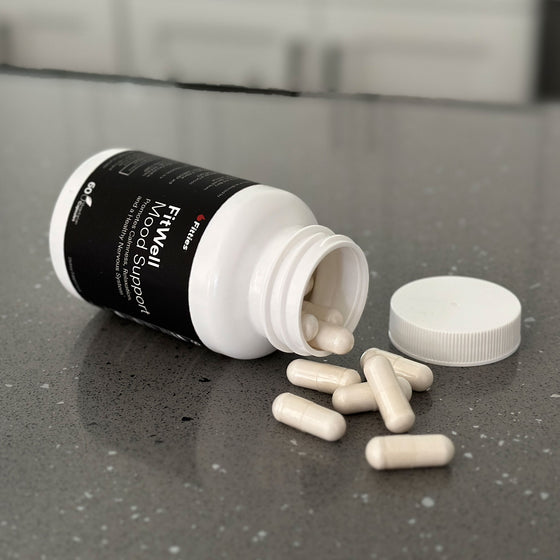
FitWell
FitWell is a melatonin-free formula that combines L-theanine (as Suntheanine), GABA, 5-HTP, and taurine with magnesium lysinate glycinate chelate and B vitamins. Every dose is listed on the label, and it is manufactured in a GMP compliant facility.
Shop FitWell