The Fitties Journal
Monk Fruit: Why It Is the Best Sweetener for Supplements
Key Takeaways
Here's what matters most if you're short on time:
- Monk fruit extract gets its sweetness from mogrosides, not sugar. It contains zero calories, zero sugar, and does not raise blood sugar levels.
- Most supplement brands sweeten with added sugar, artificial sweeteners, or stevia. Each comes with different tradeoffs in taste, cost, and formulation.
- Stevia and monk fruit are both natural, zero-calorie options. The primary difference is taste profile, which matters most in products like protein shakes where the sweetener is a core part of the daily experience.
- The sweetener a brand chooses tells you something about its formulation priorities. Learning to read the "Other Ingredients" section is one of the fastest ways to evaluate a supplement.
You spend time choosing the right protein source. You check the amino acid profile. You read the label for fillers and artificial ingredients. And then you drink the thing without asking a very basic question: what is making this taste sweet?
The answer, for most supplements on the market, is one of four options: added sugar, an artificial sweetener like sucralose or acesulfame potassium, stevia, or monk fruit. These are not interchangeable. They differ in origin, in how your body processes them, in taste, and in why the manufacturer chose one over the other. That last part matters more than you might think.
What Is Monk Fruit?
Monk fruit (Siraitia grosvenorii) is a small green melon native to southern China and northern Thailand. It has been cultivated and used in traditional Chinese cuisine for centuries, primarily as a natural sweetener in teas and soups. The fruit itself is rarely eaten fresh because it spoils quickly after harvest, which is part of why it remained relatively unknown outside of Asia until recent decades.
The sweetness in monk fruit comes from a group of natural compounds called mogrosides. When the fruit is processed into an extract, the mogrosides are isolated and concentrated. The result is a sweetener that is roughly 150 to 250 times sweeter than table sugar by weight, which means a very small amount goes a long way in any formulation.
Here is what makes that relevant for supplements: monk fruit extract contains zero calories, zero sugar, and zero carbohydrates. The mogrosides responsible for its sweetness are not metabolized the way sugar is, which means monk fruit does not affect blood sugar levels the way sugar or even some sugar alcohols can. It has been granted GRAS (Generally Recognized as Safe) status by the FDA, and its long history of use in traditional food preparation adds a track record that most newer sweetener options simply cannot claim.
FitWhey+
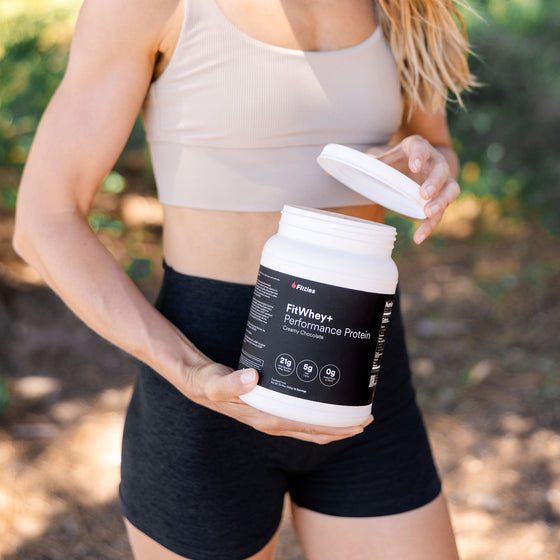
21g high-quality whey protein from grass-fed, rBST/rBGH hormone-free New Zealand cattle. Aminogen for enhanced protein digestion. Inulin prebiotic fiber from chicory root. No added sugar, stevia, or artificial sweeteners. Monk fruit sweetened.
Shop FitWhey+How Supplements Are Sweetened: The Four Main Options
Walk down the supplement aisle and flip over any flavored protein powder, pre-workout, or greens blend. You will find one of the following sweeteners on the label. Each one involves different tradeoffs, and understanding those tradeoffs makes you a better label reader.
Added Sugar (Including Fructose)
The cheapest and most familiar sweetener. It tastes good. Consumers like it. The problem is that adding sugar to a product you are taking for health or performance purposes can be counterproductive. Animal and human research suggests that consuming fructose-containing beverages increases visceral adiposity. If your protein shake contains 5 to 10 grams of added sugar per serving, that adds up fast across daily use, especially for athletes consuming one to two shakes per day.
Beyond the caloric impact, added sugar undermines one of the fundamental reasons people choose supplements in the first place: to support body composition and performance without the downsides of a poor diet.
Artificial Sweeteners (Sucralose, Acesulfame Potassium, Aspartame)
Zero calories, which is their selling point. They are cheap to produce and easy to formulate with, which is why they dominate the mass-market supplement space. Sucralose is by far the most common artificial sweetener in protein powders and pre-workouts.
Consumer preference has been shifting away from artificial sweeteners for years, driven by concerns about what synthetic compounds do in the body over long-term, repeated consumption. Whether those concerns are fully validated by current research is a separate question. The trend is clear: people who care about ingredient quality are increasingly looking for natural alternatives.
Stevia
Natural, plant-derived, and zero calories. Extracted from the leaves of the Stevia rebaudiana plant native to South America, stevia has become the most widely used natural sweetener in the supplement industry. It is affordable, widely available, and has earned a strong reputation as a clean-label ingredient.
Stevia works well across many product formats, particularly in formulations where it is used at lower concentrations or blended with complementary ingredients. The main limitation is taste at higher concentrations. Some consumers detect a bitter or metallic aftertaste, particularly in products where the sweetener is more prominent, like protein shakes and flavored drink mixes. High-purity stevia extracts like Reb A and Reb M have improved this significantly, though individual taste sensitivity varies.
For many supplement applications, stevia is a strong choice, which is why it remains the most popular natural sweetener in the industry.
Monk Fruit Extract
Natural, plant-derived, zero calories, zero sugar, and a clean sweetness profile that closely resembles sugar's taste. Monk fruit tends to avoid the aftertaste that some consumers experience with stevia, which makes it particularly well-suited for products you consume by the glass, like protein shakes and meal replacements, where taste is front and center.
The tradeoff is cost. Monk fruit extract is significantly more expensive than every alternative listed above. The fruit is primarily grown in a limited region of southern China (mainly the Guangxi province), the extraction process to isolate mogrosides is more involved than processing sugar or stevia, and global supply is smaller. This cost difference is the primary reason monk fruit remains less common in supplements than stevia or artificial sweeteners.
Monk Fruit vs. Stevia: Understanding the Differences
Monk fruit and stevia are the two leading natural, zero-calorie sweetener options in supplements. They share several important properties: both are plant-derived, both contribute zero calories and zero sugar, and both have FDA GRAS status. Where they differ is worth understanding.
Taste profile. Monk fruit extract delivers a clean, rounded sweetness. Stevia, depending on the extract quality and concentration, can carry a bitter or licorice-like note. High-purity stevia extracts (Reb A and Reb M) have reduced this issue, and many consumers have no problem with stevia's taste. But for applications where the sweetener is highly prominent, such as protein shakes and flavored powders you mix with water, monk fruit's taste neutrality becomes a meaningful advantage.
Source and processing. Stevia comes from the Stevia rebaudiana leaf. Monk fruit comes from the Siraitia grosvenorii fruit. Both require extraction to isolate their sweet compounds: steviol glycosides for stevia, mogrosides for monk fruit. Neither is a "whole food" sweetener in supplement applications. Both undergo processing to deliver a concentrated, stable ingredient.
Formulation flexibility. Stevia is versatile and works well across a wide range of product formats, from capsules and stick packs to powders and ready-to-drink beverages. Monk fruit excels specifically in products where taste is the primary consumer experience, like protein powders and meal shakes. Some manufacturers use both sweeteners across their product lines, choosing whichever works best for each specific formulation.
Cost. Stevia is cheaper to produce and more widely available. Monk fruit is more expensive due to limited growing regions, lower global production volume, and more complex extraction. This cost difference is one of the primary reasons stevia dominates the natural sweetener market overall.
Neither sweetener is inherently "better" than the other. They serve different formulation needs. The right choice depends on the product format, the taste profile the formulator is targeting, and the role the sweetener plays in the overall consumer experience.
Sweetener Comparison
| Sweetener | Calories | Taste Notes | Relative Cost |
|---|---|---|---|
| Monk Fruit Extract | Zero | Clean, rounded sweetness | Highest |
| Stevia | Zero | Bitter note at higher doses | Moderate |
| Sucralose | Zero | Variable | Low |
| Acesulfame K | Zero | Bitter at high doses | Low |
| Added Sugar | 4 per gram | Familiar, universally liked | Lowest |
Why Sweetener Choice Matters in Protein Supplements
Sweetener selection matters most in products you consume by volume: protein shakes, meal replacements, and flavored drink mixes. These are products where the sweetener is not a background ingredient. It is a core part of the taste experience, and you are tasting it every day.
A protein powder you mix with water and drink once or twice daily is a very different proposition than a capsule or a stick pack dissolved in 12 ounces of liquid. The sweetener has more room to shine or more room to cause problems. This is why monk fruit's clean taste profile is especially valuable in protein formulations. It lets the flavor do its job without an aftertaste competing for your attention.
FitWhey+ and FitPlant+ are both sweetened exclusively with monk fruit extract, with no added sugar, stevia, or artificial sweeteners. The choice to use monk fruit in these formulations came down to taste quality in a product format where taste matters most. It is the more expensive option, but for a protein shake you are drinking daily, the difference is worth it.
How to Read Supplement Labels for Sweeteners
If the sweetener in your supplement matters to you, here is what to check on the label.
Check the "Other Ingredients" section. This is where sweeteners are listed, separate from the Supplement Facts panel. Look for specific names: monk fruit extract, stevia leaf extract, sucralose, acesulfame potassium, aspartame, sugar, fructose, dextrose, maltodextrin. If the label says "natural flavors" without specifying the sweetener, that is not transparency.
Watch for blends and bulking agents. Some products list "monk fruit blend" or "stevia blend," which often means the sweetener is combined with erythritol, maltodextrin, or dextrose as a bulking agent. These fillers add volume to make the sweetener easier to formulate with, but they also add ingredients you may not want. A product that lists just "monk fruit extract" or "stevia leaf extract" with no secondary sweetener is using the ingredient as intended.
Look for what is excluded. A "formulated to exclude" or "free of" section on the label tells you what the manufacturer deliberately left out. This section is just as informative as the ingredients list because it shows you the decisions the formulator made before the product was manufactured.
Consider the product format. As noted above, the sweetener matters more in some products than others. In a protein powder you mix with water and drink daily, the sweetener has an outsized impact on your experience. In a capsule supplement, it is essentially irrelevant. Prioritize your sweetener scrutiny for the products where you will actually taste it.
For a deeper guide to reading and evaluating supplement labels, see our supplement label guide. For broader criteria on choosing quality supplements, the Supplement Buyer's Guide covers what to look for and what to skip.
Next Steps
The sweetener is one ingredient decision among many, but it is a revealing one. Understanding the differences between monk fruit, stevia, artificial sweeteners, and sugar gives you a sharper lens for evaluating any supplement on the shelf, and it takes about five seconds of label reading to find out which one a product uses.
To see how sweetener choice fits into a broader supplement evaluation, our protein intake guide covers how much protein you need and how to choose a protein supplement. The Supplement Buyer's Guide provides the full framework for separating quality formulations from commodity products.
As with any dietary supplement, consult a healthcare professional if you have specific health concerns or are taking medication.
FitWhey+
21g high-quality whey protein from grass-fed, rBST/rBGH hormone-free New Zealand cattle. Aminogen for enhanced protein digestion. Inulin prebiotic fiber from chicory root. No added sugar, stevia, or artificial sweeteners. Monk fruit sweetened.
Shop FitWhey+