
The Fitties Journal
Protein Powder for Weight Loss: 6 Rules Before You Buy
Key Takeaways
Here's what matters most if you're short on time.
- Protein powder does not cause weight loss; it makes a calorie deficit easier to hold by making protein targets practical.
- In shorter, tightly controlled studies, higher protein intakes are linked to modestly greater fullness and more muscle kept in a calorie deficit, according to a 2015 review in The American Journal of Clinical Nutrition.
- Judge any powder by the panel for a real 20 to 40 gram protein dose, 0 grams added sugar, a printed amino acid profile, and no proprietary blends.
- Whey and plant protein both work for weight loss; consistency decides, not the protein source.
- A shake should replace calories in your day, not add to them.
No protein powder burns fat. Whatever the tub promises, weight loss comes from one place, eating fewer calories than you burn. What protein does is make that deficit work in your favor. Research ties higher protein intakes to modestly greater fullness, a higher metabolic cost of digestion, and more muscle kept while the fat comes off, mostly in shorter, tightly controlled studies (Leidy et al., 2015). A good protein powder is one of the cheapest, most reliable ways to hit those protein numbers inside a tight calorie budget.
The problem is the aisle you buy it in. "Weight loss" protein is where the supplement industry does some of its laziest work, with added sugar hiding behind a lean-looking label, protein diluted with fillers, and fat-burner fairy dust sprinkled on top to justify the markup. Six label rules sort the real formulas from the marketing.
Does Protein Powder Help With Weight Loss?

Indirectly, and only inside a calorie deficit. The powder itself is not the mechanism; the protein is. Three findings hold up well in the research.
First, appetite. A 2015 review in The American Journal of Clinical Nutrition linked higher-protein diets, roughly 1.2 to 1.6 grams per kilogram of body weight per day with about 25 to 30 grams of protein per meal, to improvements in appetite control and body weight management. Hunger is what kills most diets. Protein is the macronutrient that pushes back.
Second, digestion cost. Classic metabolic research on diet-induced thermogenesis puts the cost of digesting protein at 20 to 30 percent of its own calories, versus 5 to 10 percent for carbohydrate and 0 to 3 percent for fat. Not a license to eat more. Just a real, measurable edge that compounds in protein's favor.
Third, muscle. In a four-week trial of young men training hard in a roughly 40 percent calorie deficit, the group eating 2.4 grams of protein per kilogram per day gained about 1.2 kilograms of lean mass while losing 4.8 kilograms of fat. The group at 1.2 grams held lean mass roughly flat and lost 3.5 kilograms of fat. Keeping muscle through a deficit is the difference between "lost weight" and "got leaner."
A powder contributes exactly what its label says it contributes, which is protein, conveniently. That is the entire pitch. The question is whether the tub in your cart delivers it clean.
FitWhey+
FitWhey+ delivers 21 grams of New Zealand grass-fed whey per serving with 0 grams of added sugar, no stevia, and no artificial sweeteners, sweetened with monk fruit. Inulin prebiotic fiber and a fully printed amino acid profile round out a label with nothing to hide.
Shop FitWhey+How Do You Choose a Protein Powder for Weight Loss?
Ignore the front of the tub. Everything that matters is printed on the back, in the panel the marketing department hopes you skip. Six rules.
1. Demand a real protein dose per serving
The International Society of Sports Nutrition's position stand on protein recommends 1.4 to 2.0 grams per kilogram per day for exercising people, delivered in doses of roughly 20 to 40 grams. A scoop that delivers 12 grams is not a protein supplement; it is a protein-flavored beverage. Check the grams, then check the serving size they used to get there.
2. Read the added sugar line, not the front label
The row that matters is "Includes Xg Added Sugars." Plenty of powders sold for leaning out carry dessert-grade sweetness, and the front of the tub will never volunteer that. The bar is 0 grams added. A gram or two of naturally occurring sugar from dairy is a different thing entirely; added sugar in a weight loss tool is a contradiction you are paying extra for.
3. Look for a full amino acid profile, not a proprietary blend
A complete protein shows its essential amino acids, and the same ISSN position stand recommends 700 to 3,000 milligrams of leucine per dose. When a brand prints every amino acid in milligrams, it is showing its math. When it prints "proprietary protein matrix," it is hiding the answer, and you should assume the answer is unflattering.
4. Treat fiber as a feature
Most powders strip fiber out entirely, which is part of why a shake can vanish without touching your hunger. A formula that includes it, whether from added prebiotic fiber like inulin or from its base ingredients, behaves less like flavored water and more like food. In a deficit, that difference is the whole game.
5. Check what it is sweetened with
Zero added sugar still leaves the question of what made it sweet. Some people are fine with artificial sweeteners; others want them nowhere near their diet. Either way, that should be your call to make from the label, not a surprise in the fine print. If you want zero-calorie sweetness without going artificial, monk fruit is how nature gets it done.
6. Skip the fat-burner fairy dust
Powders aimed at weight loss love to bolt on a "thermogenic blend," a sprinkle of green tea extract here, some carnitine there, doses conveniently hidden inside a proprietary label. You are shopping for protein. Buy protein. Ingredients that cannot state their own dose are not carrying your deficit, and you should not be carrying their markup.
Whey or Plant Protein: Which Is Better for Weight Loss?
Either one. Your deficit does not care where the protein came from; it cares that you hit your number every day. The honest differences sit at the label level, not the ideology level.
| What to check | Whey protein | Plant protein | "Weight loss" blends |
|---|---|---|---|
| Amino acid profile | Complete and leucine-rich | Complete when pea and rice are combined; single sources fall short | Varies; often undisclosed |
| Added sugar risk | Low in clean formulas; verify flavored versions | Low in clean formulas; verify flavored versions | High; many are sweetened like dessert |
| Fiber | Usually stripped out unless added back | Naturally carries a little more | Rarely meaningful |
| Dairy | Contains milk | Dairy-free | Varies; read the allergen line |
| The tell on the label | Full amino profile printed | Both protein sources named | "Proprietary matrix" anywhere |
If dairy sits fine with you, whey earns its reputation on amino density and taste. If it does not, a properly blended plant formula closes the gap. The full comparison lives in our whey versus plant protein breakdown. For a cut, the tiebreaker is simpler than either camp admits. The best protein powder for weight loss is the one you will still be drinking in March.
How Do You Use Protein Powder During a Weight Loss Phase?

Set your daily protein target first. The research ranges above, roughly 1.2 to 1.6 grams per kilogram for appetite and weight management (Leidy et al., 2015) and 1.4 to 2.0 for people who exercise (ISSN position stand), are the working numbers, and our protein intake guide walks through the math for your body weight. The powder exists to close the gap between that number and what your food already provides.
Make the shake a swap, not an addition. It replaces the low-protein breakfast or the vending-machine snack; it does not ride on top of an unchanged diet. Spread your intake across the day in meals of roughly 25 to 30 grams, the per-meal quantity the appetite research above kept landing on, rather than backloading everything into dinner.
This is where the label math pays off. FitWhey+, for example, prints its entire hand, with 21 grams of New Zealand grass-fed whey per serving, 0 grams of added sugar, no stevia, no artificial sweeteners, monk fruit for sweetness, added inulin fiber, and the full amino acid profile listed in milligrams. That is what rules one through six look like on an actual panel.
Two cautions, straight from the label. Very low calorie diets, below 400 calories per day, can cause serious illness or death; do not attempt one, with or without protein supplements, outside medical supervision. FitWhey+ is not for use by infants, children, or pregnant or nursing women, and if you manage a medical condition or take medication, clear any supplement with your healthcare provider before it goes in the cart.
Can Protein Shakes Make You Gain Weight?
Yes, the same way anything with calories can. A shake stacked on top of an unchanged diet is a surplus with good branding. And the powders marketed hardest for weight loss are often the easiest to gain with, because a formula that tastes like a milkshake usually is one. We take the question apart in full in whether protein powder makes you gain weight, including the five scenarios where the scale actually moves.
Two habits keep the shake on your side. Count it in your daily calories like the food it is. And treat it as a protein delivery vehicle, not a treat. If the label needed added sugar to make you want it, the label already told you whose side it is on.
FitWhey+
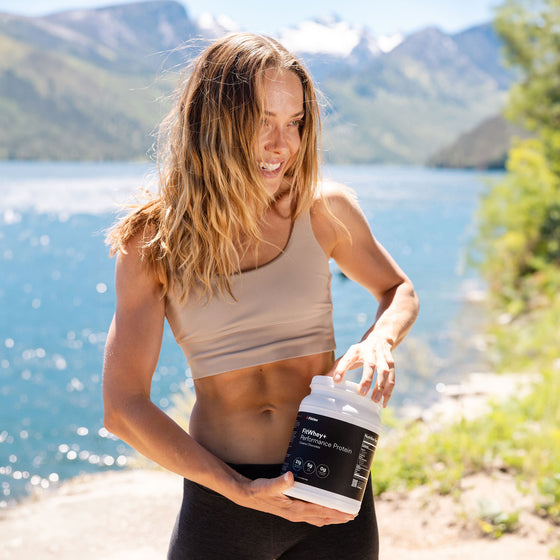
FitWhey+ delivers 21 grams of New Zealand grass-fed whey per serving with 0 grams of added sugar, no stevia, and no artificial sweeteners, sweetened with monk fruit. Inulin prebiotic fiber and a fully printed amino acid profile round out a label with nothing to hide.
Shop FitWhey+