The Fitties Journal
Whey vs Plant Protein: Which Builds Muscle Better?
Key Takeaways
Here's what matters most if you're short on time:
- Whey is a complete protein and carries more leucine per serving, the amino acid that triggers muscle protein synthesis.
- A pea and rice blend can reach a complete amino acid profile and supports comparable muscle growth when protein and leucine are matched.
- Whey contains milk, while plant protein is dairy-free and lactose-free, which often makes it easier to digest for sensitive people.
- For body composition, total daily protein matters more than whether it comes from whey or plants.
- Look for a protein with no added sugar and no artificial sweeteners, regardless of source.
Whey edges out plant protein for raw muscle building, and the reason is simple chemistry: whey is a complete protein with a naturally high leucine content, and leucine is the amino acid that flips the switch on muscle protein synthesis. But that is not the whole story. A well-built pea and rice plant blend that hits the same protein and leucine targets supports muscle just as well. The real decision is not whey versus plant in the abstract. It is which one fits your digestion, your diet, and your standards for what goes in the tub.
Here is the part the supplement aisle would rather you not notice: most of the gap people imagine between whey and plant protein is a manufacturing gap, not a biology one. Cheap commodity whey buried under artificial sweeteners is not "better" than a thoughtfully formulated plant blend. Below is how the two actually compare, and how to pick the right one for you.
Whey vs plant protein: what is the real difference?
The difference starts with the source. Whey comes from milk, separated during cheese production, then concentrated or isolated into a powder. The slower-digesting protein left behind in that same milk is casein, which we compare directly in whey versus casein. Plant protein is extracted from crops, most often peas, brown rice, soy, or hemp, and the better products blend two sources so the amino acids complement each other.
That source difference drives almost everything else: how complete the amino acid profile is, how fast it digests, how it sits in your stomach, and who can or cannot use it. Here is the side-by-side.
| Factor | Whey protein | Plant protein |
|---|---|---|
| Source | Milk (dairy) | Peas, rice, soy, hemp |
| Complete protein | Yes, naturally | Single sources often incomplete; blends can reach a full profile |
| Leucine per serving | Higher, roughly 2.4g | Lower, roughly 1.5g in a typical pea-rice blend |
| Digestion speed | Fast | Slower, with more fiber |
| Lactose | Contains milk | Dairy-free and lactose-free |
| Best for | Omnivores chasing fast recovery and max leucine | Vegans, and anyone sensitive to dairy or lactose |
FitWhey+
FitWhey+ delivers 21g of New Zealand grass-fed whey per serving with naturally high leucine, plus Aminogen enzymes and prebiotic inulin fiber. Sweetened with monk fruit, never stevia or artificial sweeteners. Formulated to support healthy body composition and normal muscle recovery after training.*
Shop FitWhey+Which builds more muscle, whey or plant protein?
Muscle gets built when muscle protein synthesis outpaces breakdown over time, and the single biggest dietary lever on that is hitting enough total protein each day. The second lever is leucine, one of the three branched-chain amino acids and the one that acts as the primary trigger for protein synthesis. Whey wins on both counts in a single scoop: it is naturally complete and carries more leucine per serving, which is why peer-reviewed research has long regarded animal-source protein as higher quality for building muscle.
The catch is that "per scoop" is not the same as "per day." Studies comparing the two repeatedly find that when total protein and leucine intake are matched, a well-formulated plant blend supports comparable muscle growth. Plant protein is not weaker at building muscle. It is usually just less concentrated, so you may need a slightly larger serving, or a blend engineered to close the leucine gap, to land in the same place. For the deeper math on this, see our guide on how much protein you actually need. Leucine content is where the two split most clearly, and it matters most after 60, which we covered in protein powder for seniors.
Is plant protein a complete protein?
A complete protein contains all nine essential amino acids in usable amounts. Whey and other animal proteins are complete by default. Most single-source plant proteins are not: pea protein runs low on methionine, and rice protein runs low on lysine. On its own, each leaves a gap.
Pair them, though, and the gap closes. Rice covers pea's weak spot, pea covers rice's, and together they read as a complete protein. This is why serious plant formulas blend the two rather than relying on one. FitPlant+ is built on exactly this pairing: its pea and rice blend reaches an amino acid score of 100%, which means it delivers the full range of essential amino acids rather than a partial profile. If you want the full breakdown of what separates a good plant powder from a chalky single-source one, read our guide on how to choose a plant-based protein powder.
Which is easier to digest, whey or plant protein?
This is where the answer flips for a lot of people. Whey is fast-digesting and light, but it contains milk. If you are lactose intolerant or dairy-sensitive, even a quality whey can leave you bloated or uncomfortable. Plant protein sidesteps that entirely. It is dairy-free and lactose-free, digests more slowly, and carries more natural fiber, which many people find sits easier.
Two formulation details make a real difference here. The first is a digestive enzyme like Aminogen, which supports protein digestion and amino acid absorption, so more of what you drink actually gets used. The second is prebiotic fiber such as inulin, which feeds beneficial gut microbes and slows digestion. Both FitWhey+ and FitPlant+ are built with both, so you are not just drinking protein, you are drinking protein your body is set up to actually digest and absorb.
One honest note: if you choose whey and you are sensitive to dairy, that is on the formula's source, not on you. FitWhey+ contains milk, so dairy-sensitive readers are better served by a plant option.
Whey vs plant protein for weight loss and satiety
For body composition, the protein source matters less than the total package: protein keeps you full, preserves lean mass while you are in a deficit, and costs fewer calories than the snacks it replaces. Both whey and plant protein do this well. Plant blends often carry a bit more fiber, which adds to satiety. Whey digests faster, which some people prefer right around training.
The thing that quietly wrecks a "healthy" protein is what gets added to it: piles of sugar, or a wall of artificial sweeteners to mask cheap raw material. A protein sweetened with monk fruit and free of added sugar, stevia, and artificial sweeteners keeps the macros clean. That is a formulation choice, and it is one of the easiest tells of whether a brand respects what it is selling you. If you are choosing specifically for a cut, our six rules for buying a protein powder for weight loss go through the label line by line.
FitWhey+ vs FitPlant+: which should you choose?
Both are clinically dosed, monk-fruit sweetened, and free of added sugar, stevia, and artificial sweeteners. FitWhey+ is built on New Zealand grass-fed whey protein, and the choice comes down to your diet and your gut.
| Spec | FitWhey+ | FitPlant+ |
|---|---|---|
| Protein source | New Zealand grass-fed whey concentrate | Pea and rice blend |
| Protein per serving | 21g | 15g |
| Leucine per serving | 2,350 to 2,400 mg by flavor | About 1.5g |
| Complete profile | Yes, naturally | Yes, amino acid score of 100% |
| Dairy and lactose | Contains milk | Free of dairy and lactose; vegan |
| Extras | Aminogen enzyme, inulin fiber | Aminogen, chitin-glucan fiber, full vitamin and mineral matrix |
Choose whey if you eat dairy, your stomach handles it, and you want the most leucine and the fastest recovery per scoop. Choose plant if you are vegan, you react to dairy or lactose, or you simply prefer a fiber-rich, plant-based option that also brings a full spread of vitamins and minerals along for the ride. There is no wrong answer, only the one that fits how you eat.
Talk to your healthcare provider before adding a new supplement if you are pregnant or nursing, take medication, or manage a health condition.
FitWhey+
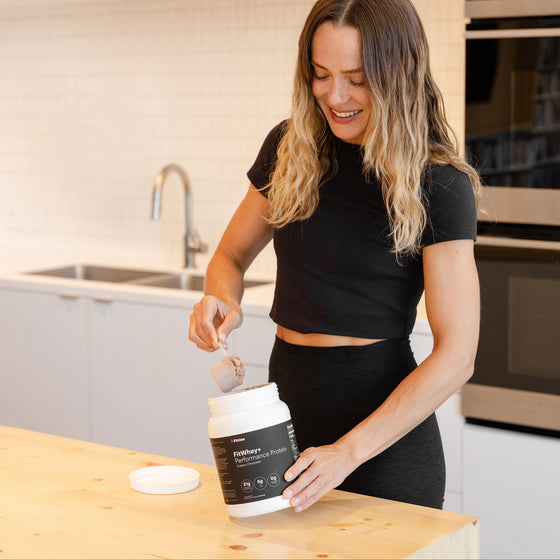
FitWhey+ delivers 21g of New Zealand grass-fed whey per serving with naturally high leucine, plus Aminogen enzymes and prebiotic inulin fiber. Sweetened with monk fruit, never stevia or artificial sweeteners. Formulated to support healthy body composition and normal muscle recovery after training.*
Shop FitWhey+