The Fitties Journal
Grass-Fed Whey Protein: Is It Better, and Worth the Money?
Key Takeaways
Here's what matters most if you're short on time.
- Grass-fed whey is whey protein from the milk of pasture-raised cows, not a different type of protein.
- Per gram of protein, grass-fed and conventional whey build muscle the same way; the amino acids are comparable.
- Milk from grass-fed cows tends to carry more omega-3 fatty acids and a more balanced fatty acid ratio than conventional milk.
- The real differences you pay for are sourcing, sweeteners, added sugar, and what else is in the tub.
- Whey is a dairy product and contains milk, so it is not suitable if you avoid dairy.
Grass-fed whey protein is whey made from the milk of cows raised on pasture instead of grain. Gram for gram, it builds muscle the same way regular whey does. The protein and the amino acids are essentially the same, so there is no magic muscle advantage hiding in the word "grass-fed." What actually differs is the source. Milk from pasture-raised cows carries a modestly better fat profile, with more omega-3 fatty acids and a more balanced fatty acid ratio, and it usually comes from cows not treated with synthetic hormones. Whether that is worth paying more for depends on what else is in the tub, like the sweeteners, the added sugar, and the quality of the protein itself. This guide breaks down what grass-fed whey really is, how it compares to conventional whey, and how to tell when the premium is real and when you are just paying for a label.
What is grass-fed whey protein?

Whey is one of the two proteins in milk (the other is casein, which we break down in whey versus casein). When milk is turned into cheese, the liquid left behind is whey, and that liquid is filtered, dried, and turned into the powder you scoop. "Grass-fed" describes the cows, not a different kind of protein. The milk comes from cattle that graze on pasture rather than being raised primarily on grain.
You will see grass-fed whey sold in two main forms. Whey protein concentrate covers a wide range, from about 25 to 89 percent protein, and keeps more of the natural fat and lactose (Hoffman and Falvo, 2004). Whey protein isolate is filtered further, to 90 percent protein or more, with very little fat or lactose (Hoffman and Falvo, 2004). Neither is automatically "better," they just suit different priorities, which we cover in our guide to whey isolate vs concentrate. Grass-fed simply refers to how the source milk was produced, and it applies to both.
The other thing "grass-fed" usually signals is sourcing standards. New Zealand whey, for example, comes from cows that graze most of the year and are not given synthetic growth hormones like rBST, because those hormones are prohibited in New Zealand dairy. That is a sourcing difference, not a claim that conventional whey is unsafe.
FitWhey+
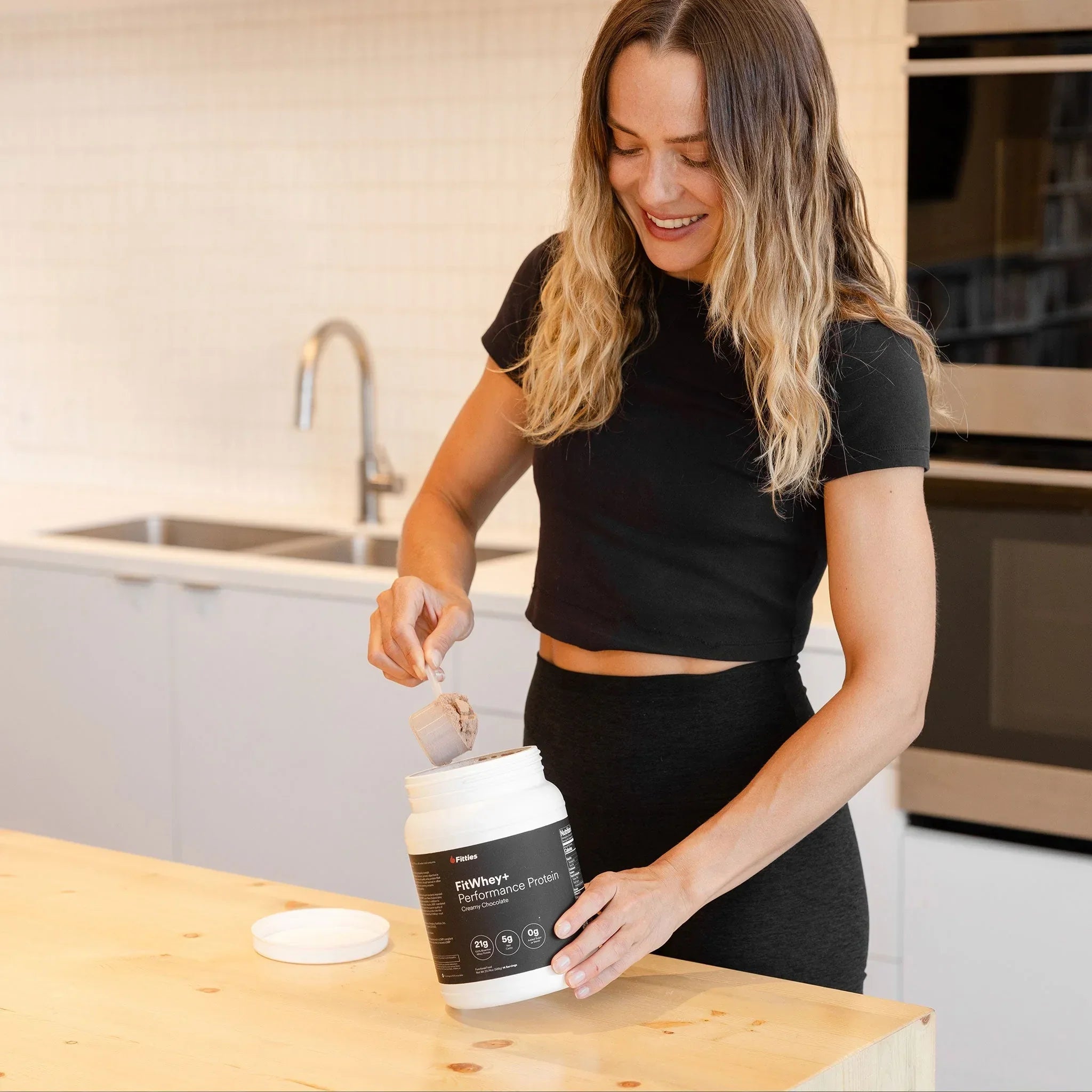
FitWhey+ starts with New Zealand grass-fed, rBST/rBGH hormone-free whey, 21 grams per serving, sweetened with monk fruit instead of sucralose or stevia, with no added sugar and no soy protein. Inulin prebiotic fiber and a fungal protease complex round out a label with nothing to hide.
Shop FitWhey+Is grass-fed whey protein better than regular whey?
For building muscle, no, not in any meaningful way. Whey is a complete protein whether the cow ate grass or grain, meaning it contains all nine essential amino acids your body cannot make on its own, and it is especially rich in leucine, the amino acid that switches on muscle protein synthesis. The International Society of Sports Nutrition puts the target for active people at roughly 1.4 to 2.0 grams of protein per kilogram of body weight per day, with 700 to 3,000 mg of leucine per serving to maximize the muscle-building response. A quality grass-fed whey and a quality conventional whey both clear that bar.
Where grass-fed milk genuinely differs is the fat. Because you mix whey with water and the fat content per scoop is small, the practical difference is minor, but it is real and it is measurable. Milk from pasture-fed cows contains more omega-3 fatty acids and more conjugated linoleic acid (CLA) than milk from grain-fed cows. One United States study of grassmilk found 147 percent more omega-3 fatty acids than conventional milk and a near 1-to-1 omega-6 to omega-3 ratio, compared with about 5.7-to-1 in conventional whole milk. A review of pasture feeding and milk quality reached the same conclusion, that grazing shifts the fatty acid profile in a favorable direction. Just keep the scale in mind. Whey is a low-fat product, so you are getting a better version of a small amount, not a fish-oil dose.
Here is the honest comparison, side by side.
| Factor | Grass-Fed Whey | Conventional Whey |
|---|---|---|
| Protein per gram | Same | Same |
| Amino acids and leucine | Complete, high leucine | Complete, high leucine |
| Muscle building | Equivalent per gram | Equivalent per gram |
| Omega-3 and CLA in source milk | Higher | Lower |
| Synthetic hormones (rBST) | Typically none | Varies by source |
| Price | Higher | Lower |
What are the benefits of grass-fed whey protein?
Most of the benefits people attribute to grass-fed whey are really just the benefits of whey protein, plus a slightly cleaner source. Worth separating the two so you know what you are actually paying for.
The protein itself does the heavy lifting. Whey digests quickly and delivers a strong hit of leucine, which is why it is a popular choice around training. If you are weighing protein shake timing around workouts, the short version is that your daily protein total matters more than the exact minute. Protein in general supports muscle repair and growth, helps preserve lean mass when you are eating in a deficit, and is more filling per calorie than carbs or fat, which is why higher-protein diets tend to help with appetite. None of that is unique to grass-fed whey, it is true of any well-made whey.
The grass-fed part adds a better fat profile in the source milk (the omega-3 and CLA difference above) and, from the right suppliers, milk from cows not given synthetic hormones. Those are reasonable things to prefer. They are not, on their own, going to change your physique. If a product implies that grass-fed sourcing alone will transform your results, that is marketing doing the work, not the whey.
Are there downsides to grass-fed whey?
A few, and they are worth knowing before you spend more.
First, it still contains milk. Grass-fed or not, whey is a dairy product, so it is off the table if you have a milk allergy, and concentrate in particular keeps some lactose that can bother sensitive stomachs. Isolate has less. If you avoid dairy entirely, a plant protein is the better route.
Second, the "why do doctors say no to whey" worry is mostly overblown. For healthy people, whey does not damage your kidneys or liver, that caution applies to those with existing kidney disease, who should talk to their doctor about protein intake. The real downsides of cheap whey are more mundane, like added sugar, artificial sweeteners, and underdosed protein hidden behind a big label.
Third, the price. Grass-fed whey costs more, and sometimes that premium buys genuine sourcing quality, and sometimes it just buys the words on the front. The next section is how you tell the difference.
How to choose a grass-fed whey protein

Grass-fed is a starting point, not a guarantee of quality. Plenty of "grass-fed" tubs still lean on the cheapest commodity base and cover the taste with a pile of artificial sweetener. Here is what actually separates a premium grass-fed whey from a marketing exercise, and where an honest label earns the extra money.
Read past the front of the label and check these things in order.
- Where the milk comes from. Named, reputable dairy sourcing (New Zealand is a common benchmark) beats a vague "grass-fed" stamp with no origin.
- Protein per serving. Look for a real dose, around 20 to 25 grams, not a scoop padded out with fillers.
- Sweeteners. Monk fruit or stevia beats sucralose and acesulfame potassium if you would rather skip artificial sweeteners. Check which one it actually uses.
- Added sugar. Ideally zero. A "healthy" protein with 8 grams of added sugar per scoop is a dessert.
- What else is in the tub. Some formulas add prebiotic fiber or digestive enzymes, others add cheap thickeners and flavor. Know which you are buying.
- Manufacturing standards. A product made in a GMP compliant facility gives you more confidence than a label with no quality information at all.
This is the lane FitWhey+ was built for. It starts with New Zealand grass-fed, rBST/rBGH hormone-free whey rather than commodity powder, delivers 21 grams of protein per serving, and is sweetened with monk fruit instead of sucralose or stevia, with no added sugar and no soy protein. It adds inulin prebiotic fiber and a fungal protease complex, and its label lists it as formulated to exclude gluten, soy protein, and sesame (it does contain milk, as all whey does). That is what a grass-fed premium looks like when it is spent on the formula instead of the marketing.
Is grass-fed whey protein worth the money?
It depends on what you are buying it for. If your only goal is hitting your daily protein target to build or keep muscle, a solid conventional whey does that just as well for less. If you also care about the source, a cleaner fat profile, milk from cows raised without synthetic hormones, and no artificial sweeteners, then a well-made grass-fed whey is a reasonable upgrade, as long as the rest of the label backs it up.
The trap to avoid is paying a grass-fed premium for a product that is grass-fed in name only, with a cheap base and a sugar-and-sucralose finish. Judge the whole tub, not the two words on the front. Get that right and grass-fed whey is worth it. Get it wrong and you are just paying more for the same commodity powder in nicer packaging. For how it fits with everything else you take, see our guide to building a supplement stack.

FitWhey+
FitWhey+ starts with New Zealand grass-fed, rBST/rBGH hormone-free whey, 21 grams per serving, sweetened with monk fruit instead of sucralose or stevia, with no added sugar and no soy protein. Inulin prebiotic fiber and a fungal protease complex round out a label with nothing to hide.
Shop FitWhey+