The Fitties Journal
Protein Powder for Seniors: Why 20g a Serving Falls Short After 60
Key Takeaways
Here's what matters most if you're short on time.
- The ESPEN Expert Group recommends at least 1.0 to 1.2 g of protein per kg of body weight per day for healthy older adults, against the 0.8 g per kg RDA.
- Older men are estimated to need about 0.40 g of protein per kg at one sitting to maximize myofibrillar synthesis, against about 0.24 g per kg in young men.
- A leucine threshold near 3 g per meal has been proposed for older adults, though in a 2021 systematic review only 16 of 29 studies supported the leucine trigger idea (Zaromskyte et al., 2021).
- A single scoop is a strong contribution to a meal rather than a meal in itself, and lands closer to the per-meal target when it rides alongside food.
- Collagen contains no tryptophan, so it is not a complete protein and does not substitute for whey or a pea and rice blend against a protein target.
- Kidney function and prescription medication change the protein conversation, so raise the plan with a healthcare professional first.
Protein powder for seniors comes down to two numbers, and grams per scoop is only half of one of them. The daily target is the first. The ESPEN Expert Group recommends at least 1.0 to 1.2 g of protein per kg of body weight per day for healthy older adults, well above the 0.8 g per kg RDA. The second is the one almost nobody prints on a tub, the per-meal dose. Researchers have proposed that older men need roughly 0.40 g of protein per kg at a single eating occasion, against about 0.24 g per kg for young men, to maximize the rate of myofibrillar synthesis. That is the whole reason a 20 g scoop that worked fine at 35 quietly stops being enough at 70. Hit both numbers and the brand on the tub matters far less than the industry would like you to believe.
How much protein do you need per day after 60?
Start with what the RDA is and what it is not. The Recommended Dietary Allowance for protein is 0.8 g per kg of body weight per day for every adult over 18, independent of age. That figure is a floor built to cover basic nutritional needs in healthy people. It was never built as a target for someone trying to hold on to muscle in their seventies.
Two expert groups have since said so directly. The ESPEN Expert Group recommends at least 1.0 to 1.2 g per kg per day for healthy older adults, and 1.2 to 1.5 g per kg per day for those with acute or chronic illness, with even higher intakes for severe illness or injury. The PROT-AGE Study Group landed in the same range, at 1.0 to 1.2 g per kg per day, with 1.2 g per kg for those who exercise. Both are 25 to 50 percent above the RDA.
Here is what those two recommendations look like on a bathroom scale, using 1.0 to 1.2 g per kg for the daily figure and 0.40 g per kg for the per-meal figure.
| Body weight | Protein per day | Protein per meal |
|---|---|---|
| 130 lb (59 kg) | 59 to 71 g | about 24 g |
| 150 lb (68 kg) | 68 to 82 g | about 27 g |
| 170 lb (77 kg) | 77 to 93 g | about 31 g |
| 190 lb (86 kg) | 86 to 103 g | about 34 g |
| 210 lb (95 kg) | 95 to 114 g | about 38 g |
Notice how the per-meal column behaves. A 170 lb adult needs roughly 31 g at a sitting, three or four times a day. A single 21 g serving of powder does not cover one of those slots on its own. It gets you most of the way there when it rides alongside food, and it does very little when it replaces a meal. That distinction is where most protein powder money is wasted.
FitWhey+
FitWhey+ is 100% New Zealand whey protein concentrate from pastured, grass-fed herds raised without rBST or rBGH. 21 g of protein and 2,400 mg of leucine per two-scoop serving of the Chocolate, with the full typical amino acid profile printed on the panel so you can check the number yourself. Sweetened with monk fruit, with 0 g added sugars and no stevia or artificial sweeteners. Contains milk.
Shop FitWhey+Why does protein stop working as well with age?

Because the same dose of protein produces a smaller muscle-building response than it used to. Researchers call it anabolic resistance (Burd et al., 2013), and it is the single most useful concept for anyone over 60 reading a supplement label. The muscle is still willing. It just needs a louder signal to get moving.
The proposed size of that gap is striking. Older men are estimated to need about 0.40 g of protein per kg at an eating occasion to maximize the rate of myofibrillar synthesis, compared with about 0.24 g per kg in young men. That is roughly two thirds more protein, per meal, for the same result. Spread it out and the arithmetic gets uncomfortable fast, because most people over 60 eat their protein the way most people do, with a trace at breakfast, a little at lunch, and a pile at dinner.
The clock behind all this is not gentle either. The HHS Office on Women's Health notes that the body naturally loses about 3 to 5 percent of its muscle mass per decade. Protein alone does not stop that. Protein plus resistance training is the combination every expert group keeps pointing at, and the powder is the easy half of that pair.
What is the leucine threshold, and why does it decide the serving?
Leucine is the amino acid that flips the switch. Muscle protein synthesis responds to essential amino acids generally, but leucine is the one that appears to trigger the response, which is why a protein's leucine content matters as much as its total grams.
For older adults the proposed number is higher. A systematic review in Frontiers in Nutrition refers to a 3 g leucine threshold proposed for the maximal stimulation of muscle protein synthesis in older adults. Be honest about the caveat. That same review concluded the leucine trigger hypothesis is not fully settled, and the International Society of Sports Nutrition gives a wider working range of 700 to 3,000 mg of leucine per dose. An earlier review in the Journal of Frailty & Aging pointed the same direction, recommending a moderate serving of 25 to 30 g of high-quality protein at each meal for older people. Anyone quoting you a single magic number is overselling the evidence. The direction of travel is not in doubt. Aim high, not low.
Now put real labels against it. A two-scoop, 42 g serving of FitWhey+ in Creamy Chocolate lists 21 g of protein and 2,400 mg of leucine on its Nutrition Facts panel. The Vanilla Delight version lists 21 g of protein and 2,350 mg of leucine per 38 g serving. Both sit just under 3 g. A pea and rice blend runs lower again. FitPlant+ in Chocolate lists 15 g of protein and 1,550 mg of leucine per 35 g serving. Whey is the leucine-dense option here for a reason, and the NIH Office of Dietary Supplements notes that whey protein has more leucine than either casein or soy.
So the practical answer is not "buy the leucine tub." It is that one serving of any 20 g protein powder is a strong contribution to a meal, not a meal in itself. Drink it alongside two eggs, a bowl of Greek yogurt, or a glass of milk, and the meal's leucine total looks very different from the scoop's. That is a different instruction from the one the category gives you, and it is the one worth following.
There is a second point buried in those numbers. Both of those labels publish a full typical amino acid profile, so you can look the leucine up yourself. Most tubs do not. If a brand will not print the amino acid breakdown, it is asking you to take its word on the number the research keeps pointing at.
Which type of protein powder fits an older adult?
Type matters less than the internet suggests, and tolerance matters more. A 2025 systematic review and meta-analysis in Nutrition Reviews pooled randomized controlled trials comparing plant and animal protein and found no meaningful difference in adults aged 60 and over. The best protein powder for a 72 year old is the one they will drink every day without feeling bloated.
| Type | Complete protein | Lactose | Where it fits after 60 |
|---|---|---|---|
| Whey concentrate | Yes, leucine-rich | Some, from milk | The default if dairy sits fine |
| Whey isolate | Yes, leucine-rich | Very little | Mild lactose sensitivity |
| Casein | Yes | Some, from milk | A slower option before bed |
| Pea and rice blend | Blended to complement | None | Dairy-free, expect a bigger serving |
| Collagen | No, it lacks tryptophan | None | Skin and joint routines, not a protein target |
| Nutrition drinks | Usually yes | Usually some | Convenient, but check the added sugar |
Two entries in that table deserve a warning label of their own. A complete protein contains all nine essential amino acids, tryptophan among them. Collagen contains no tryptophan, so it is not a complete protein, and grams of collagen do not substitute for grams of whey or a pea and rice blend against a daily protein target. It gets recommended to older adults constantly, and it is the wrong tool for muscle. The ready-to-drink nutrition shakes on the pharmacy shelf are the opposite case, genuinely useful for someone struggling to eat, and often carrying a lot of sugar. Read the added sugars line before you buy a case.
What should you check on the label before you buy?
1. Protein per serving, and how many scoops that takes
Read the serving size first, every time. A tub advertising 25 g of protein often means two or three scoops, which halves the number of servings you actually get. Then check protein against calories. If a 220 calorie serving delivers 15 g of protein, you bought a carbohydrate drink.
2. Whether the leucine number is printed at all
A published typical amino acid profile is the fastest transparency test in this category. It costs a manufacturer nothing but honesty, and most will not do it.
3. Lactose, if dairy is a problem
Whey concentrate carries more residual lactose than whey isolate, which is the practical difference between the two forms for most people. If milk has become harder to handle with age, that is the single spec to check, and a pea and rice blend removes the question entirely. We covered the split in detail in whey isolate vs concentrate.
4. Added sugar and total calories
These pull in opposite directions depending on the person. If appetite has dropped and weight is hard to keep on, extra calories are a feature. If blood sugar is the concern, the added sugars line is the one that matters. Decide which problem you are solving before you read the panel.
5. How it mixes and how it tastes
Unserious as it sounds, this is the spec that decides whether the tub gets finished or shoved to the back of a cupboard in week two. A gritty shake with a chemical aftertaste does not get drunk, and a powder nobody drinks delivers exactly 0 g of protein.
6. Cost per gram of protein, not cost per tub
Divide the price by the total grams of protein in the container. A $60 tub with 30 servings at 25 g works out to $0.08 per gram. A $35 tub with 20 servings at 15 g looks cheaper on the shelf and costs $0.12 per gram, half again as much. This one calculation cuts through most of the value marketing in the category in about fifteen seconds.
How do you build a day that hits the number?

Fix breakfast first. It is almost always the weakest protein meal of the day and the easiest one to repair, because the standard version, toast and cereal and coffee, carries almost none. Rebuilding it around eggs, Greek yogurt, cottage cheese, or a shake mixed with milk rather than water is the single highest-yield change most people over 60 can make. Lunch is usually the next offender. Dinner rarely needs help.
Where a powder earns its place is convenience and consistency, not superiority. FitWhey+ is built on 100% New Zealand whey protein concentrate from pastured, grass-fed herds raised without rBST or rBGH. A two-scoop 42 g serving of the Chocolate lists 170 calories, 21 g of protein, 13 g of carbohydrate including 3 g of fiber from chicory inulin, 2 g of total sugars and 0 g of added sugars, alongside Aminogen®, a plant-derived enzyme system. It is sweetened with monk fruit extract, with no stevia. Its label reads Contains: Milk, and it is formulated to exclude wheat, gluten, yeast, soy protein, fish, shellfish, peanuts, tree nuts, egg, sesame, artificial colors and artificial sweeteners. If dairy is out, FitPlant+ is the pea and rice route, and we compared the two properly in whey vs plant protein.
Then do the part the supplement industry would rather not mention, because it cannot be sold in a tub. Every expert group that raised the protein target for older adults paired it with resistance training, and the protein does far less without it. The CDC guideline is muscle-strengthening activities on 2 or more days a week that work all major muscle groups. That, plus a protein target you hit, is the entire intervention. Everything else on the shelf is a rounding error.
One practical note on timing is to spread it out. Four meals in the 25 to 30 g range beats one heroic 90 g dinner, because the per-meal threshold has to be cleared each time it comes around. If you want the full daily-target math for any age, we laid it out in our guide to how much protein per day.
When should you talk to your doctor first?
Before you start, if any of the following apply. Kidney function changes the protein conversation entirely. The National Institute of Diabetes and Digestive and Kidney Diseases advises people with chronic kidney disease to work with a dietitian or health care professional to find the amount and sources of protein to include in their diet. That is a decision for a clinician who has seen your bloodwork, not for a blog. The same goes for anyone managing diabetes, taking prescription medication, or working through a recent hospital stay or a new diagnosis.
The FitWhey+ label is explicit on this, and it is worth quoting rather than paraphrasing. Consult your healthcare professional prior to use, and individuals taking medication should discuss potential interactions with their healthcare professional. It also states that very low calorie protein diets (below 400 calories per day) may cause serious illness or death, that it should not be used for weight reduction in such diets without medical supervision, and that it is not for use by infants, children, or pregnant or nursing women.
None of this is a reason to avoid protein. It is a reason to raise the plan with someone who knows your history, and then get on with it. Muscle you keep in your sixties is muscle you still have in your eighties, and that is a better argument than anything printed on a tub.
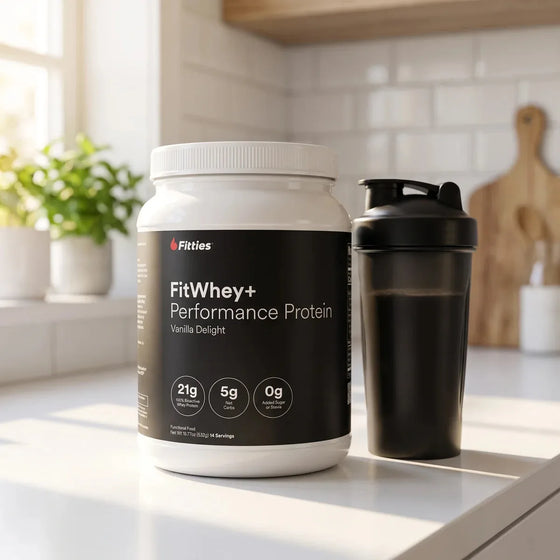
FitWhey+
FitWhey+ is 100% New Zealand whey protein concentrate from pastured, grass-fed herds raised without rBST or rBGH. 21 g of protein and 2,400 mg of leucine per two-scoop serving of the Chocolate, with the full typical amino acid profile printed on the panel so you can check the number yourself. Sweetened with monk fruit, with 0 g added sugars and no stevia or artificial sweeteners. Contains milk.
Shop FitWhey+