The Fitties Journal
Female Muscle Growth Guide: Build Strength and Lean Muscle
Key Takeaways
Here's what matters most if you're short on time.
- Women build muscle through the same process as men, just at a slower rate due to lower testosterone. The results tend to be leaner and more defined.
- Progressive overload drives growth. Compound movements (squats, deadlifts, presses, rows) form the foundation; isolation work fills in the gaps.
- Menstrual cycle phases can influence training performance. The follicular phase may favor intensity; the luteal phase may call for moderate volume.
- Protein intake of roughly 1.6 to 2.2 g/kg/day, spread across meals, supports muscle protein synthesis. Carbs fuel training; fats support hormones.
- Recovery is where growth happens. Sleep, rest days, active recovery, and stress management are non-negotiable.
Here is a stat that might surprise you. Women can gain roughly the same percentage of muscle mass as men relative to their starting point (meta-analysis). The process is identical. The stimulus is identical. The muscle fibers do not care about your chromosomes.
What is different is the hormonal environment, the recovery timeline, and the mountain of bad advice the fitness industry has been shoveling at women for decades. "Tone, don't build." "Stick to cardio." "Keep the weights light." It is all noise, and it is costing women results.
This guide cuts through that noise. Whether you are picking up a barbell for the first time or looking to push past a plateau, here is what actually works for building lean muscle as a woman, backed by exercise science and zero fairy tales.
How Women Build Muscle: The Science
Muscle growth (hypertrophy) is driven by repeated bouts of elevated muscle protein synthesis. The popular "damage it, then it repairs stronger" story is not what the research found. The study that measured this directly reported that when muscle damage was highest, it was not related to hypertrophy, and that growth followed once damage had been attenuated. This process, called muscle protein synthesis, works identically in men and women.
The difference is hormonal. Men carry roughly 15 times the circulating testosterone of women, and produce about 20 times as much (Handelsman et al., Endocrine Reviews 2018). Those two figures differ for a reason, and it is why you should be skeptical of any single ratio quoted without units. That gap is why men carry more total muscle mass. It is not why they build it faster, because in percentage terms they do not. Women, however, produce more estrogen and growth hormone relative to body weight, and both play supportive roles in muscle repair and recovery.
The practical takeaway is that women build muscle through the exact same mechanism as men. It happens on a smaller absolute scale, because there is less starting tissue, but in percentage terms the gains are comparable. That is physiology, not a limitation.
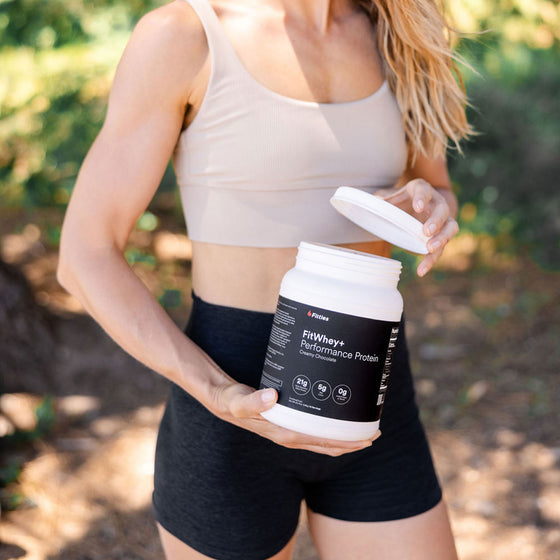
FitWhey+
21g high-quality whey protein from grass-fed, rBST/rBGH hormone-free New Zealand cattle. Aminogen (fungal proteases). Inulin prebiotic fiber from chicory root. No added sugar, stevia, or artificial sweeteners. Monk fruit sweetened.
Shop FitWhey+Five Myths That Hold Women Back
"Heavy weights will make me bulky." This is the single most persistent myth in women's fitness, and it is categorically false. The "bulky" physique requires testosterone levels most women do not have, combined with years of progressive overload, significant caloric surplus, and often competition-specific protocols. Lifting heavy builds dense, defined muscle. If anything, it makes you smaller at the same body weight because muscle is more compact than fat.
"Women should focus on cardio for weight management." Cardio has its place, but muscle is metabolically active tissue. The more of it you carry, the more energy your body uses at rest. Resistance training and cardio do different jobs. Resistance work preferentially builds and preserves lean mass, aerobic work preferentially reduces fat mass, and doing both generally beats either alone.
"Women are not built for strength training." Women compete at the highest levels of powerlifting, Olympic weightlifting, and strongman. Strength is not a gendered trait. It is a trainable quality, and everyone starts somewhere.
"You can spot-reduce fat with targeted exercises." Your body decides where it loses fat, not your exercise selection. Crunches do not burn belly fat any more than bicep curls burn arm fat. A 2022 meta-analysis of 13 studies found no spot reduction at all, regardless of population or program. Resistance training builds the muscle underneath; nutrition and overall energy balance handle the fat on top.
"Muscle turns to fat if you stop training." Muscle and fat are entirely different tissue types. One does not convert into the other. When you stop training, muscle mass gradually decreases and, if caloric intake remains unchanged, fat may accumulate. But there is no conversion happening.
Training Principles That Drive Results
Building muscle is not complicated, but it is specific. These are the principles that matter most.
Progressive overload is non-negotiable. Your muscles adapt to the demands you place on them. If the demand stays the same, so does the muscle. Gradually increasing weight, reps, sets, or training volume over time is what drives continued adaptation, and the 2026 ACSM position stand concludes that healthy adults should perform progressive resistance training, with hypertrophy enhanced by higher weekly volumes and by eccentric overload. This does not mean adding weight every session. It means your training should trend upward over weeks and months.
Compound movements form the foundation. Squats, deadlifts, bench presses, rows, and overhead presses recruit multiple muscle groups simultaneously, allowing you to move heavier loads and stimulate more total muscle. These should form the core of any muscle-building program. Isolation exercises like bicep curls, lateral raises, and leg extensions serve as targeted additions after your compound work is done.
Volume and frequency matter. Current evidence supports roughly 10 or more sets per muscle group per week for muscle growth and at least two training sessions a week for strength (ACSM, 2026), so training each muscle group two to three times per week is a practical way to spread that volume. Beginners can start at the lower end and increase as they adapt.
Form before load. Always. Poor technique reduces the effectiveness of every rep and increases injury risk. If you cannot perform a movement with control through the full range of motion, the weight is too heavy. This is not a suggestion. It is how you stay in the gym long enough to see results.
Sample Weekly Training Split
| Day | Focus | Key Compound Lifts |
|---|---|---|
| Monday | Lower Body (Quad Focus) | Back Squat, Leg Press, Romanian Deadlift |
| Tuesday | Upper Body (Push) | Bench Press, Overhead Press, Dips |
| Wednesday | Rest or Active Recovery | Walking, Mobility Work, Light Yoga |
| Thursday | Lower Body (Glute/Ham Focus) | Hip Thrust, Deadlift, Bulgarian Split Squat |
| Friday | Upper Body (Pull) | Barbell Row, Pull-ups, Face Pulls |
| Saturday | Full Body or Weak Points | Varies Based on Individual Goals |
| Sunday | Rest | Full Recovery Day |
This is a starting framework, not a prescription. Adjust based on your experience level, recovery capacity, and schedule, not a body type label. Beginners may benefit from three full-body sessions per week rather than a body-part split.
Training With Your Cycle
Cycle-based training programming is everywhere right now. The evidence for it is not.
A 2023 umbrella review examined what the research actually shows across menstrual cycle phases and found scant, low-quality and largely inconsistent evidence of meaningful differences in strength, performance or hypertrophy. Its conclusion is blunt. Building resistance training prescriptions around cyclical hormonal changes is not an evidence-based approach.
The largest meta-analysis on the question, covering 78 studies, found only a trivial effect overall, and where it found one at all, performance was slightly lower in the early follicular phase. That is the reverse of the usual advice, which nominates the follicular window as the time to test personal records. The authors graded their own evidence as low quality and stated that general guidelines on exercise performance across the cycle cannot be formed.
What is worth doing is to track how you actually feel and perform, and adjust accordingly. If certain weeks are consistently harder, that is real information about you and it is worth acting on. What is not worth doing is restructuring a training block around a phase chart.
Nutrition for Muscle Growth
Training provides the stimulus. Nutrition provides the raw materials. You cannot out-train a diet that does not support muscle growth.
Protein is the priority. Research generally supports approximately 1.6 to 2.2 grams of protein per kilogram of body weight per day for building muscle (Morton et al., 2018). Worth knowing that far less of this work has been done in women than in men. Spreading intake across three to five meals helps maintain a more consistent supply of amino acids for muscle protein synthesis. For a detailed breakdown of protein targets and timing, see our complete protein intake guide.
Carbohydrates fuel your training. Carbs replenish muscle glycogen, which is your muscles' primary fuel source during resistance training. Carbohydrate intake matters less for strength training performance than the standard advice implies. A 2022 systematic review of 49 studies found long-term performance unaffected by carbohydrate intake in 15 of 17 studies. The exception was very high session volume, above ten sets per muscle group in a single workout, which is well beyond what the split above prescribes. Prioritize complex carbohydrates like whole grains, sweet potatoes, oats, and fruit around your training sessions.
Fats support hormone production. Cholesterol is the precursor your body uses to build steroid hormones, including estrogen and progesterone, and adequate dietary fat supports a diet varied enough to cover fat-soluble nutrients. It also supports the absorption of fat-soluble vitamins (A, D, E, and K). Do not fear healthy fats from sources like avocados, nuts, olive oil, and fatty fish.
Micronutrients fill the gaps. Iron is particularly important for women of reproductive age, who NIH ODS identifies as a group where deficiency is not uncommon, partly because of menstrual blood loss. Calcium and vitamin D support bone health alongside your resistance training. Magnesium plays a role in muscle and nerve function (NIH ODS). A well-rounded diet covers most of these, but gaps are common, especially during caloric restriction or high training volume.
For strategic guidance on when to take what, our supplement timing guide breaks down the science of nutrient timing around your training.
Supplements That Support the Process
Supplements do not replace a solid training program and a well-structured diet. They fill specific gaps and, when chosen well, provide a meaningful edge. Here is what is actually worth considering for women focused on building muscle.
Protein powder is the most practical supplement for hitting daily protein targets, especially on busy days or when whole-food options are limited. Choosing one comes down to the label rather than the marketing, and the five specs that decide a protein powder for women are all printed on the back of the tub. FitWhey+ delivers 21 grams of high-quality whey protein from grass-fed, rBST/rBGH hormone-free New Zealand cattle, with no added sugar or stevia, sweetened with monk fruit. For plant-based options, FitPlant+ provides 15 grams of protein per two-scoop serving from a pea and rice protein blend, along with Aminogen® (fungal proteases).
HMB (beta-hydroxy-beta-methylbutyrate) is a natural metabolite of leucine that supports increased protein synthesis and decreased protein degradation. FitRestore pairs HMB with vitamin D. The International Society of Sports Nutrition's 2013 position stand says HMB appears to speed recovery from high-intensity exercise and may help athletes hold on to lean mass during calorie restriction (Wilson et al., 2013), but a 2018 meta-analysis of randomized trials in trained athletes found no effect on strength or body composition (Sanchez-Martinez et al., 2018).
A comprehensive multivitamin can help athletes whose diets fall short. A joint position statement from the Academy of Nutrition and Dietetics, Dietitians of Canada and the American College of Sports Medicine says shortfalls are most common for calcium, vitamin D, iron and some antioxidants, and that female athletes may need up to 70% more iron than the estimated average requirement (Thomas et al., 2016). FitNutrients+ is a four-capsule multivitamin and mineral formula with 12.5 mcg (500 IU) of vitamin D3, metabolically active B vitamins and Albion chelated minerals. Its label lists no iron and 17 mg of calcium (2% DV) per serving, so plan those two through food, and talk to a healthcare professional before adding an iron supplement.
A well-formulated pre-workout supports training intensity and endurance. FitBoost+ features 3 g of creatine monohydrate, 400 mg of Peak ATP® and a blend that includes caffeine pterostilbene co-crystal, with 95 mg of caffeine per scoop. No artificial colors, no synthetic sweeteners, zero sugar.
Always consult a healthcare professional before starting any new supplement regimen, particularly if you are taking medication or have specific health considerations.
Recovery: Where Growth Actually Happens
Your muscles do not grow in the gym. They grow while you recover. Neglect recovery and you are leaving results on the table, no matter how good your training is.
Sleep is your most powerful recovery tool. Growth hormone is released preferentially during deep sleep (Van Cauter et al., 2004), and in a small crossover trial, one night without sleep lowered muscle protein synthesis by 18% (Lamon et al., 2021). Aim for seven to nine hours per night. This is not optional if you are serious about results.
Rest days are productive days. At least one to two full rest days per week allows your nervous system and musculoskeletal system to recover from accumulated training stress. More is not always better. Strategic rest prevents the stalled progress and fatigue that come with overtraining.
Active recovery supports the process. Light movement on rest days, such as walking, gentle stretching, or mobility work, promotes blood flow to recovering muscles without adding meaningful training stress. For more on how to structure your off days, see our guide to active recovery.
Stress management matters more than you think. Chronically elevated cortisol can interfere with recovery and muscle-building processes. Find what works for you, whether that is meditation, time outdoors, social connection, or simply not training seven days a week.
Conclusion
Building muscle as a woman is not a different sport. It is the same sport with a slightly different hormonal backdrop. The fundamentals, progressive resistance training, adequate protein, strategic recovery, and consistency over time, are universal.
What changes is the framing. Drop the myths. Ignore the advice that tells you to stay small. Pick up heavy things, eat to support your goals, rest enough to let your body do what it is designed to do, and give it time.
The physique you build will be strong, functional, and entirely yours. And if you choose to support the process with supplements, make sure they are formulated to the standard your effort deserves. You can explore the full Fitties lineup whenever you are ready.
As always, consult a healthcare professional before making significant changes to your training, nutrition, or supplement regimen.
FitWhey+
21g high-quality whey protein from grass-fed, rBST/rBGH hormone-free New Zealand cattle. Aminogen (fungal proteases). Inulin prebiotic fiber from chicory root. No added sugar, stevia, or artificial sweeteners. Monk fruit sweetened.
Shop FitWhey+