
The Fitties Journal
Dietary Restrictions and Food Allergies for Athletes
Key Takeaways
Here's what matters most if you're short on time.
- Athletes on restricted diets face amplified nutritional risks because higher caloric and protein demands leave thinner margins for error.
- A "Formulated to Exclude" statement on a supplement label is more reliable than front-of-package "free from" marketing claims.
- Pea and rice protein blends can match animal protein amino acid profiles when properly formulated with digestive enzyme support.
- Hidden allergens frequently appear in "Other Ingredients" sections as casein, soy lecithin, or wheat-derived maltodextrin.
- Work with a healthcare professional to identify your specific nutrient gaps rather than relying on a one-size-fits-all approach.
If your diet has a list of rules, your supplement shelf should too. Whether you're managing a food allergy, lactose intolerance, or a plant-based commitment, you already know the basics. Read every label, ask every question, trust nothing at face value. But most guides on dietary restrictions stop at the kitchen. They rarely address what happens when you're also trying to perform, recover, and build a body that does what you ask of it.
This is where it gets interesting, and where most athletes with restricted diets quietly fall behind. Not because they lack discipline, but because the supplement industry makes it unreasonably hard to find products that are both effective and safe for restricted diets. That changes when you know what to look for.
Understanding Dietary Restrictions
Dietary restrictions are limitations on what someone eats, driven by medical necessity, ethical conviction, religious practice, or personal preference. For athletes, restrictions add a layer of complexity. You're not just avoiding certain foods, you're trying to avoid them while still hitting protein targets, maintaining micronutrient levels, and fueling recovery. The margin for error is thinner than most people realize.
There are dozens of named restriction patterns, but a handful dominate the athletic landscape. Vegetarians exclude meat, poultry, and fish, with variations like lacto-vegetarian (includes dairy), ovo-vegetarian (includes eggs), and lacto-ovo vegetarian (includes both). Vegans eliminate all animal-derived products entirely, including dairy, eggs, and honey, often extending these principles to clothing and personal care products. For athletes following these patterns, protein quality and completeness become the central challenge. A plant-based athlete supplement strategy can help close the gaps that whole foods alone sometimes leave open.
A gluten-free diet eliminates the protein found in wheat, barley, and rye. For individuals with celiac disease or non-celiac gluten sensitivity, this is non-negotiable. Athletes on gluten-free diets need to be especially careful with supplements, protein powders, and meal replacements, many of which use wheat-derived ingredients. Our gluten-free sports nutrition guide covers this in depth.
The low FODMAP diet reduces fermentable oligosaccharides, disaccharides, monosaccharides, and polyols, which are short-chain carbohydrates that can be poorly absorbed in the small intestine. For athletes with digestive sensitivities, this approach may help manage bloating, gas, and abdominal discomfort that interfere with training and competition. The intersection of low FODMAP diets and supplements requires careful ingredient scrutiny, since common supplement additives like inulin and certain sugar alcohols are high-FODMAP.
The keto diet is a high-fat, low-carbohydrate, moderate-protein approach that shifts the body toward using ketones derived from fat breakdown instead of glucose for fuel. It has gained popularity for body composition goals. Athletes on keto need supplements that don't contain hidden carbohydrates or sugars.
FitPlant+
A pea and rice protein blend with 15 grams of protein per two-scoop serving, plus Aminogen (fungal proteases). Formulated to exclude wheat, gluten, soy protein, dairy, fish, shellfish, peanuts, tree nuts, egg, and sesame. Sweetened with monk fruit, not sugar or stevia.
Shop FitPlant+Why Athletes Face Unique Challenges
The general population can usually manage a restricted diet without much strategic thinking. Athletes can't. Higher caloric expenditure, elevated protein requirements, increased micronutrient turnover from training stress, and the need for precise recovery nutrition all amplify the consequences of dietary gaps.
Common nutritional risks for athletes on restricted diets include inadequate protein intake (especially for vegans and those avoiding dairy and eggs), low calcium and vitamin D (common when dairy is eliminated), insufficient iron and zinc (particularly for female athletes on plant-based diets), and vitamin B12 deficiency (a well-documented risk for strict vegans). Understanding your macronutrient needs is the starting point for managing these risks.
This is also why a high-quality multivitamin matters more for restricted-diet athletes than for the general population. When entire food groups are off the table, micronutrient gaps compound faster than most people expect. FitNutrients+, for example, is a four-capsule multivitamin and mineral formula with metabolically active B vitamins and Albion chelated minerals, and its label lists it as formulated to exclude wheat, gluten, yeast, soy protein, dairy products, fish, shellfish, peanuts, tree nuts, and egg.
Food Allergies: What Athletes Need to Know
Food allergies are fundamentally different from food intolerances. An allergy involves an immune system response that can escalate from mild (hives, itching) to life-threatening (anaphylaxis). An intolerance, like lactose intolerance, causes digestive discomfort but doesn't involve the immune system and isn't life-threatening. The distinction matters because management strategies differ. Allergies demand strict, zero-tolerance avoidance, while intolerances may allow small amounts depending on the individual.
Eight food allergens were found to account for 90% of food allergies when the federal labeling law was passed. Sesame was added later as the ninth. Under U.S. law (FALCPA, updated by the FASTER Act of 2021), these must be declared on food labels.
| Allergen | Common Supplement Sources |
|---|---|
| Milk | Whey, casein, "natural flavors" |
| Eggs | Protein blends, baked protein bars |
| Fish | Omega-3 supplements, collagen |
| Shellfish | Glucosamine, some collagen sources |
| Tree nuts | Flavoring systems, protein bars |
| Peanuts | Protein bars, flavored powders |
| Wheat | Maltodextrin, fillers, binders |
| Soybeans | Lecithin (emulsifier), soy protein isolate |
| Sesame | Flavoring blends, protein bars |
For athletes, these allergens show up in places you might not expect, such as whey and casein protein powders (milk), lecithin in capsule coatings (soy), maltodextrin in pre-workouts (sometimes wheat-derived), and flavoring systems in protein bars (tree nuts, sesame). The allergen isn't always the primary ingredient. It's often hiding in the supporting cast.
Food allergy symptoms typically appear within minutes to a few hours after exposure and can include hives or skin rash, swelling of the face, lips, or tongue, difficulty breathing or swallowing, abdominal pain, nausea, or diarrhea, and dizziness or fainting. In severe cases, anaphylaxis can occur, which is a medical emergency requiring immediate treatment with epinephrine. Athletes with known food allergies should always carry their epinephrine auto-injector and make sure training partners and coaches know how to use it.
The exact causes of food allergies involve both genetic and environmental factors. Family history of allergies, the presence of other allergic conditions, and changes in the gut microbiome all appear to play a role.
Choosing Supplements When Your Diet Is Restricted
This is where most dietary restriction guides fail athletes completely. They tell you what to avoid eating but say nothing about how to evaluate supplements, the very products designed to fill the gaps your restricted diet creates. Here's what to actually look for.
Read Beyond the Front Label
"Free from" marketing claims on the front of a label are a starting point, not a finish line. The real information lives in the "Formulated to Exclude" or allergen statement, typically near the supplement facts panel. This tells you exactly what was intentionally left out of the formulation. Learning to read supplement labels properly is one of the highest-leverage skills an athlete with dietary restrictions can develop.
For example, FitPlant+ Ultra-Premium Plant Protein is formulated to exclude wheat, gluten, yeast, soy protein, animal and dairy products, fish, shellfish, peanuts, tree nuts, egg, sesame, artificial colors, and artificial sweeteners. That level of specificity is what you should expect from any supplement you put in your body.
Check the "Other Ingredients" Section
The supplement facts panel shows the active ingredients. The "Other Ingredients" section, often in smaller print below, lists binders, fillers, flavoring agents, and capsule materials. This is where hidden allergens frequently live, such as casein or whey in "natural flavors," soy lecithin as an emulsifier, or wheat-derived maltodextrin as a filler. If a product doesn't clearly disclose what's in this section, that's a signal to move on.
Understand cGMP and Manufacturing Standards
cGMP (current Good Manufacturing Practice) compliance means the facility follows FDA-regulated quality standards. For athletes with allergies, this matters because it reduces (though never fully eliminates) cross-contamination risk. Products manufactured under strict quality controls offer a higher level of assurance. All Fitties formulas are manufactured in a GMP compliant facility.
Managing Dietary Restrictions for Performance
Start with whole foods that fit your restrictions, then identify the gaps. A vegan athlete who trains intensely may need supplemental protein, B12, iron, and omega-3s. An athlete avoiding gluten may benefit from a comprehensive multivitamin to support overall micronutrient intake. A dairy-free athlete may need calcium and vitamin D support. The gaps are different for everyone, which is why a one-size-fits-all approach fails.
Athletes with dairy and soy restrictions often struggle most with protein. Whey is out. Soy isolate is out. What's left? Pea and rice protein complement each other. In a 2020 analysis, an optimized pea and rice mix scored 84 on DIAAS, the protein quality score the FAO recommends, close to the 85 calculated for whey but below casein and egg (Herreman et al., 2020). The key is digestibility and absorption, not just grams on the label. Some products add digestive enzymes such as Aminogen®, but the published Aminogen studies used whey protein, not plant protein (Oben et al., 2008; Anderson, 2013).
Athletes with food sensitivities often experience compromised gut comfort, which can affect nutrient absorption and overall recovery. If you add a probiotic, the same label checks apply. FitProbio+, for example, contains a single strain, Bifidobacterium animalis subsp. lactis B420 (10 billion CFU per capsule), in acid-resistant vegetarian capsules, and its label lists it as formulated to exclude wheat, gluten, soy, animal and dairy products, fish, shellfish, peanuts, tree nuts, and egg.
When eating away from home, especially while traveling for competition, communicate your restrictions clearly to restaurant staff and event organizers. Carry safe snack options as backup. If you have a severe allergy, ensure your epinephrine auto-injector is always accessible and that people around you know your allergy action plan.
Building Your Restricted-Diet Supplement Strategy
The smartest approach is to layer your supplementation based on priority. Start with the non-negotiables, namely a high-quality protein source that respects your restrictions, and a comprehensive multivitamin to cover foundational micronutrient needs. From there, add targeted support based on your specific gaps and training demands.
For most restricted-diet athletes, this looks something like the following.
- Protein: A protein powder that matches your restriction profile and includes enzyme support for absorption.
- Foundational micronutrients: A multivitamin with bioactive forms of key nutrients, especially B12, folate, and chelated minerals.
- Targeted support: Based on your specific elimination pattern. Dairy-free athletes may need calcium and vitamin D. Vegans may need iron and omega-3s. Athletes with digestive sensitivities may benefit from probiotic support.
Keep a running list of every supplement you take and bring it to appointments with your healthcare provider. This ensures nothing falls through the cracks and your supplement strategy evolves with your training.
Conclusion
Dietary restrictions and food allergies add complexity to athletic nutrition, but they don't have to limit performance. The athletes who manage this well share a common approach. They understand their specific restrictions, they read every label with precision, they fill nutritional gaps strategically rather than reactively, and they choose supplements held to the same standard they hold themselves to.
If you have a food allergy or are managing a restricted diet, work with a healthcare professional, ideally an allergist or registered dietitian with sports nutrition experience, to build a plan tailored to your specific needs and training demands. The right strategy turns a dietary limitation into something you barely think about on race day.
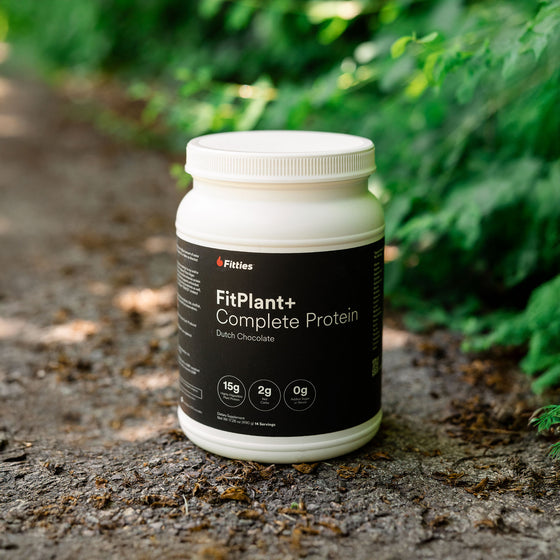
FitPlant+
A pea and rice protein blend with 15 grams of protein per two-scoop serving, plus Aminogen (fungal proteases). Formulated to exclude wheat, gluten, soy protein, dairy, fish, shellfish, peanuts, tree nuts, egg, and sesame. Sweetened with monk fruit, not sugar or stevia.
Shop FitPlant+