The Fitties Journal
The Plant-Based Athlete's Supplement Strategy: What You Actually Need
Key Takeaways
Here's what matters most if you're short on time.
- A plant-based diet can support athletic performance, but it creates predictable gaps in complete protein, vitamin B12, iron, zinc, vitamin D, calcium, magnesium, and omega-3s.
- Combining pea and rice protein covers the gap either protein has on its own. On DIAAS, the scoring method the FAO now recommends, a 2020 analysis models a maximum of 84 for an optimised pea and rice blend. FitPlant+ pairs this blend with L-glutamine, Aminogen®, and a full micronutrient panel.
- A multivitamin with bioactive B vitamins and chelated minerals fills the micronutrient shortfall that even the most careful plant-based diet leaves behind.
- High-fiber diets can affect mineral absorption. The HOWARU® Shape B420™ strain was tested in a six-month randomized, placebo-controlled trial (Stenman et al., 2016), though not for mineral absorption.
A plant-based diet can absolutely support athletic performance. The evidence base is thinner than either side of that argument usually admits. A 2024 meta-analysis found overall athletic performance unchanged on plant-based diets, with a positive effect on aerobic performance and no effect on strength or power. What the research is also clear on is that plant-based diets create a set of predictable nutrient challenges. A review for athletes lists energy and protein, vitamin B12, iron, zinc, calcium, iodine, vitamin D, and the long-chain omega-3s EPA and DHA (Rogerson, 2017). Higher protein turnover, greater micronutrient demand, increased oxidative stress, and the physical reality of training volume mean that "eating well" is not enough. You need a strategy.
This article is not about whether you should eat plant-based. That is your call. This article is about what to do once you have made that call, specifically which supplements close the gaps that a plant-based diet leaves open, and how to put them together into a stack that performs.
Where Plant-Based Diets Fall Short for Athletes
Plant-based diets tend to be rich in fiber, antioxidants, and complex carbohydrates. For athletes, these are real advantages. The shortfalls are equally real and well-documented.
Protein Quality and Completeness
The issue is not protein quantity. A varied plant-based diet can provide adequate total protein. The issue is protein quality, specifically the amino acid profile and digestibility of plant protein sources compared to animal sources.
Most individual plant proteins are low in one or more essential amino acids. Legumes tend to be low in methionine. Grains tend to be low in lysine. And most plant proteins contain less leucine per gram than whey, which matters because leucine is a key trigger for muscle protein synthesis.
The solution is complementary protein pairing. When you combine pea protein (high in lysine, low in methionine) with rice protein (high in methionine, low in lysine), the blend covers the gap either protein has on its own. On DIAAS, the scoring method the FAO now recommends, a 2020 analysis models a maximum of 84 for an optimised pea and rice blend, which lands in the same band that analysis reports for commercial whey products. This is not a theoretical concept. It is the basis for how well-formulated plant protein supplements are designed.
Vitamin B12
Vitamin B12 is found almost exclusively in animal products. NIH ODS puts it plainly. Plant foods do not naturally contain it. It is essential for red blood cell formation, neurological function, DNA synthesis, and energy metabolism. For athletes, a B12 shortfall can manifest as fatigue, reduced endurance, and impaired recovery. Vegans and vegetarians who do not consume fortified foods carry a higher risk of B12 deficiency, because natural food sources are limited to animal foods. Fortified foods and supplements substantially reduce that risk. Hepatic stores are large, so the time course varies widely between individuals, which is exactly why it is worth monitoring rather than assuming.
Supplementation is the reliable route. Methylcobalamin is one of the two metabolically active forms, though NIH ODS notes that no evidence indicates absorption rates differ by supplement form.
Iron
Iron supports oxygen transport, energy production, and immune function. Plant foods contain non-heme iron, which the body absorbs less efficiently than the heme iron in animal products. Compounds common in plant-based diets, including phytates in grains and legumes, polyphenols in tea and coffee, and oxalates in spinach and beet greens, can further reduce absorption.
This does not mean plant-based athletes cannot maintain adequate iron status. It means they need to be deliberate about it. Pairing iron-rich foods with vitamin C improves non-heme iron absorption. Iron supplements come in several forms with different amounts of iron, and some forms are more likely than others to upset the stomach at high doses, according to the NIH Office of Dietary Supplements. For a deeper look at essential vitamins and minerals for athletes, see our micronutrients guide.
Zinc
Zinc supports immune function, protein synthesis, and recovery. Like iron, zinc from plant sources is less bioavailable than from animal sources, largely due to phytate content. Soaking, sprouting, and fermenting grains and legumes can reduce phytate levels and improve zinc absorption. Chelated zinc (such as zinc bisglycinate) is the form used here. Note that NIH ODS puts absorption at about 61 percent for zinc citrate and gluconate against 50 percent for zinc oxide, and does not evaluate bisglycinate specifically.
Calcium, Vitamin D, and Magnesium
These three nutrients work together to support bone health, muscle function, and recovery. Plant-based athletes who avoid dairy need alternative calcium sources (fortified plant milks, leafy greens, tofu processed with calcium sulfate). Vitamin D is challenging regardless of diet, since dietary sources are limited and most people depend on sun exposure and supplementation. Magnesium is found in nuts, seeds, and whole grains, but intense training increases demand through sweat losses.
Omega-3 Fatty Acids
The omega-3 fatty acids EPA and DHA support recovery and help maintain a healthy inflammatory response. Plant sources provide ALA (alpha-linolenic acid), which the body converts to EPA and DHA, but the conversion is limited. NIH ODS puts reported rates at less than 15 percent. If DHA is what you are after, preformed algae oil is the direct route. Plant-based athletes seeking meaningful EPA and DHA levels should consider algae-based omega-3 supplements, which provide these fatty acids directly without relying on the inefficient ALA conversion pathway. For more on how omega-3 fatty acids support athletic performance and recovery, see our dedicated guide.
FitPlant+
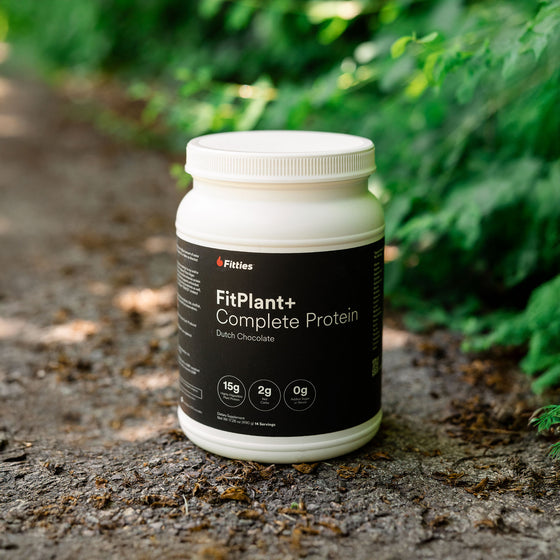
15 g of protein per serving from pea protein isolate and rice protein concentrate. L-glutamine, Aminogen (fungal proteases), activated B vitamins, Albion chelated minerals, and inulin fiber from chicory. No sugar, stevia, soy protein, or dairy. Monk fruit sweetened.
Shop FitPlant+Building a Plant-Based Athlete Stack
The goal of supplementation for plant-based athletes is not to replicate an omnivore diet through pills and powders. It is to close the specific gaps that matter for athletic performance, which are complete protein with adequate leucine, micronutrient sufficiency (especially B12, iron, zinc, and D), gut health, and recovery.
Here is how the pieces fit together.
Foundation: Plant Protein
FitPlant+ delivers 15g of protein per serving from a pea protein isolate and rice protein concentrate blend. The formula also includes L-glutamine, glycine, and taurine.
Two features make FitPlant+ particularly relevant for plant-based athletes. First, its ingredient list includes Aminogen (fungal proteases). It is worth flagging honestly that the published Aminogen work, a small open-label study (Oben et al., 2008) and a 30-day safety trial (Anderson, 2013), was done on whey protein, not plant protein. Second, FitPlant+ includes an array of micronutrients, with high-potency vitamin C and B12 (as methylcobalamin, 5,208% DV), activated B vitamins (pyridoxal 5'-phosphate, riboflavin 5'-phosphate, methyltetrahydrofolate), and Albion chelated minerals including zinc, magnesium, selenium, manganese, and chromium.
This means FitPlant+ is not just a protein supplement. It is a protein supplement with an array of added vitamins and minerals, which can reduce the total number of products a plant-based athlete needs to manage.
FitPlant+ also includes 2.25g of KiOtransine® chitin-glucan per serving, a fiber derived from Aspergillus niger, and inulin fiber from chicory. No sugar, no stevia, no soy protein, no dairy. Sweetened with monk fruit.
Micronutrient Insurance: Comprehensive Multivitamin
Even with FitPlant+'s built-in micronutrient panel, a dedicated multivitamin provides a broader and deeper foundation. This is especially important for plant-based athletes because the gaps extend beyond what a protein shake covers.
FitNutrients+ is a premium multivitamin/mineral formula that includes metabolically active B vitamins (B2 as riboflavin 5'-phosphate, B6 as pyridoxal 5'-phosphate, and B12 as methylcobalamin), folate as 5-MTHF and calcium folinate, and Albion chelated minerals. It also provides vitamin D3 (cholecalciferol), vitamin C, vitamin E (as d-alpha tocopheryl succinate), zinc, calcium, magnesium, and selenium.
Beyond the foundational vitamins and minerals, FitNutrients+ includes 200 mg of N-acetyl-L-cysteine (NAC), 100 mg of alpha-lipoic acid, 200 mg of bacopa extract, and 200 mcg of huperzine A per serving. See the Antioxidant Supplements Guide for more on how these compounds work.
Gut Health: Probiotic Support
Plant-based diets are typically high in fiber, which supports beneficial gut bacteria. However, the same high-fiber intake can affect mineral absorption, particularly iron, zinc, and calcium, especially if gut barrier function is compromised by training stress.
FitProbio+ features HOWARU Shape B420 (Bifidobacterium animalis subsp. lactis B420), a probiotic strain studied in a randomised controlled trial in overweight and obese adults (Stenman et al., 2016). It is worth knowing how to read that trial. The intention-to-treat analysis found no significant between-group difference in body fat mass, and B420 on its own did not reach significance in the per-protocol comparison. The significant result came from B420 combined with a fiber this product does not contain, and from a post-hoc analysis. Each vegetarian capsule delivers 10 billion CFU in a gastro-resistant DRcaps™ capsule, sealed in a nitrogen-purged blister pack for stability. For a deeper look at the science behind this strain, read our B420 probiotic deep dive. For a broader introduction to probiotics, see our probiotics guide.
Supporting gut barrier integrity is not just about digestive comfort. Note that the absorption issue described above is phytate binding minerals in the gut before they reach the intestinal wall, which is a different mechanism from barrier integrity.
Plant-Based Athlete Nutrient Gap Matrix
| Nutrient Gap | Why It Matters for Athletes | Covered By |
|---|---|---|
| Complete protein (leucine, lysine) | Muscle protein synthesis, recovery | FitPlant+ |
| Vitamin B12 | Energy metabolism, red blood cell formation, neurological function | FitPlant+ + FitNutrients+ |
| Iron | Oxygen transport, energy production | Partially. FitPlant+ carries 3 mg in Vanilla and 4 mg in Chocolate (17% and 22% DV), naturally occurring. A dedicated chelated iron supplement is not a current Fitties product. |
| Zinc (chelated) | Immune function, protein synthesis, recovery | FitPlant+ + FitNutrients+ |
| Vitamin D3 | Bone health, muscle function, immune support | FitNutrients+ |
| Calcium & Magnesium | Bone density, muscle contraction, electrolyte balance | FitPlant+ + FitNutrients+ |
| Omega-3 (EPA/DHA) | Recovery, healthy inflammatory response | Algae-based supplement (not a current Fitties product) |
| Gut barrier support | Nutrient absorption, digestive comfort under training stress | FitProbio+ |
| L-Glutamine | Muscle recovery, gut lining integrity, immune resilience | FitPlant+ |
Timing and Practical Guidance
Supplement timing does not need to be complicated. Here is a straightforward daily framework for plant-based athletes.
Post-workout: FitPlant+ mixed with water. This covers protein, L-glutamine, B-vitamins, and chelated minerals in a single step. For guidance on how to time supplements around meals and training, see the Supplement Timing Guide.
With a meal (morning or midday): FitNutrients+ (4 capsules). Taking your multivitamin with a meal is sensible practice. The best-studied case is vitamin D, where taking it with the largest meal of the day has been associated with higher resulting blood levels in a small uncontrolled study.
Daily (consistent timing): FitProbio+ (1 capsule). Take it consistently. We found no published timing comparison for this strain, so daily consistency is the practical advice rather than an evidence-based one. Pick a time you will remember and stick with it.
Separate consideration: If you choose to add an algae-based omega-3 supplement, taking it with a meal is the common recommendation. NIH ODS notes that algal supplements typically supply omega-3s in triglyceride form, and that in one small study DHA bioavailability from algal oil matched that from cooked salmon.
What Plant-Based Athletes Should Look for in Supplements
Not all supplements are created equal, and this matters even more for plant-based athletes because the quality and bioavailability of the nutrient forms directly determine whether they close the gaps they are supposed to close.
Prioritize chelated minerals (like Albion mineral chelates) over standard oxide or carbonate forms. Chelated minerals are bound to amino acids. Whether that improves absorption varies by mineral and is not settled across the board. Look for activated B vitamins (methylcobalamin for B12, pyridoxal 5'-phosphate for B6, 5-MTHF for folate) rather than synthetic forms that require conversion by the body. Verify that the product is actually plant-based and free of hidden animal-derived ingredients like gelatin capsules, magnesium stearate from animal sources, or vitamin D3 derived from lanolin.
For a deeper dive into evaluating supplement quality, see the Supplement Buyer's Guide. For label-reading specifics, our supplement label guide covers what to look for and what to avoid.
Next Steps
For a broader look at how protein intake supports athletic performance regardless of dietary pattern, see our protein guide. To understand how each supplement in your stack works at the ingredient level, explore our deep dives on L-glutamine and HOWARU Shape B420.
As with any significant change to your supplement regimen, consult a healthcare professional, especially if you take prescription medication or have specific health concerns. A sports dietitian with plant-based nutrition experience can provide individualized guidance on how to fine-tune your approach.
FitPlant+
15 g of protein per serving from pea protein isolate and rice protein concentrate. L-glutamine, Aminogen (fungal proteases), activated B vitamins, Albion chelated minerals, and inulin fiber from chicory. No sugar, stevia, soy protein, or dairy. Monk fruit sweetened.
Shop FitPlant+