The Fitties Journal
Bodybuilding Nutrition for Beginners
Key Takeaways
Here's what matters most if you're short on time.
- Protein intake of 1.6 to 2.2 grams per kilogram of body weight daily supports muscle repair and growth for bodybuilders.
- Carbohydrates are the primary fuel for high-intensity resistance training; cutting them too aggressively undermines performance and recovery.
- Micronutrients and hydration are frequently overlooked but play a direct role in energy production, hormone function, and training output.
- Meal timing matters less than total daily intake, but a protein-rich meal within a few hours of training supports recovery.
- Start with whole foods, then use targeted supplementation to fill the gaps your diet cannot cover consistently.
- Use the protein calculator below to find your daily target based on your body weight, activity level, and goal.
You can design the perfect training program, show up to the gym five days a week, and push yourself to failure on every set. None of it matters if your nutrition is working against you. For beginners especially, what you eat determines whether your body has the raw materials to build muscle, recover from training, and keep performing at a level that produces results.
This is not a crash course in calorie counting. This is a practical framework for understanding what your body needs, why it needs it, and how to build a nutrition plan that supports your bodybuilding goals without turning every meal into a math problem.
Skip to the Protein Intake Calculator
Protein: The Non-Negotiable Foundation
If bodybuilding nutrition has a single cornerstone, protein is it. Amino acids from dietary protein are what your body uses to repair muscle fibers after training and to synthesize new muscle tissue over time. Without adequate protein, your training stimulus goes to waste.
Research supports a daily protein intake of 1.6 to 2.2 grams per kilogram of body weight for individuals focused on building muscle (Morton et al., 2018). For someone weighing 80 kg (about 176 lbs), that means roughly 128 to 176 grams per day. The higher end of that range is more appropriate during intense training phases or when eating in a caloric deficit.
Prioritize complete protein sources that deliver all nine essential amino acids. Meat, poultry, fish, eggs, and dairy are the most efficient options. Plant-based sources like tofu, tempeh, legumes, and quinoa work well when combined thoughtfully to cover the full amino acid spectrum. For a deeper look at how protein works alongside carbs and fats, see our guide to macronutrients for performance.
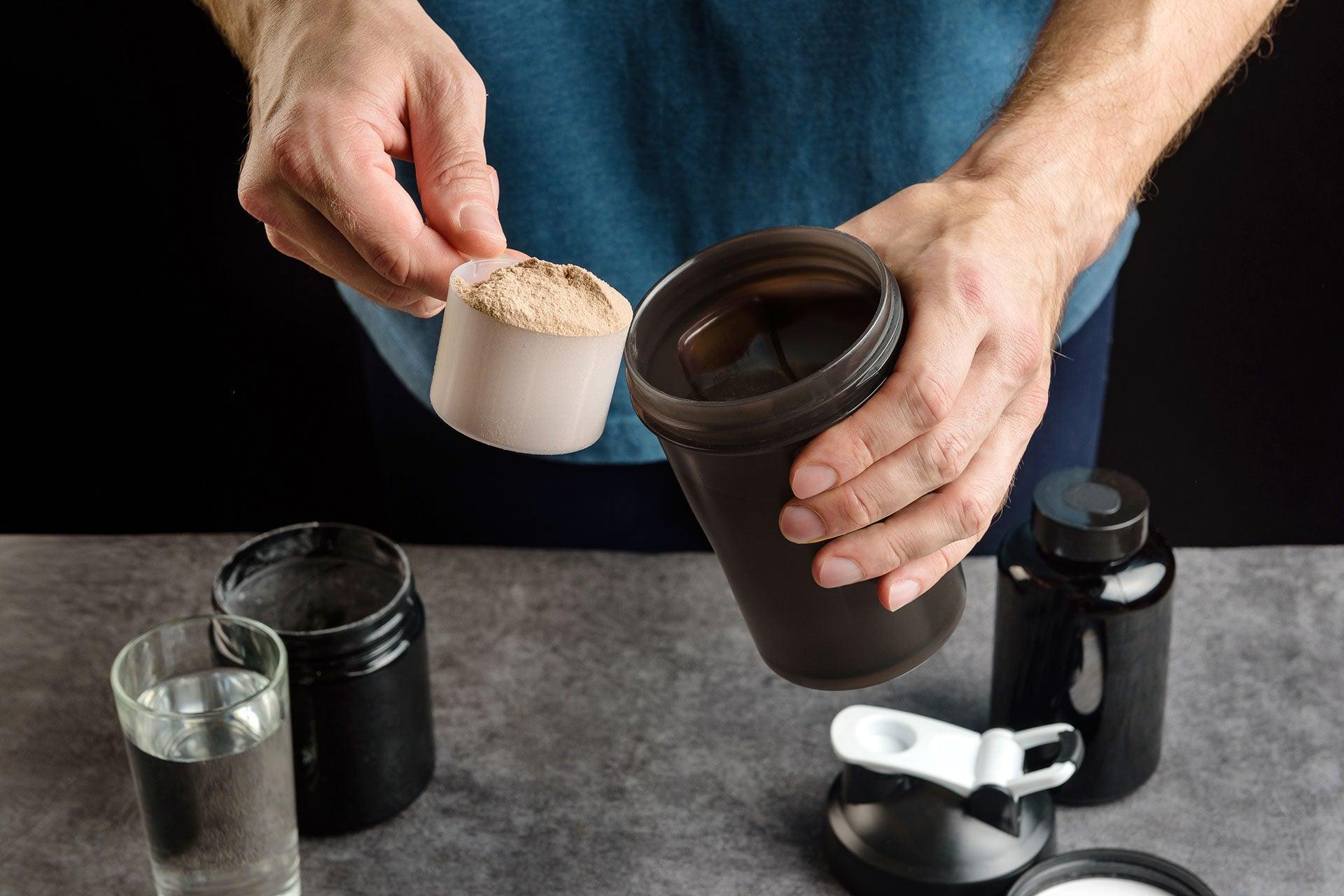
Hitting your protein target from whole food alone is harder than most beginners expect. That is where a quality protein supplement earns its place. FitWhey+ delivers 21 grams of New Zealand whey protein per serving, sourced from grass-fed, rBST/rBGH hormone-free cattle and sweetened with monk fruit. For those who prefer plant-based options, FitPlant+ provides 15 grams of pea and rice protein with all nine essential amino acids, plus an array of micronutrients including activated B vitamins and Albion chelated minerals.
Not sure exactly how much protein you need? The calculator below estimates your daily target based on your body weight, activity level, and training goal. It also shows how many servings of a quality protein supplement can help close the gap between your whole-food intake and your target.
Now that you have a protein target, the next question is what to build around it. Protein is the anchor, but it does not work in isolation. The carbohydrates and fats in your diet determine how much energy you have for training, how well your hormones function, and how efficiently your body recovers between sessions.
The sections below walk through each macronutrient and its role in a bodybuilding nutrition plan, followed by micronutrients, hydration, meal timing, and a complete sample day of eating that puts it all together.
FitWhey+
21 grams of New Zealand whey protein per serving, sourced from grass-fed, rBST/rBGH hormone-free cattle. Sweetened with monk fruit. No added sugar, no stevia, no compromises.
Shop FitWhey+Carbohydrates: Your Training Fuel
Carbohydrates are the body's preferred energy source for high-intensity resistance training. When you are pushing through heavy sets, your muscles are running primarily on glucose derived from carbohydrates stored as glycogen. Let those glycogen stores deplete and your performance drops. You fatigue faster, power output declines, and recovery takes longer.
Complex carbohydrates from whole grains, sweet potatoes, oats, legumes, and starchy vegetables should make up the bulk of your carb intake. These digest slowly and provide sustained energy rather than sharp spikes and crashes. Simple carbs from fruit and other fast-digesting sources have their place around training, where quick energy availability is more useful.
As a starting point, a 2019 review of off-season bodybuilding nutrition recommends at least 3 to 5 grams of carbohydrate per kilogram of body weight a day, with carbohydrates filling the calories left after protein and fat (Iraki et al., 2019). The exact number depends on your training volume, body composition goals, and individual metabolism. If you are training hard and heavy five or six days a week, you need more carbs than someone training three days. If you are in a caloric deficit for body recomposition, your carb allotment will be lower but should never be slashed so aggressively that it impairs your training.
Fats: Hormones, Health, and Sustained Energy
Dietary fat plays a role in hormone production (including testosterone), helps your body absorb fat-soluble vitamins (A, D, E, and K), and provides a concentrated energy source for lower-intensity activity and daily function. Keeping fat intake too low for extended periods can interfere with hormonal health and leave you feeling flat.
Focus on unsaturated fat sources such as avocados, olive oil, nuts, seeds, and fatty fish like salmon. Saturated fat from animal products is fine in moderation. Trans fats from processed foods should be avoided entirely.
Aim for a moderate 0.5 to 1.5 grams of fat per kilogram of body weight a day, the range a 2019 review of off-season bodybuilding nutrition recommends (Iraki et al., 2019). For most beginners, this is enough to support hormonal health and normal bodily function without eating into your carb or protein budget.
Micronutrients: The Overlooked Performance Layer
Macronutrients get all the attention, but vitamins and minerals are what keep the underlying systems running. Energy production, immune function, muscle contraction, bone health, and hormone regulation all depend on adequate micronutrient status. Deficiencies in vitamin D, magnesium, zinc, or B vitamins can quietly undermine your training long before you notice obvious symptoms.
The solution starts with diet. Eat a wide variety of nutrient-dense whole foods including fruits, vegetables, whole grains, and lean proteins. But even well-planned diets often fall short of optimal micronutrient levels, especially under the increased demands of regular intense training.
A comprehensive multivitamin fills those gaps. FitNutrients+ is a premium multivitamin and multimineral formula with metabolically active B vitamins, bioavailable mineral chelates from Albion, and added ingredients like acetyl-L-carnitine (500 mg per serving) and alpha-lipoic acid (100 mg). The serving is four capsules a day.
Hydration: More Than Just Drinking Water
Water is involved in nearly every physiological process that matters for bodybuilding, including nutrient transport, temperature regulation, joint lubrication, and muscle contractions. Dehydration can reduce strength output. A meta-analysis of 28 studies found that losing body water cut muscle strength by about 5.5 percent and muscle endurance by about 8 percent, and the drop tended to be smaller in trained people (Savoie et al., 2015).
Aim for at least 3 to 4 liters of water per day as a baseline, with additional intake before, during, and after training. If your sessions are long or particularly intense, or if you train in a hot environment, your needs go up.
Plain water handles most of the job, but during and after hard sessions, electrolytes matter. Sodium, potassium, and magnesium are lost through sweat and need to be replaced to maintain performance and recovery. FitBoost+ provides electrolytes (sodium, potassium and magnesium) alongside 500 mg of vitamin C, B vitamins, 3 g of creatine monohydrate, 400 mg of Peak ATP® and a blend that includes a caffeine pterostilbene co-crystal, yielding 95 mg of caffeine per serving. One scoop in 6 to 12 ounces of water, consumed before training on workout days.
Meal Timing: What Matters and What Does Not
You have probably heard about the "anabolic window," the idea that you must consume protein within 30 minutes of training or lose your gains. The reality is more forgiving. Research suggests that the window is wider than originally thought (Aragon and Schoenfeld, 2013), and the largest meta-analysis on protein supplementation found that timing, post-exercise dose and protein source play a minor role compared with total daily intake (Morton et al., 2018).
That said, some timing principles are worth following.
Before training: Eat a balanced meal with protein, complex carbohydrates, and a moderate amount of fat 2 to 3 hours before your session. This gives your body time to digest and provides sustained energy through your workout. If you train early and cannot eat a full meal, a lighter snack like a banana with a small protein shake 30 to 60 minutes before is a workable alternative.
After training: Consuming a protein-rich meal or shake within a couple of hours after training supports muscle recovery. A serving of FitWhey+ or FitPlant+ paired with a fast-digesting carbohydrate source like fruit makes a practical post-workout option. FitRestore features HMB (beta-hydroxy-beta-methylbutyrate), a natural metabolite of leucine. Each six-capsule serving has 3 g of calcium HMB monohydrate and 12.5 mcg of vitamin D3.
Throughout the day: Many bodybuilders find success eating 4 to 6 smaller meals spread across the day. Others prefer 3 larger meals. Some follow intermittent fasting protocols. The best approach is the one you can follow consistently. What matters is that your daily totals for protein, carbohydrates, and fats land where they need to be. For more on optimizing when you take your supplements relative to meals and training, see our supplement timing guide.
A Sample Day of Eating
Theory is useful. Seeing what it looks like on an actual plate is more useful. Here is a sample day for an 80 kg (176 lb) individual in a muscle-building phase targeting roughly 2,800 calories, 160 g protein, 350 g carbohydrates, and 80 g fat.
| Meal | Time | What to Eat | Protein |
|---|---|---|---|
| Breakfast | 7:00 AM | 4 eggs scrambled, 2 slices whole grain toast, 1/2 avocado | ~32 g |
| Snack | 10:00 AM | Greek yogurt (200 g) with a handful of almonds and berries | ~22 g |
| Lunch | 1:00 PM | Grilled chicken breast (200 g), brown rice (1 cup cooked), roasted vegetables, olive oil drizzle | ~46 g |
| Pre-Workout | 4:00 PM | Banana + FitBoost+ in water | ~1 g |
| Post-Workout | 6:30 PM | FitWhey+ shake (1 serving) + 1 medium apple | ~22 g |
| Dinner | 8:00 PM | Salmon fillet (180 g), sweet potato (1 medium), steamed broccoli, side salad | ~38 g |
The total is approximately 161 g protein, 345 g carbohydrates, 82 g fat, ~2,770 calories. This is a template, not a prescription. Adjust the quantities and food choices to your preferences, dietary needs, and actual caloric target.
Building Your Plan
The framework above works for most beginners, but the details need to be personalized. Your ideal caloric intake, macro split, and food choices depend on your age, body weight, training intensity, and body composition goals. If you are unsure where to start or want a plan customized to your situation, consult a registered dietitian or sports nutritionist who has experience working with bodybuilders.
Here are a few principles to carry with you regardless of the specifics.
Set your protein target first. This is the non-negotiable anchor. Everything else gets built around it.
Do not fear carbohydrates. They fuel your training. Cutting them too aggressively is one of the most common mistakes beginners make.
Prioritize whole foods. Supplements fill gaps. They do not replace a well-structured diet built on real food.
Be consistent before you try to be perfect. Hitting 80 percent of your targets every day for six months will produce better results than hitting 100 percent for two weeks and then falling off a cliff.
Track for calibration, not punishment. Spend a few weeks measuring and logging your food to learn what your portions actually look like. Once you have a feel for it, you can loosen up and rely on habits instead of spreadsheets.

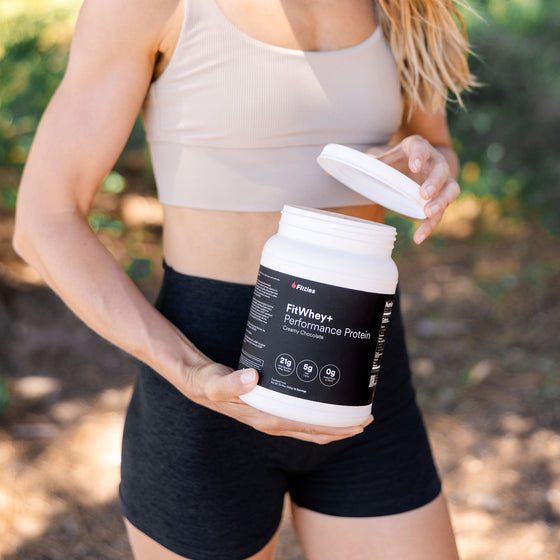
FitWhey+
21 grams of New Zealand whey protein per serving, sourced from grass-fed, rBST/rBGH hormone-free cattle. Sweetened with monk fruit. No added sugar, no stevia, no compromises.
Shop FitWhey+